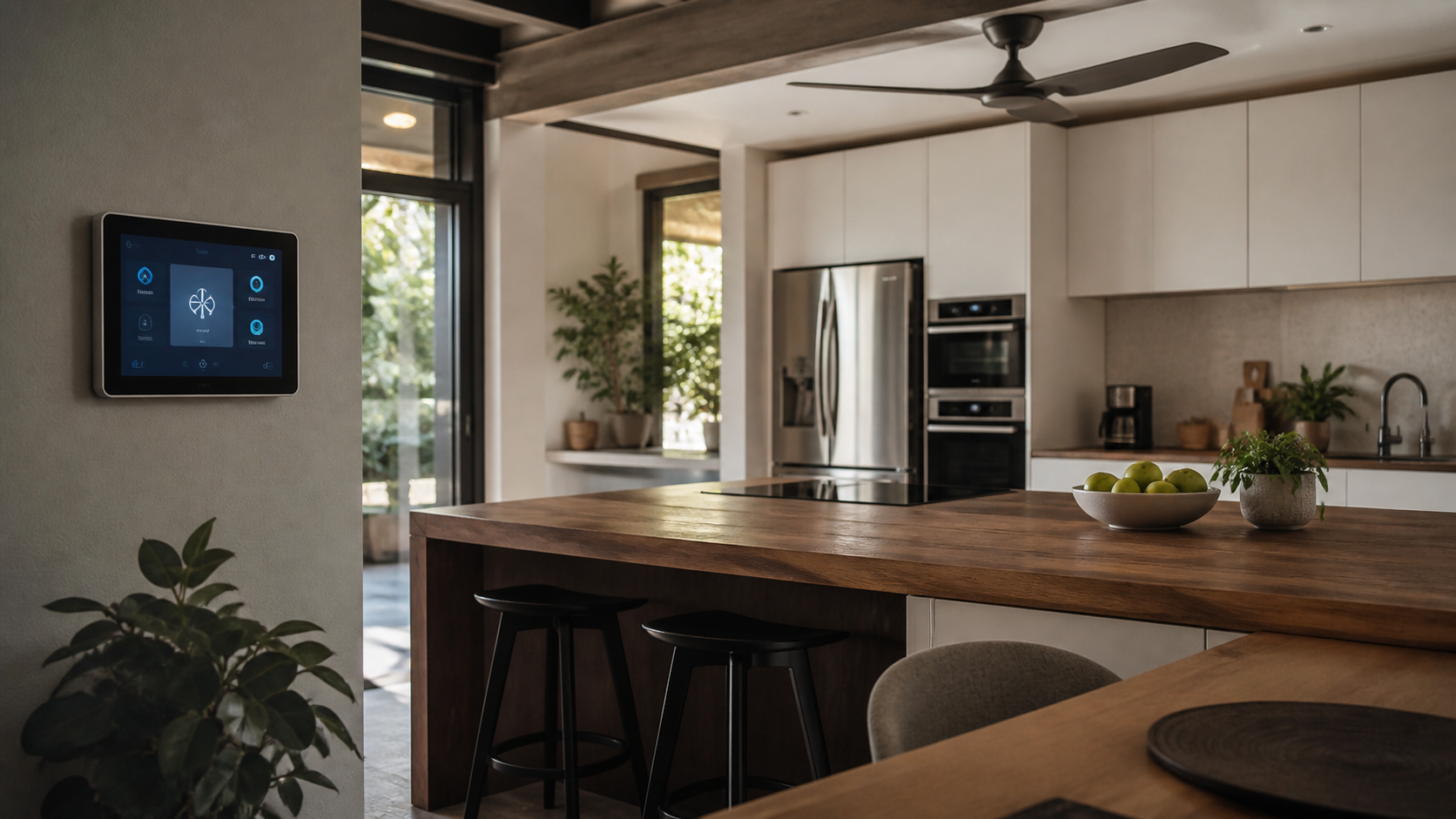
Searching for the best smart ceiling fans 2025 can still be useful in 2026, because the strongest models have not changed as quickly as phones or televisions. What has changed is the buying context. Prices move, retailer stock rotates, and a few brands now offer better app support or more polished finishes. The core decision remains the same: choose a quiet DC-motor fan that fits the room scale, gives you dependable wall and app controls, and does not force a decorative compromise.
For most homes, the Carro Smart Ceiling Fan is still the most balanced option. It pairs a quiet DC motor with Alexa and Google Home support, a remote, an app, and a broad range of wood-tone and matte finishes. Typical prices run from $180 to $350 at Amazon, Home Depot, Wayfair, and Carro USA, depending on blade span, light kit, and finish. It is followed closely by Minka-Aire’s smart-enabled fans for rooms where design is the priority, and by Hunter’s smart models for homeowners who want a familiar fan brand with good parts support.
Standalone Definition: Smart Ceiling Fan
A smart ceiling fan is a ceiling-mounted fan with connected controls that let you adjust speed, direction, light settings, timers, and schedules through a remote, wall control, phone app, or voice assistant. Most current smart fans use energy-efficient DC motors and connect over Wi-Fi, Bluetooth, or a manufacturer bridge. A smart fan does not automatically cool a room below its actual temperature; it creates air movement that makes people feel cooler.
“A good smart ceiling fan should disappear into the room visually and become obvious only when the air feels exactly right.”
Quick Picks
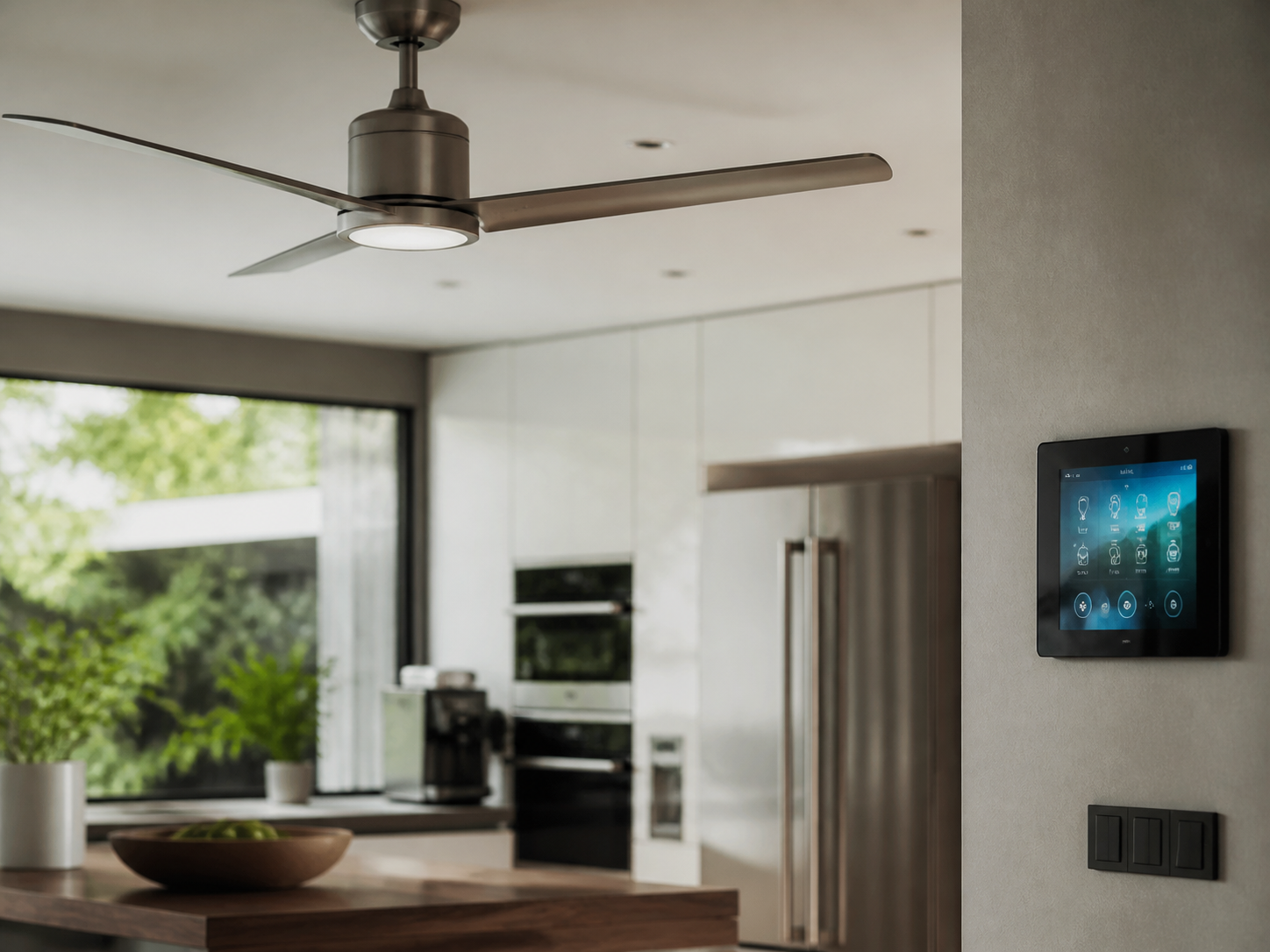
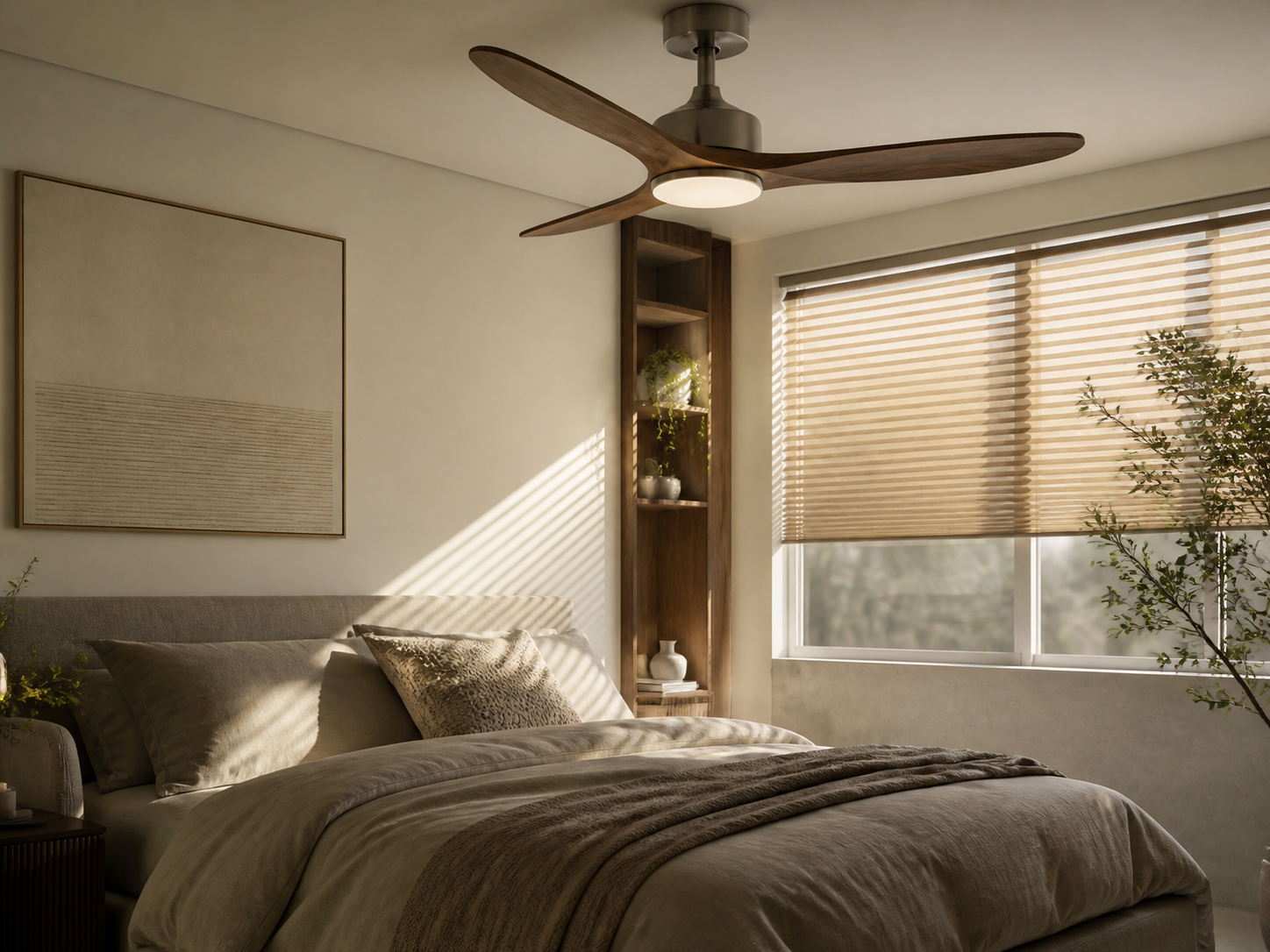
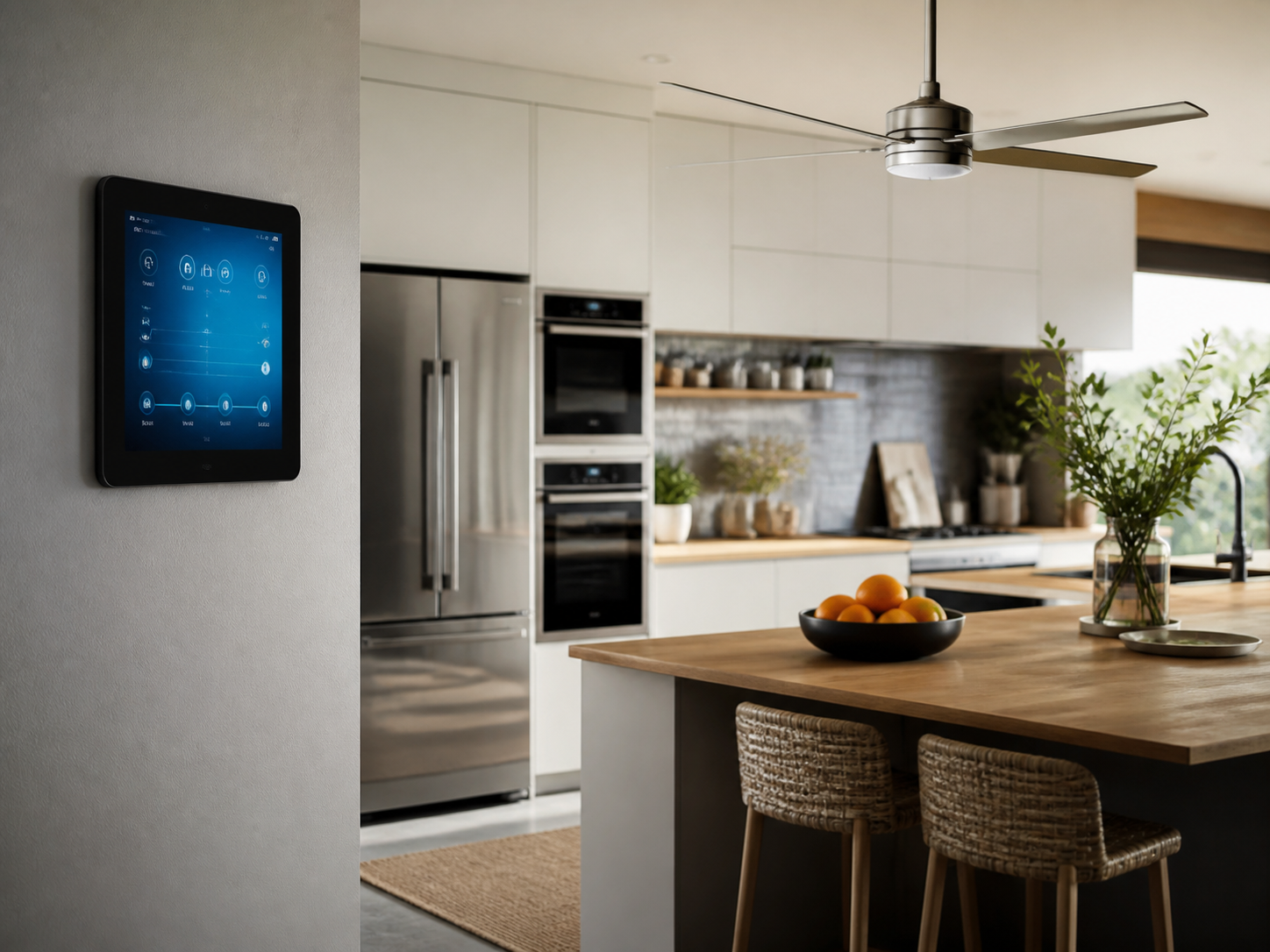
| Model | Typical Price | Best For | Where to Buy | Notable Detail |
|---|---|---|---|---|
| Carro Smart DC Fan | $180 to $350 | Most rooms | Amazon, Home Depot, Wayfair, Carro | Quiet DC motor and wide finish range |
| Minka-Aire Light Wave Smart | $350 to $550 | Design-led living rooms | Lumens, Build.com, Wayfair, dealers | Sculptural three-blade profile |
| Hunter Aerodyne | $180 to $280 | Bedroom and everyday use | Amazon, Home Depot, Hunter | Reliable mainstream choice |
| Modern Forms Wynd | $400 to $650 | Architectural interiors | Lumens, Build.com, Modern Forms | Premium finishes and app controls |
| Rejuvenation Peregrine | $450 to $650 | Heritage-style rooms | Rejuvenation | Traditional styling with modern motor tech |
Why 2025 Models Are Still Worth Considering
Ceiling fan technology is mature. A well-made DC motor from 2025 is still a well-made DC motor in 2026. The important checks are warranty support, replacement remote availability, motor noise, airflow rating, and whether the smart platform works with your household setup. Do not buy a fan solely because it supports voice control. A remote that feels clear at midnight is often more valuable than an assistant command.
The appeal of older model-year search terms is price. Retailers often clear a discontinued finish or previous packaging at a meaningful discount. That can be a smart purchase when the motor, blade span, downrod options, and warranty match the current version. Confirm that the exact SKU includes the control module you expect before ordering.
1. Carro Smart Ceiling Fans: Best Overall
Carro has become a common recommendation because the brand offers a lot of room sizes, finish options, and integrated light choices at attainable prices. The better models use reversible DC motors, six speed settings, and a remote alongside app control. A 52-inch Carro fan suits many bedrooms and small living rooms; a 60-inch or 72-inch model is more appropriate for an open-plan space with sufficient ceiling height.
The design language is modern but not aggressive. White, matte black, brushed nickel, and wood-look blades can work in a warm minimal, Japandi, contemporary, or transitional room. Buy from Home Depot or Carro when you want the clearest product specifications; Amazon and Wayfair can be useful for sale prices, but check seller status and the included downrod length.
2. Minka-Aire Light Wave: Best Design Statement
Minka-Aire’s Light Wave is the fan to choose when the fixture must earn its place in the room. Its three gently swept blades read more like a purposeful ceiling object than a standard fan. Prices are higher, often $350 to $550, but it works especially well over a dining table, in a bedroom with spare furnishings, or in a living room where a bulky light kit would upset the composition.
Check the control package closely. Some Minka-Aire products use a smart remote or an optional bridge rather than built-in Wi-Fi. That is not necessarily a problem, but it affects setup and total cost. Buy from an authorized lighting retailer such as Lumens, Build.com, or a local lighting showroom when finish samples and technical advice matter.
3. Hunter Aerodyne: Best Familiar Brand Choice
Hunter Aerodyne is a practical smart fan for bedrooms, home offices, and family rooms. It usually costs less than premium design brands while still offering app and voice features through Hunter’s SIMPLEconnect ecosystem. The forms are conventional, which is a benefit in rooms that already have strong furniture or art. It does not ask to become the visual center of the ceiling.
Hunter’s advantage is service familiarity. Replacement remotes, downrods, manuals, and installation information are easier to find than they are for many internet-first brands. Typical pricing falls between $180 and $280, depending on sales and finish. Amazon, Home Depot, and Hunter’s site are the most obvious buying channels.
4. Modern Forms Wynd: Best Premium Smart Option
Modern Forms Wynd is a good fit for a renovation where every fixture is being chosen deliberately. The brand offers strong finish work, quiet motors, and a more architectural profile than mass-market fans. Expect to pay roughly $400 to $650. That price is easier to justify in a primary bedroom, a high-ceiling living room, or a compact space where the ceiling fixture has an outsized visual role.
The fan’s smart control experience is among the more sophisticated in the category, though any Wi-Fi appliance can be only as stable as the home network. Put the fan on a reliable 2.4 GHz network if the model requires it, and keep the physical remote accessible for guests and outages.
How to Size a Smart Ceiling Fan
For rooms up to about 100 square feet, a 42- to 48-inch fan is usually enough. For bedrooms and rooms from 100 to 225 square feet, a 52-inch fan is the common sweet spot. For larger living rooms, look at 60-inch or 72-inch models, but consider ceiling height and furniture placement first. Bigger is not always better if blades sit too close to walls or a pendant light.
Keep blades at least seven feet above the floor and generally 18 inches from walls. On ceilings higher than nine feet, use an appropriate downrod rather than mounting the fan tight to the ceiling. A fan that hangs at the right height moves air better and looks more intentional.
Buying Checklist
- Measure the room before comparing blade spans.
- Choose a DC motor for quieter operation and lower energy use.
- Confirm whether the light kit is included, dimmable, and replaceable.
- Check if the smart connection needs Wi-Fi, Bluetooth, or a separate bridge.
- Make sure the ceiling box is fan-rated before installation.
- Check downrod lengths and sloped-ceiling compatibility.
- Keep a remote control option even when voice control is available.
Q&A
What is the best smart ceiling fan for most homes?
Carro smart DC fans are the best starting point for most homes because they combine quiet operation, mainstream app support, and flexible finishes at moderate prices. Pick a blade span that matches the room instead of choosing by price alone.
Are smart ceiling fans worth the extra cost?
They are worth it when you will use schedules, remote access, or voice controls regularly. The bigger upgrade is often the DC motor, which tends to be quieter and more efficient than older AC-motor fans. For a guest room used rarely, a standard fan with a good wall control may be enough.
Can I use a smart ceiling fan with a wall switch?
Yes, but the manufacturer instructions matter. Many smart fans should receive continuous power so the controller stays connected. Use the included remote or compatible wall control rather than an incompatible dimmer switch.
Which smart ceiling fan is quietest?
DC-motor models from Carro, Modern Forms, and Minka-Aire are generally quiet when installed correctly. Wobble, ticking, and hum are more often installation issues than a normal feature of a quality fan.
Final Take
The best smart ceiling fans 2025 list still has useful answers in 2026. Carro is the all-around choice, Minka-Aire is the design-led choice, Hunter is the easy mainstream option, and Modern Forms suits a higher-end renovation. Focus on motor type, room scale, control method, and finish. Those fundamentals will matter longer than any model-year label.