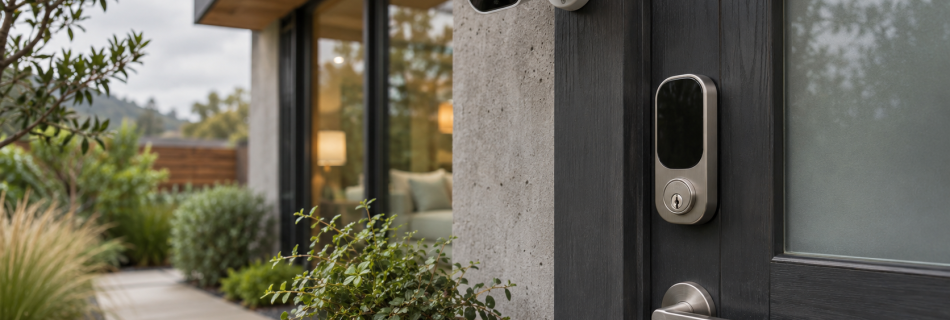
How Do Basic and Premium Security Packages Compare? A Smart-Home Guide

How Do Basic and Premium Security Packages Compare? A Smart-Home Guide

When you compare home security offers, the word “premium” can suggest a safer home by default. In practice, package names are marketing labels, and the features behind them vary by provider. One basic plan may include professional monitoring, while another may provide only app alerts. A premium plan might add cameras, smart-home integrations, or cloud …

What Does Professionally Installed Home Protection Include? A Practical Smart Home Guide

What Does Professionally Installed Home Protection Include? A Practical Smart Home Guide

Home protection has expanded beyond a keypad and an alarm siren. A professionally installed package may connect entry sensors, cameras, smoke alarms, smart locks, a mobile app, and 24/7 monitoring into one system. It can also work alongside smart lighting, thermostats, doorbells, and other connected devices. However, the exact contents depend on the provider, property, …

Which Alarm Systems Integrate With Existing Smart Devices? A Room-by-Room Buying Guide

Which Alarm Systems Integrate With Existing Smart Devices? A Room-by-Room Buying Guide

Ring Alarm is a practical starting point for a home with Ring cameras and Alexa speakers. Abode may suit households that use Apple Home. ADT is worth considering if you want professional installation and compatible Google Nest equipment, but you should confirm the current platform and plan before ordering. AT&T Connected Life should not be …

Which Security Apps Are Easiest for Beginners? A Practical Smart Home Guide

Which Security Apps Are Easiest for Beginners? A Practical Smart Home Guide

Choosing a security app can feel harder than choosing a camera or door sensor. App stores contain products for cameras, alarms, video doorbells, professional monitoring, and complete smart home platforms, while each manufacturer uses different terms for setup, storage, alerts, and privacy. For a first-time buyer, the most useful question is often simple: which security …

How Occupancy Sensors Control Lighting and Heating in a Smart Home

How Occupancy Sensors Control Lighting and Heating in a Smart Home

Occupancy sensors can make a home feel more responsive: lights come on when someone enters a room, and heating can adjust when a space is in use. But a sensor does not automatically know what a person wants, and lighting and heating do not respond in quite the same way. Good results depend on choosing …

Why Does High CRI Matter for Home Decor? A Practical Guide to Better Lighting

Why Does High CRI Matter for Home Decor? A Practical Guide to Better Lighting

Two rooms can have the same paint, furniture, and artwork yet look noticeably different under different lights. A warm white lamp may make a cream wall feel welcoming, while another light of a similar apparent color makes it look dull or slightly green. The difference may come partly from color rendering: how faithfully a light …

Can Daylight Sensors Automatically Dim Indoor Lights? A Smart Home Guide

Can Daylight Sensors Automatically Dim Indoor Lights? A Smart Home Guide

Yes, daylight sensors can automatically dim indoor lights when they are connected to compatible lighting controls. This process is commonly called daylight harvesting or daylight-responsive lighting. A sensor measures the amount of natural light in a room, and a lighting controller adjusts dimmable fixtures so the space maintains a chosen brightness level. The result is …

What Color Temperature Suits Morning and Evening? A Practical Guide to Smart Lighting

What Color Temperature Suits Morning and Evening? A Practical Guide to Smart Lighting

Choosing a light color for different times of day can make a room feel more useful and comfortable. A cooler, more neutral white can help a kitchen or desk feel alert and clear in the morning, while warmer light often creates a calmer atmosphere in the evening. But there is no single color temperature that …

Ceiling Lights With Separate Uplight and Downlight: A Practical Guide for Smarter Spaces

Ceiling Lights With Separate Uplight and Downlight: A Practical Guide for Smarter Spaces

Ceiling lights with separate uplight and downlight are designed to direct light in two distinct directions: upward toward the ceiling and downward toward the room, furniture, or work surface. This simple division gives homeowners more control over brightness, atmosphere, and visual comfort than a conventional single-direction ceiling fixture. In a smart home, the two light …

How Does Room Mapping Improve Lighting Scenes? A Practical Smart-Home Guide

How Does Room Mapping Improve Lighting Scenes? A Practical Smart-Home Guide

Smart lights can change color, brightness, and timing, but a scene may still feel wrong if it treats a room as a collection of identical bulbs. A lamp beside a reading chair has a different job from a ceiling light over a dining table. Room mapping helps a smart-lighting system account for those differences, so …