
Best Smart Air Quality Monitor 2026: Airthings, IQAir, PurpleAir, and Awair Compared
If the modern home has a quiet status symbol in 2026, it is not another screen. It is a small device on a shelf that tells you whether the room is actually healthy to sit, sleep, cook, and work in. The best smart air quality monitor 2026 buyers should consider is not the one with the prettiest app or the most dramatic color ring. It is the one that measures the pollutants your room is likely to have, gives readable advice, and looks calm enough to live beside a lamp, ceramic bowl, or stack of design books.
Indoor air changes fast. Frying dinner can spike fine particles. A scented candle can raise volatile organic compounds. A closed bedroom can climb in carbon dioxide overnight. New furniture, cleaning sprays, wildfire smoke, and poor ventilation all leave fingerprints in the data. The best models turn those signals into plain decisions: open a window, run the purifier, turn on the range hood, pause the diffuser, or move a desk away from a stale corner.
“A good air monitor should behave like a design editor with instruments: specific, calm, and unwilling to mistake a pretty room for a healthy one.”
Quick Picks
For most homes, Airthings View Plus is the strongest all-rounder: PM2.5, CO2, VOCs, humidity, temperature, pressure, and radon for about $299 from Airthings, Amazon, and Best Buy. For design-conscious apartments, Awair Element is the prettiest option when in stock, usually around $299. PurpleAir Zen, around $249 from PurpleAir, is the serious particle pick for wildfire season. IQAir AirVisual Pro, often around $299, is the clearest desk or bedroom display. Qingping Air Monitor Lite, usually $89 to $129, is the budget buy.
Definition: What Is a Smart Air Quality Monitor?
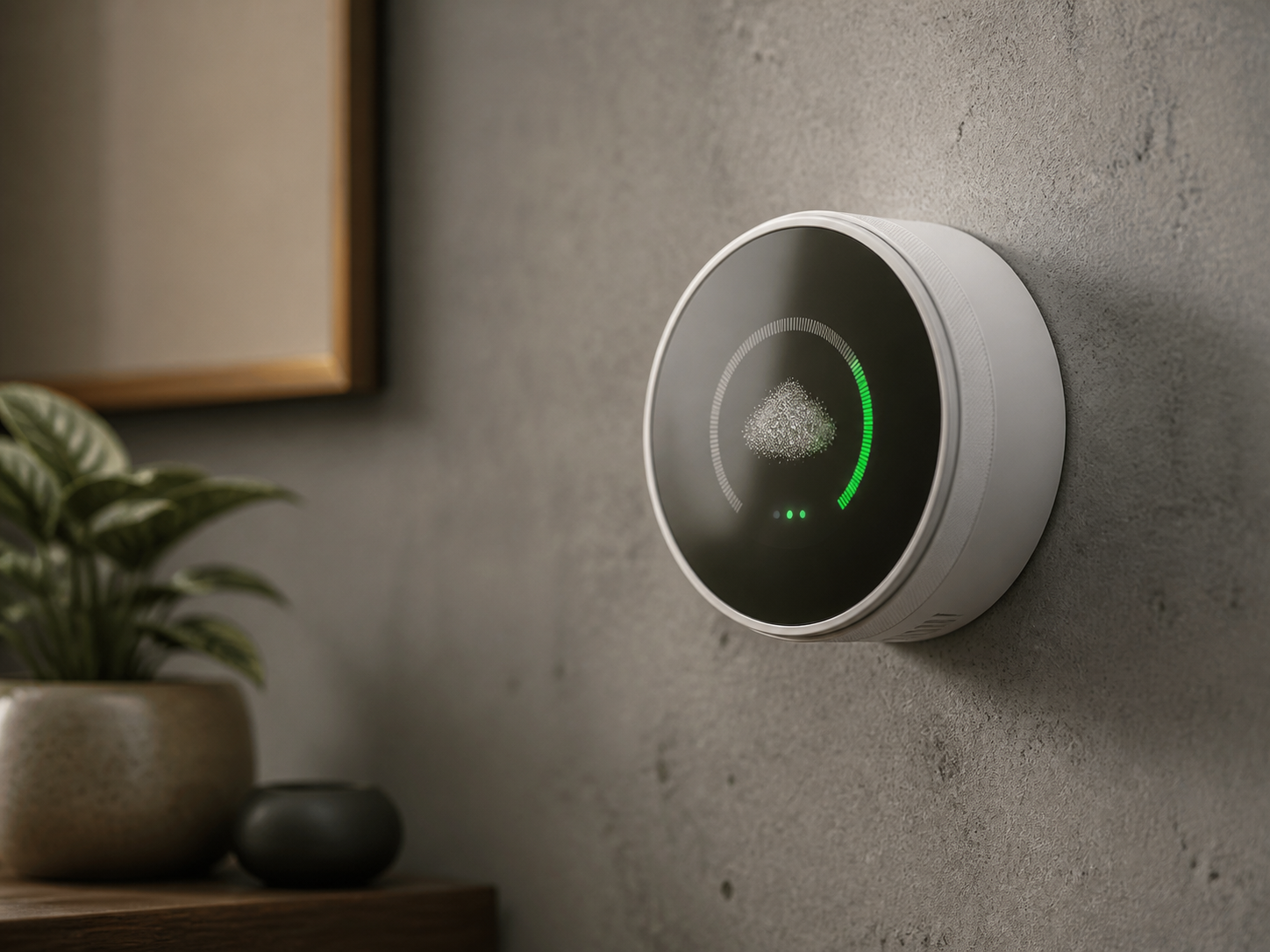
A smart air quality monitor is a connected sensor device that measures indoor air and sends readings to a screen, app, or smart home system. Common readings include PM2.5, PM10, carbon dioxide, VOCs, temperature, humidity, and sometimes radon or carbon monoxide. PM2.5 means fine particles smaller than 2.5 microns, the type associated with smoke, cooking fumes, traffic pollution, and allergy triggers. VOCs are gases released by paints, furniture, fragrances, cleaning products, and adhesives. Carbon dioxide is usually a ventilation clue: if it climbs, the room needs fresh air.
Comparison Table: Best Smart Air Quality Monitor 2026
| Model | Typical Price | Measures | Best Room | Where to Buy |
|---|---|---|---|---|
| Airthings View Plus | About $299 | PM2.5, CO2, VOCs, radon, humidity, temperature, pressure | Living room, nursery, home office | Airthings, Amazon, Best Buy |
| IQAir AirVisual Pro | About $299 | PM2.5, CO2, temperature, humidity | Bedroom, office, smoke-prone homes | IQAir, Amazon |
| PurpleAir Zen | About $249 | Fine particles, local air mapping | Window-side shelf, wildfire zones | PurpleAir |
| Awair Element | About $299 when available | PM2.5, CO2, VOCs, temperature, humidity | Design-forward apartments | Awair, Amazon resellers |
| Qingping Air Monitor Lite | About $89 to $129 | PM2.5, CO2, temperature, humidity | Desk, bedroom, rental | Amazon, Qingping |
| Temtop M10 | About $80 to $110 | PM2.5, AQI, VOC estimate, formaldehyde estimate | Spot checks and budget testing | Amazon, Temtop |
1. Airthings View Plus: Best Overall
Airthings View Plus is the model I would put in a renovated living room, especially one with new rugs, upholstery, candles, pets, and open-plan cooking. It has an e-ink display that feels closer to a thermostat than a gadget, so it does not shout from a shelf. The sensor set is also unusually complete: PM2.5 for smoke and fine particles, CO2 for ventilation, VOCs for chemical off-gassing, humidity and temperature for comfort, pressure for weather context, and radon for long-term household risk.
The radon sensor is the rare feature here. In basements, ground-floor rooms, and certain regions, radon matters. The View Plus does not replace professional mitigation advice, but it can reveal whether the home deserves a closer look. At about $299, it earns its price by measuring more than the average monitor and by fitting into a quiet interior without looking clinical.
2. IQAir AirVisual Pro: Best for Clear Readings
IQAir AirVisual Pro is a strong pick for anyone who wants readable data without scrolling through a phone. The display is large, color-coded, and direct. It tracks PM2.5, carbon dioxide, temperature, and humidity, then pairs that with outdoor pollution data. If you live near traffic or wildfire smoke, that comparison is valuable.
The design is more appliance than decor object, so I would place it on a nightstand, office console, or kitchen shelf. The usual price is around $299 from IQAir or Amazon. Its main weakness is the lack of VOC measurement. For paint, fragrance, cleaning products, or new cabinetry, Airthings or Awair tells a fuller story. For smoke, cooking particles, ventilation, and readable daily guidance, IQAir is excellent.
3. PurpleAir Zen: Best for Wildfire and Particle Tracking
PurpleAir Zen is less of a general lifestyle monitor and more of a serious particle station for people who watch air the way others watch weather. It is especially useful in regions affected by wildfire smoke, heavy traffic, construction dust, or seasonal outdoor pollution. PurpleAir devices are known for community air maps, and the Zen gives that data a friendlier object form for the home. At around $249 from PurpleAir, it makes the most sense near a window, entry, or room where outdoor air enters. It is not the one-device answer for VOCs or CO2, but for fine-particle awareness, it is one of the strongest choices in this group.
4. Awair Element: Best-Looking Apartment Pick
The Awair Element understands the interior-design problem: people do not want a lab device beside a sculptural lamp. Its wood-accented face and dot display are still handsome, and it tracks PM2.5, CO2, VOCs, temperature, and humidity.
Availability can be uneven, so check Awair directly and compare Amazon listings carefully. Around $299 is a fair reference price, but third-party prices can move. The Awair app is easy to read, and its single air score is useful for quick checks. I would choose it for a design-led apartment, a nursery corner, or a home office where a visible object needs to be acceptable on camera.
5. Qingping Air Monitor Lite: Best Budget Display
Qingping Air Monitor Lite is the budget model that does not feel bargain-bin on a desk. Prices often sit around $89 to $129, and the compact color screen is clear enough for a bedroom, rental, or workstation. It typically covers PM2.5, CO2, temperature, and humidity, which is enough to answer two common questions: is the air smoky or dusty, and does this closed room need ventilation?
Its tradeoff is depth. You do not get radon, and VOC coverage depends on the specific Qingping model. App and ecosystem support can vary by region. For a first monitor, though, it is a smart buy. Put it near your desk for a week, then move it to the bedroom.
What to Measure Before You Buy
If you cook often, prioritize PM2.5 and place the monitor where cooking air actually travels. If you work from home with the door closed, prioritize carbon dioxide. If you recently painted, bought pressed-wood furniture, or use fragrance devices, prioritize VOCs. If you live in a radon-prone region, choose a monitor with radon or buy a dedicated radon test kit. Humidity matters too: below about 30 percent can feel dry, while sustained levels above about 60 percent can support mold and dust mites.
Placement is the detail most buyers get wrong. Do not hide the monitor behind books, beside a diffuser, directly over a stove, or in a sunny window. Put it at breathing height, away from vents, and leave it in one room long enough to see patterns. A week of consistent data is more useful than a day of anxious checking.
How These Monitors Fit a Smart Home
The best smart air quality monitor 2026 shoppers can buy should trigger action, not just worry. Pair high PM2.5 readings with an air purifier such as the Coway Airmega 250, Blueair Blue Pure 211i Max, or Dyson Purifier Big+Quiet Formaldehyde. Use CO2 readings to decide when to run an ERV, open windows, or schedule a fan. Use humidity readings with a Levoit humidifier, Midea dehumidifier, or a smart plug rated for the appliance load.
Apple Home, Google Home, Alexa, IFTTT, and Home Assistant support vary by brand, so confirm integrations before purchase. Matter support is still not universal in air monitors. For most people, the app plus a purifier schedule is enough.
Buying Advice
Buy Airthings View Plus if you want one polished monitor for the main room and care about radon. Buy IQAir AirVisual Pro if you want clear readings and strong smoke awareness. Buy PurpleAir Zen if outdoor particles are the story where you live. Buy Awair Element if design matters and you can find it at a sane price. Buy Qingping Air Monitor Lite if you want a low-cost way to learn how your rooms behave before spending more.
My practical recommendation is simple: start with the room where you spend the most closed-door hours. For many homes, that is the bedroom or home office, not the living room. The healthiest home is often the one where boring numbers quietly change habits: using the range hood every time, ventilating before bedtime, reducing fragrance load, and running a purifier before smoke has filled the room.
Q&A
Do smart air quality monitors clean the air?
No. They measure conditions and warn you. To clean the air, pair the monitor with ventilation, source control, and an air purifier sized for the room.
Which reading matters most?
For many homes, PM2.5 and CO2 are the most useful daily readings. PM2.5 shows smoke and fine particles. CO2 shows stale air and poor ventilation.
Are cheap air quality monitors accurate?
Some are useful for trends, but absolute accuracy varies. A budget monitor can still show when cooking, candles, or closed windows are changing the room. For radon, safety claims, or formal testing, use specialist equipment or professional guidance.
Where should I place an air quality monitor?
Place it at breathing height, away from vents, windows, direct sun, diffusers, and cooking steam. A sideboard, desk, or nightstand usually works better than a kitchen counter.
What is the best smart air quality monitor 2026 for most people?
Airthings View Plus is the best overall pick for most homes because it covers particles, CO2, VOCs, radon, humidity, temperature, and pressure in a design that can sit in a finished room without visual fuss.