Choosing bedding is both a comfort decision and a materials decision. Sheets, duvet covers, blankets, pillows, and mattress protectors sit close to the skin for long periods, while their production, care, and disposal affect a bedroom’s environmental footprint. A sustainable bedding materials comparison for bedrooms should therefore look beyond a label such as “natural” or “eco-friendly.” Fiber origin, processing, chemical management, durability, washing requirements, and credible certification all matter.
This guide compares common bedding materials, explains what sustainability claims mean, and shows how to select bedding that works with a calm, efficient smart-home bedroom. The goal is not to identify one universal winner. Climate, sleep preferences, allergies, budget, laundry access, and product construction can change the best choice.
What Does Sustainable Bedding Mean?
Sustainable bedding is bedding designed and produced with comparatively lower environmental and social impacts across its life cycle, while still meeting practical needs such as comfort, safety, durability, and cleanability. The term covers several dimensions:
- Fiber source: The material may come from a plant, animal, recycled input, or a manufactured cellulose source.
- Processing: Spinning, dyeing, finishing, and manufacturing can use water, energy, chemicals, and labor.
- Useful life: A durable product that remains comfortable for years may be preferable to a fragile product that needs frequent replacement.
- Care: Washing temperature, drying method, ironing, and frequency influence ongoing energy and water use.
- End of life: Single-fiber textiles are generally easier to sort and recycle than complex blends, although local textile recycling options vary.
“Natural” does not automatically mean low impact, and “recycled” does not automatically mean safer or longer lasting. A responsible comparison considers the whole product rather than one attractive claim.
Sustainable Bedding Materials Compared
Organic cotton
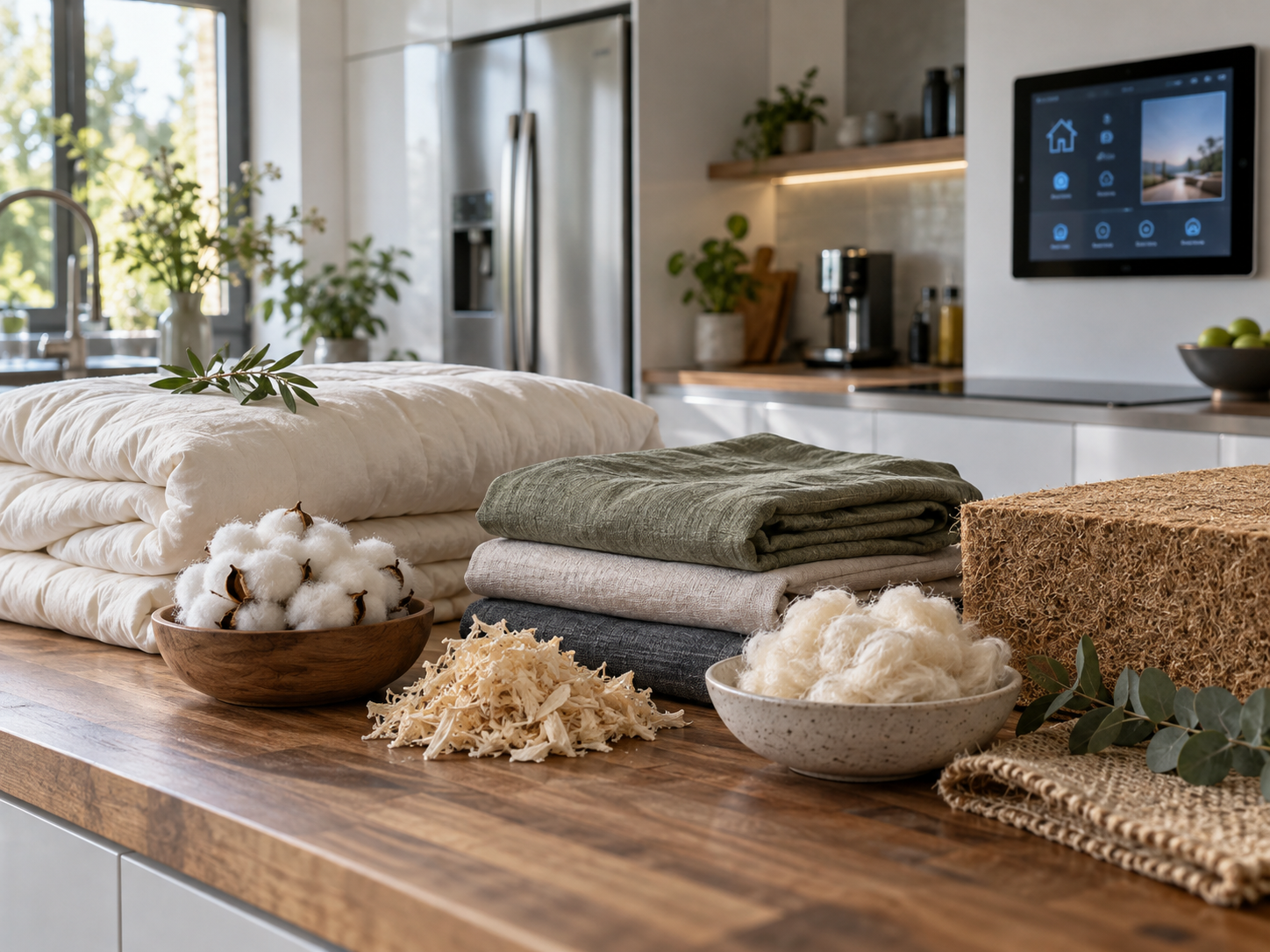
Organic cotton is grown under organic agricultural standards that restrict certain synthetic pesticides and fertilizers. It is familiar, widely available, breathable, and offered in many weaves, including percale, sateen, and jersey. Its feel depends at least as much on yarn quality and construction as on the organic label.
Advantages: Organic cotton is comfortable in a wide range of climates, easy to wash, and available in sheets, towels, quilts, and mattress protectors. It can be a practical starting point for buyers who want a conventional fiber with stronger agricultural oversight.
Limitations: Cotton remains a water- and land-intensive crop in many growing regions, although impacts vary with climate, irrigation, farming practices, and supply chain. Organic certification does not eliminate all environmental impacts. Cotton can also shrink or wear if exposed to excessive heat and harsh detergents.
Look for a recognized organic textile certification rather than relying only on “made with organic cotton.” The Global Organic Textile Standard (GOTS) covers organic fiber requirements and includes processing, environmental, and social criteria. Its product and transaction certificates can help distinguish a certified supply chain from an unverified marketing statement.
Linen and flax
Linen is made from flax stalks. It is known for airflow, a textured appearance, and a tendency to become softer with use. Linen bedding suits warm bedrooms and relaxed Living Aesthetic styles, especially when paired with natural wood, restrained lighting, and simple furniture.
Advantages: Linen is breathable and can be comfortable in warm or humid conditions. Its characteristic texture hides minor creasing, so it may require less pressing than some smooth fabrics. Well-made linen can be durable, and the material’s visual character often supports a minimalist bedroom without decorative excess.
Limitations: Linen may feel coarse at first, costs more than many basic cotton products, and can crease noticeably. The environmental profile still depends on farming, retting, dyeing, finishing, and transport. “European flax” identifies a source region or claim, not necessarily a complete sustainability certification.
Hemp
Hemp fiber comes from the stalk of the hemp plant and is used in sheets, towels, and blended fabrics. It is often marketed as a lower-input crop, but the full outcome depends on regional agriculture and textile processing.
Advantages: Hemp can produce a strong fabric with a distinctive texture and may become softer over time. It can work well for durable duvet covers or sheets intended for long-term use.
Limitations: Hemp bedding is less widely available, and some products blend it with cotton or synthetic fibers. Blends can change softness and price while making end-of-life sorting more difficult. Product quality varies substantially, so inspect construction, seam strength, and washing instructions.
Tencel lyocell and other regenerated cellulose fibers
Lyocell is made by dissolving wood cellulose and forming it into fibers. Tencel is a brand associated with Lenzing’s lyocell and modal fibers; the brand name should not be treated as a generic synonym for every regenerated cellulose product. Bedding made from lyocell often has a smooth, draping feel and is frequently chosen for warm sleepers.
Advantages: Lyocell can feel soft and cool against the skin, and some manufacturing systems recover and reuse much of their processing solvent. The fiber is useful when a bedroom needs a smoother alternative to textured linen or hemp.
Limitations: The sustainability of a lyocell product depends on the wood source, chemical management, energy, dyes, finishing, and factory practices. It may be less rugged than heavy linen or tightly woven cotton. Consumers should check whether the product is lyocell, modal, or a blend, and seek relevant forestry or textile certifications.
For wood-based fibers, the Forest Stewardship Council (FSC) and the Programme for the Endorsement of Forest Certification (PEFC) are examples of forestry certification systems that may appear in supply-chain claims. They address forest management, not every stage of bedding production.
Recycled polyester and recycled nylon
Recycled polyester is commonly made from recovered plastic, while recycled nylon can come from sources such as discarded industrial materials or fishing nets. These fibers appear in performance sheets, mattress covers, blankets, and filling.
Advantages: Recycled synthetics can make use of existing materials, resist wrinkling, dry quickly, and provide useful strength. They may be practical for mattress protectors or bedding that needs frequent washing and rapid drying.
Limitations: Synthetic fibers can shed microfibers during laundering, and recycling does not make a product biodegradable. Polyester may also feel warmer or less breathable than linen or lyocell, depending on the weave. A recycled claim may refer only to part of the product, so check the percentage and whether it applies to the outer fabric, filling, or both.
The Global Recycled Standard (GRS) is a recognizable certification that can verify recycled content and includes chain-of-custody and social, environmental, and chemical-management requirements. It does not guarantee that a product is ideal for every bedroom or that it can be recycled locally later.
Wool, down, and other animal fibers
Wool blankets and wool-filled bedding can provide insulation and moisture management. Down and feather products are lightweight and warm, while alternatives such as recycled polyester fill avoid animal materials.
Advantages: Wool can be long lasting and useful in colder bedrooms. Down offers a high warmth-to-weight ratio. High-quality animal-fiber bedding may remain in service for many years when cared for correctly.
Limitations: Animal welfare, land use, washing requirements, and allergies require careful consideration. Down products should disclose responsible sourcing, and wool shoppers may look for standards such as the Responsible Wool Standard (RWS). Washing wool or down incorrectly can damage the fill, so cleaning may require specialist care. “Hypoallergenic” is not a universal guarantee; the cover, dust, laundering routine, and individual sensitivities also matter.
A Simple Comparison Framework
Use the following framework rather than ranking fibers in isolation:
| Priority | Materials to consider | What to check |
|---|---|---|
| Warm-weather airflow | Linen, hemp, percale cotton, lyocell | Weave, fabric weight, bedroom humidity, and personal preference |
| Soft, smooth hand feel | Lyocell, sateen cotton, washed cotton | Fiber blend, finishing chemicals, and durability |
| Texture and relaxed appearance | Linen, hemp, wool | Initial feel, shrinkage, and care instructions |
| Fast drying | Lightweight cotton, lyocell, polyester blends | Heat tolerance and microfiber considerations |
| Animal-free construction | Cotton, linen, hemp, lyocell, recycled synthetics | Fill and trim, not only the outer shell |
| Long service life | Well-constructed linen, cotton, hemp, wool | Stitching, fabric density, replacement parts, and care |
This table is directional, not a laboratory ranking. Weave, yarn, finishing, and manufacturing quality can reverse the expected result.
How to Choose Bedding Step by Step
1. Start with the bedroom conditions
Consider whether the room is warm, dry, humid, or drafty, and whether a smart thermostat changes the temperature overnight. A programmable thermostat can reduce unnecessary heating or cooling, but bedding should still suit the sleeper. Lightweight linen or lyocell may help warm sleepers, while wool or down may reduce the need for a higher heating setting in a cold room.
2. Choose the minimum necessary layers
Overbuying is not sustainable. Build a practical set: fitted sheet, top sheet or duvet cover, pillowcases, one suitable blanket or duvet, and a washable mattress protector if needed. Buy spare sets according to laundry frequency rather than collecting multiple decorative layers that are rarely used.
3. Read the fiber and fill percentages
Check the entire product description. A “linen bedding set” may contain a cotton blend, and a “recycled comforter” may have recycled fill but a conventional shell. The fiber label should identify the material composition, while care instructions indicate likely maintenance demands.
4. Verify certifications
Use the certifier’s public directory or certificate information where available. GOTS, GRS, OEKO-TEX STANDARD 100, FSC, PEFC, and RWS address different issues; none should be treated as proof of every sustainability attribute. OEKO-TEX STANDARD 100 focuses on testing textiles and components for harmful substances, which is relevant to skin-contact products, but it does not certify organic farming or guarantee a low-carbon product.
5. Assess construction and repairability
Inspect hems, elastic, closures, stitching, and the quality of the duvet insert. A sturdy product that can be washed repeatedly often offers better value than a delicate item with an attractive initial claim. For a minimalist bedroom, neutral colors and replaceable covers can reduce the need to replace an entire comforter when the decor changes.
6. Plan care before buying
Follow the manufacturer’s instructions. Wash full loads when practical, use the lowest effective temperature, avoid unnecessary detergent, and line-dry or air-dry when conditions allow. Do not use high heat on materials that can shrink or damage elastic. A smart washing machine or energy monitor can help identify routines, but technology cannot compensate for unsuitable care instructions.
How Bedding Fits Into a Smart Bedroom
Sustainable bedding works best as part of a broader room strategy. Smart lighting can shift from bright task lighting to warmer, dimmer evening light, helping the room feel restful without adding decorative clutter. Motion sensors should be configured carefully so they do not illuminate the room unexpectedly during sleep.
Smart home security systems can improve peace of mind, but cameras and microphones should not be placed where privacy is compromised. Use strong passwords, multifactor authentication, software updates, and sensible device permissions. A smart bedroom gadget is only useful if its data practices and charging needs fit your household.
Air purifiers may help manage particles in some homes, but they do not replace ventilation, laundering, or professional advice for persistent respiratory symptoms. Keep purifier filters clean and avoid blocking airflow with bedding. Robot vacuums can reduce dust on floors, yet they cannot clean sheets, mattress surfaces, or upholstery on their own.
For an eco-luxury look, combine one durable focal textile, such as a linen duvet cover, with simple furniture, low-energy lighting, and a restrained color palette. The result can feel considered without relying on frequent seasonal replacement.
Limitations of Material Comparisons
No universal score can accurately rank every bedding material. Agricultural conditions differ by region, factories use different energy sources, and product lifespans are difficult to predict. A certified product may still travel a long distance or use energy-intensive finishing. Conversely, a locally made uncertified product may have a short supply chain but provide less evidence about chemical or labor practices.
Consumer labels also vary in scope. Some verify inputs, some test for substances, some address forests or animal welfare, and some provide chain-of-custody information. Compare like with like, keep documentation, and be cautious with vague claims such as “green,” “clean,” “earth-friendly,” or “chemical-free.” Everything made from a material involves chemistry; the useful question is which substances are used, restricted, tested, and disclosed.
Concise Q&A
What is the best sustainable bedding material?
There is no single best option. Linen, organic cotton, hemp, lyocell, recycled synthetics, wool, and down each have different strengths. Choose based on climate, comfort, care, longevity, and verified sourcing.
Is organic cotton more sustainable than polyester?
Not automatically. Organic cotton may reduce some agricultural chemical inputs, while recycled polyester can use existing material and dry quickly. Compare the complete product, expected lifespan, laundering, and certifications rather than only the fiber name.
Is linen good for hot sleepers?
Linen is often suitable for warm sleepers because its structure supports airflow and absorbs moisture. However, weave, room humidity, duvet weight, and personal comfort determine the actual result.
Does OEKO-TEX mean bedding is organic?
No. OEKO-TEX STANDARD 100 concerns testing for certain harmful substances in the finished textile and its components. Organic claims require a separate standard, such as GOTS, when applicable.
How can I make existing bedding more sustainable?
Keep using it while it remains comfortable and safe, wash it efficiently, repair seams or elastic where possible, and donate or recycle it through a suitable local program when it reaches the end of its useful life. Replacing functional bedding solely for a trend can create unnecessary impact.
Bottom Line
A strong sustainable bedding materials comparison for bedrooms balances verified sourcing with everyday performance. Start with the room climate and your sleep preferences, select durable construction, verify the relevant certification, and buy only the layers you will use. Organic cotton may suit a familiar all-purpose set; linen or hemp may fit a breathable, textured bedroom; lyocell may suit a smooth feel; recycled synthetics may work for quick-drying performance; and wool or down may provide efficient insulation when responsibly sourced.
Informational and safety note: This article is general information, not medical, environmental-engineering, financial, or product-safety advice. People with allergies, asthma, skin conditions, or chemical sensitivities should review product information and consult a qualified health professional when appropriate. Follow all care, electrical, fire, and smart-device security instructions supplied by manufacturers.
Sources and Comparison Methodology
The comparison uses publicly available standards and established sector references rather than invented tests, prices, or personal experience. Relevant sources include the Global Organic Textile Standard (GOTS), OEKO-TEX, the Global Recycled Standard (GRS), the Forest Stewardship Council (FSC), the Responsible Wool Standard (RWS), and Textile Exchange publications on preferred fibers and materials. These sources were used to distinguish organic, recycled, chemical-testing, forestry, animal-welfare, and supply-chain claims. Their standards cover different parts of a product’s life cycle, so certification should be interpreted according to its stated scope.