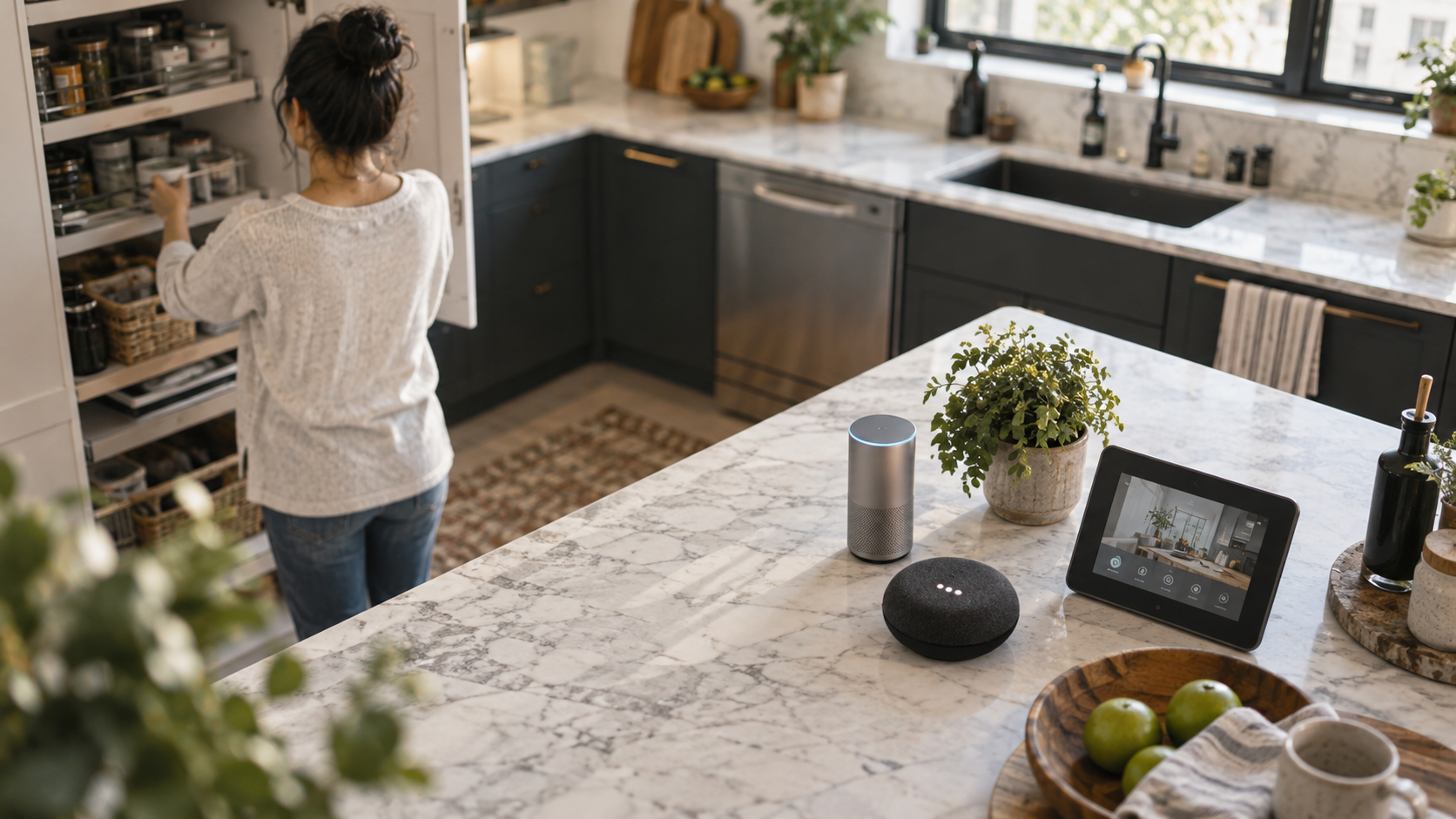
Limited cabinet space can make even a well-designed kitchen feel crowded. The most effective solution is not always adding more storage. It is usually a combination of better measurements, clearer zones, vertical organization, and a few carefully chosen tools that make everyday items easier to reach. These kitchen organization ideas for limited cabinet space are designed for apartments, compact homes, rental kitchens, and households that want a calmer cooking area without a major remodel.
A smart kitchen upgrade should improve access without creating new clutter. That means using the space inside cabinets, on cabinet doors, under shelves, and on the walls while keeping work surfaces clear. It also means considering how lighting, appliances, cleaning routines, and household safety affect the layout.
What Does Kitchen Organization for Limited Cabinet Space Mean?
Kitchen organization for limited cabinet space is the intentional arrangement of cookware, food, appliances, cleaning supplies, and serving items so that each category has an appropriate location and can be reached without unnecessary rearranging. The goal is not to store the greatest possible number of objects. The goal is to make the available storage work harder while preserving safe movement, usable counter space, and a simple daily routine.
This approach usually combines three ideas:
- Space recovery: using vertical gaps, cabinet doors, corners, drawer depths, and the area beneath shelves.
- Zone planning: placing items near the activity where they are used, such as keeping spices near the cooking area and food containers near the refrigerator.
- Selection: reducing duplicates and choosing organizers that match the actual cabinet dimensions rather than buying storage products first.
Start With a Cabinet and Countertop Audit
Before purchasing bins, risers, or smart appliances, remove the contents of one cabinet or drawer at a time. Group similar objects together and note what is used daily, weekly, seasonally, or rarely. This process reveals whether the main problem is insufficient volume, poor access, oversized packaging, or too many duplicate items.
Measure the useful space
Measure width, depth, and height inside each cabinet. Also record door hinges, plumbing, drawer slides, fixed shelves, outlets, and the clearance needed for doors to open. Interior dimensions are more useful than the outside width of a cabinet. A pull-out organizer that fits the cabinet opening may still fail if a hinge or pipe blocks its movement.
Measure the vertical gap between shelves as well. A shelf riser can create a second level for plates or cans, but it can make tall items unusable if the clearance is too tight. For drawers, check the interior height and the distance between the drawer box and the countertop or cabinet frame.
Make a keep, relocate, and release list
- Keep: items that support regular meals or important household routines.
- Relocate: items that belong in another zone, such as baking tools stored far from the mixing area.
- Release: broken, expired, uncomfortable, duplicate, or rarely used objects that do not justify their storage footprint.
Do not automatically discard items simply because they are not used every week. Seasonal equipment, specialty cookware, and accessibility aids may be valuable. Instead, move them to a higher cabinet, a labeled storage box, or another room if they do not need to occupy prime kitchen space.
Create Functional Kitchen Zones
Limited cabinet space becomes easier to manage when storage follows the way the kitchen is used. A zone system reduces searching and prevents unrelated items from occupying the same shelf.
Cooking zone
Place pans, spatulas, cooking utensils, oils, and frequently used seasonings near the cooktop. A slim drawer divider can keep utensils upright or separated by type. If a drawer is not available, a heat-resistant utensil holder on the counter may be more practical than stacking tools in a deep cabinet.
Keep oils and spices away from direct heat where possible. Heat and light can affect quality, and bottles placed too close to a burner can become hot or difficult to handle. A narrow pull-out rack beside the cooking area can use a gap that would otherwise be wasted, provided it does not interfere with appliance ventilation or safe movement.
Food preparation zone
Store cutting boards, knives, mixing bowls, measuring tools, and preparation appliances near the main work surface. A vertical divider can hold cutting boards and baking sheets on their edges. This is often more space-efficient than laying them flat in a stack.
Knife storage requires extra care. A drawer insert, knife block, or wall-mounted magnetic strip can work, but the selected option should keep blades stable and protected. A magnetic strip must be securely mounted and positioned where children cannot easily reach it. If drilling is not allowed, a covered drawer insert is a practical alternative.
Cleaning zone
Keep dish soap, brushes, cloths, dishwasher supplies, and waste-sorting accessories close to the sink. A small caddy can contain daily-use supplies, while less frequently used products can be stored in a separate, labeled location.
Cleaning products should remain in their original containers when possible. Store them away from food and follow label directions. Never transfer chemicals into food containers, and do not combine cleaning products unless the manufacturer specifically allows it.
Food storage zone
Group dry goods by category, such as grains, breakfast foods, canned goods, snacks, and baking ingredients. Clear containers can make contents easier to see, but transferring food is not required for good organization. If you decant products, retain the original expiration or best-by information and allergen details.
Use a first-in, first-out arrangement for packaged foods: place older items toward the front and newer purchases behind them. This supports routine rotation without relying on memory. The United States Department of Agriculture Food Safety and Inspection Service, through its FoodKeeper guidance, is a useful reference for storage practices and food quality timelines.
Use Vertical and Hidden Space Carefully
One of the most useful kitchen organization ideas for limited cabinet space is to organize upward rather than outward. Vertical space can hold light or medium-weight items without taking more counter area.
Install shelf risers and under-shelf baskets
Shelf risers create separate levels for plates, mugs, cans, and small bowls. Under-shelf baskets can hold flat objects such as napkins, wraps, or small packages. Choose products that leave enough clearance for the shelf above and do not force cabinet doors to close against them.
Avoid overloading wire baskets or adhesive-mounted products. The stated weight rating may apply only when the item is installed on a clean, suitable surface. Check the manufacturer’s instructions and inspect mounting points periodically.
Use cabinet doors for narrow categories
Cabinet doors can hold pot lids, measuring spoons, wraps, cleaning cloths, or small spice containers. Door-mounted storage is best for lightweight items and should be positioned so hinges and shelves remain unobstructed.
A door rack can be useful, but it may change the balance of the door and put stress on hinges. If the door begins to sag, scrape, or resist closing, remove the organizer and reassess the load.
Organize corners and deep cabinets
Deep cabinets often become storage areas where objects disappear behind one another. A turntable, two-tier corner shelf, or handled bin can make the back area easier to reach. Use bins for categories that are removed together, such as baking supplies or lunch accessories. Avoid placing heavy glassware in a bin that must be lifted over other items.
Pull-out shelves can improve access in base cabinets, particularly for pots, small appliances, and pantry goods. Their limitation is cost, installation complexity, and the loss of some internal width. A freestanding pull-out unit may be easier to add, but it should be anchored or positioned securely if it could tip when fully extended.
Reduce Appliance and Countertop Clutter
Small appliances often occupy more visual and physical space than dry goods. Start by assigning each appliance a frequency category:
- Daily: keep accessible, possibly on the counter if it supports a regular routine.
- Occasional: store in a cabinet, rolling cart, or appliance garage if space allows.
- Seasonal or specialized: move to higher or less convenient storage.
Do not store an appliance in a way that blocks ventilation, traps heat, or requires a cord to cross a sink or cooking surface. Follow the appliance manual for clearance, cleaning, and electrical requirements. A compact induction cooktop, air fryer, or coffee machine may be convenient, but it still needs a safe operating area and an outlet that can support its electrical load.
Smart appliances can add useful functions such as scheduling, notifications, or remote monitoring, but they should solve a real household need. A connected appliance can also introduce account management, software updates, and privacy considerations. If a device uses a mobile application, enable strong account security and review permissions before connecting it to a home network.
Add Smart Lighting for Better Access and Atmosphere
Storage is easier to maintain when the contents are visible. Under-cabinet LED lighting can illuminate preparation areas and reduce shadows inside the workspace. Motion sensors may be useful in a pantry or lower cabinet, while adjustable color temperature can support both task lighting and a softer evening atmosphere.
Lighting should be installed so that cords do not interfere with cabinet doors, heat sources, or wet areas. Plug-in products can be suitable for rentals, while hardwired systems should be installed by a qualified professional when required by local rules or the product instructions.
Smart lighting offers convenience through schedules, voice controls, and scenes, but it is not automatically better than a simple switch. Connected lighting may depend on Wi-Fi, an app, or a compatible hub. A basic dimmable fixture can be more reliable when the main goal is visibility rather than automation.
Choose Sustainable Organizers Without Overbuying
Eco-conscious organization is not limited to buying products labeled sustainable. The lower-impact choice may be reusing a sturdy container, repairing a cabinet, or buying one durable organizer instead of several temporary solutions.
Consider organizers made from durable metal, responsibly sourced wood, recycled plastic, or long-lasting food-safe materials. Look for clear care instructions and replacement parts where relevant. Avoid using materials that are not intended for food contact to store unpackaged food, especially when the material may shed, absorb odors, or react with moisture.
Reusable containers can reduce disposable packaging in some households, but they also require washing and storage. Select a consistent set that stacks efficiently rather than collecting containers in many incompatible shapes. Keep lids together in a dedicated divider or shallow bin.
Make the System Easy to Maintain
An organization system is more successful when returning an item takes less effort than leaving it out. Use broad categories and simple labels. A label such as baking supplies or breakfast is usually more useful than a detailed inventory that must be updated frequently.
- Assign each category a home.
- Place the most frequently used items between waist and eye level when possible.
- Keep heavy objects low and stable.
- Leave a small amount of open capacity in the most-used zones.
- Review expired food, damaged tools, and duplicates during routine cleaning.
Use a short reset at the end of meal preparation: return tools, wipe the main work surface, and check whether any item lacks a clear home. If the same object is repeatedly left on the counter, the assigned storage location may be too inconvenient or too small.
Pros, Cons, and Limitations
| Approach | Advantages | Limitations |
|---|---|---|
| Vertical shelf risers | Inexpensive way to separate small items and use height. | May reduce clearance for tall dishes and can become crowded. |
| Pull-out organizers | Improve access to deep cabinets and reduce reaching. | Need accurate measurements and may reduce usable width. |
| Door-mounted racks | Use otherwise empty surfaces for narrow categories. | Can stress hinges or prevent doors from closing. |
| Clear containers | Make contents visible and support consistent stacking. | Require cleaning, labeling, and an upfront purchase. |
| Smart lighting | Improves visibility and can support schedules or scenes. | May depend on power, apps, hubs, or network connectivity. |
| Rolling carts | Add flexible storage without permanent construction. | Use floor space and may obstruct traffic in narrow kitchens. |
Organization cannot change the physical limits of a kitchen. A very small kitchen may still need off-site storage, fewer appliances, or a more selective cookware collection. Renters may also face restrictions on drilling, adhesive products, and electrical modifications. In those cases, prioritize freestanding solutions and removable lighting, and confirm that any adhesive organizer is suitable for the wall or cabinet finish.
Comparison Methodology and Reliable References
The recommendations in this guide are based on a practical comparison of three factors: the type of space recovered, the effort required to install and maintain the solution, and the safety or access trade-offs it creates. Product categories and planning principles can be cross-checked against IKEA kitchen planning and storage guidance and The Container Store’s kitchen organization categories. Food-storage considerations should be checked against the USDA Food Safety and Inspection Service FoodKeeper resource. For electrical safety and fire-prevention questions, consult the appliance manual, local requirements, and guidance from organizations such as the National Fire Protection Association.
These sources do not replace an on-site assessment. Cabinet construction, wiring, plumbing, ventilation, household mobility needs, and local building rules can change which solution is appropriate.
Safety and Informational Disclaimer
This article provides general home-organization information, not professional construction, electrical, food-safety, or accessibility advice. Turn off power before working near electrical fixtures, keep cords and appliances away from water and heat, secure heavy or sharp items, and follow manufacturer instructions. When in doubt about wiring, structural mounting, gas appliances, or accessibility, consult a qualified professional. Check food labels and official food-safety guidance for storage decisions.
Quick Q&A
What is the first step when cabinet space is limited?
Measure the usable interior of each cabinet and remove duplicates before buying organizers. Accurate measurements prevent products from blocking hinges, plumbing, or doors.
How can I store pots and pans in a small kitchen?
Use a vertical divider for flat pans and baking sheets, or a stable pull-out rack for heavier cookware. Keep frequently used items near the cooktop and place heavy objects low.
Are cabinet-door organizers worth using?
They can be useful for lightweight, narrow categories such as wraps, spices, or cleaning cloths. Check hinge clearance and avoid loading the door beyond the organizer’s instructions.
Should every kitchen use smart lighting?
No. Smart lighting is useful when schedules, sensors, or remote control solve a real problem. A conventional under-cabinet fixture may be simpler and more dependable for basic task lighting.
How do I prevent organized cabinets from becoming cluttered again?
Use broad categories, leave some spare capacity, and review the kitchen periodically. If an item repeatedly stays on the counter, move it to a more convenient location or reconsider whether it earns its storage space.