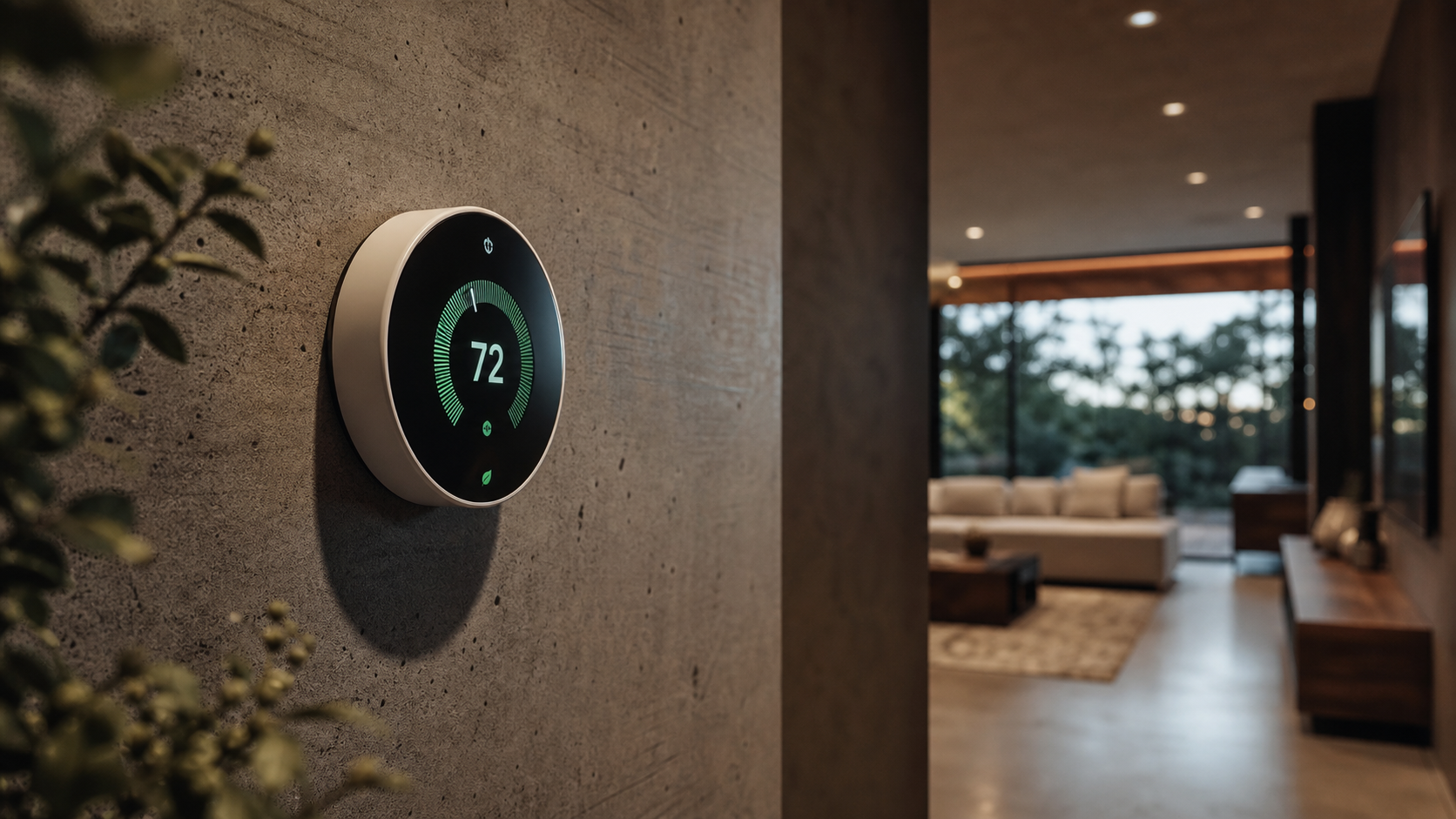
If you ask, what is the number one smart home security system in the world, the honest answer depends on the home you are protecting. A suburban house with three exterior doors needs a different mix than a one-bedroom rental with a strict landlord. Still, one name sits at the center of the category in 2026: ADT, because of its professional monitoring reach, installer network, Google Nest hardware options, and long operating history.
That does not mean ADT is the right buy for every stylish home. SimpliSafe is often the cleaner pick for renters, Ring Alarm Pro is unusually practical for homes already using Alexa and Eero, and Abode remains one of the better systems for Apple Home users. I compared current 2026 kits by hardware cost, monitoring price, design impact, smart home fit, and how much visual clutter each system adds to a room.
Quick answer: the number one system depends on how you define number one
Definition: A smart home security system is a connected set of sensors, cameras, alarms, keypads, locks, and monitoring services that can detect entry, motion, glass breakage, smoke, leaks, or package activity, then alert the owner or a professional monitoring center through an app and cellular or internet connection.
If “number one” means broad professional service, ADT is the safest answer. If it means best value for a design-conscious apartment, SimpliSafe takes the lead. If it means best DIY smart home hub with backup internet, Ring Alarm Pro is hard to ignore.
Quotable stat: In a 2026 home security budget, the biggest cost is rarely the starter kit. Over three years, monitoring fees can exceed the price of sensors and cameras by 2 to 4 times.
For readers searching what is the number one smart home security system in the world, I would not buy on brand fame alone. The better question is: which system protects your doors, looks calm in your rooms, and will still be affordable after 36 monthly bills?
Best smart home security systems compared
| System | Best for | Starter hardware price | Monitoring price | Where to buy |
|---|---|---|---|---|
| ADT Plus with Google Nest | Professional monitoring and installed homes | From about $269, packages vary | Often about $25 to $45/month | ADT, Best Buy |
| SimpliSafe The Foundation | Renters and neat interiors | About $249.96, often discounted | From about $10/month self monitoring, higher for pro | SimpliSafe, Amazon, Best Buy |
| Ring Alarm Pro 8-Piece Kit | Alexa homes and backup Wi-Fi | About $299.99 | Ring Protect plans vary by features | Amazon, Ring, Best Buy |
| Abode Smart Security Kit | Apple HomeKit and flexible automations | About $159.99 to $279.99 | Optional pro monitoring | Abode, Amazon |
| Vivint Smart Home | Full-service custom installs | Quote-based, often $599+ | Commonly about $30+/month | Vivint |
Prices change with sales, bundles, and contract terms, so use this table as a June 2026 shopping guide rather than a permanent tariff sheet. I checked current public pricing patterns from brand stores and major retailers, then judged each system as both technology and room object. A sensor that works but looks like a beige office badge still changes the mood of a hallway.
Why ADT is the closest global “number one”
ADT is the closest answer to what is the number one smart home security system in the world when the question is about professional security infrastructure. The company has one of the best-known home security brands in North America, a large monitoring operation, and a mature path for homeowners who want installation rather than weekend setup.
The current ADT Plus direction is more attractive than older hardwired panels because it pairs with Google Nest cameras, Nest Doorbell, smart locks, and app control. A white Nest Doorbell beside a painted front door looks more intentional than many bulky security cameras. For traditional homes, ADT also has the advantage of being understood by insurers, real estate agents, and service technicians.
Where ADT wins
ADT wins on professional response, brand familiarity, and support for larger homes. If you have a detached house, detached garage, multiple floors, and family members who do not want to manage every app setting, that matters. The design benefit is also practical: one installed plan can keep sensors consistent across the house instead of mixing random devices from five brands.
Where ADT falls short
The cost can feel heavy for renters, minimalists, and anyone who dislikes contracts or quote-based packages. You may also have less freedom to swap devices whenever a prettier camera launches. If you treat your home like a changing design project, a lighter DIY system may feel less restrictive.
The best alternatives for modern homes
A single global winner sounds tidy, but homes are not tidy. The best system for a brownstone, a condo, and a studio apartment will not be identical. Here are the strongest alternatives I would shortlist before signing with ADT.
SimpliSafe: best for renters and low-visual-clutter homes
SimpliSafe is the system I would put in a calm rental bedroom, a compact apartment entry, or a small house where the owner wants protection without a visible control-room effect. The white sensors are plain, small, and easy to place. Starter kits often sit around $249.96 before discounts, and the brand frequently runs sales that pull the real buy-in lower.
The keypad is not a design masterpiece, but it is easy to hide near a side table, entry shelf, or coat closet. SimpliSafe also works well for people who move, because many parts can come with you. If your interior style leans Japandi, Scandinavian, or quiet luxury, the system is less visually loud than many camera-first kits.
Ring Alarm Pro: best for Alexa households
Ring Alarm Pro is less subtle, but it is extremely useful if your home already runs on Alexa, Ring cameras, and Eero mesh Wi-Fi. The 8-piece kit is usually about $299.99, and the Pro base station includes an Eero 6 router. That means the security hub can also support network design, which is a real advantage in small homes where every box needs to earn shelf space.
The tradeoff is privacy comfort. Ring is a strong pick for porch visibility and Alexa routines, but some homeowners prefer security brands that feel less tied to neighborhood sharing and camera networks. If you choose Ring, set privacy zones, tighten motion alerts, and review shared access at least twice a year.
Abode: best for Apple Home and automation fans
Abode deserves more attention from design-led smart home owners because it can fit into Apple HomeKit, Google Home, and Alexa setups. Its starter kits are often in the $159.99 to $279.99 range, depending on hub and sale pricing. The hardware is simple enough to blend into an entryway without screaming security system.
Where Abode shines is flexibility. You can create scenes that pair security with lighting, climate, and presence detection. For example, arming the system at night can dim a hallway lamp, lock a compatible smart lock, and lower a thermostat by a few degrees.
Vivint: best full-service smart home security
Vivint is a premium, full-service option for homeowners who want cameras, smart locks, sensors, garage control, and professional installation in one project. It can be expensive, with quote-based hardware packages often starting well above DIY kits. The value is convenience and polish, not bargain pricing.
For a renovation or new-build project, Vivint can make sense because planning security during design is easier than patching holes later. Ask for exact equipment prices, monitoring terms, cancellation rules, and what happens if you sell the home. A beautiful install is only beautiful if the contract still feels reasonable in year three.
Design test: how much does the system change a room?
Security devices live in the most visible parts of a home: front doors, windows, corridors, stair landings, shelves, and nightstands. That is why the number one system should not only be judged by siren volume. It should be judged by whether the home still feels like a home after the boxes are mounted.
| Design concern | Best choice | Why it works |
|---|---|---|
| Small entryway | SimpliSafe | Small sensors and easy keypad placement |
| Modern front porch | ADT with Nest Doorbell | Clean camera styling and professional support |
| Tech-heavy office | Ring Alarm Pro | Combines security and Eero networking |
| Apple-centered home | Abode | Better fit for HomeKit routines |
| Luxury renovation | Vivint | Planned installation and broader device menu |
My simple design rule: place sensors where they disappear, but place control devices where they feel deliberate. A keypad beside a cheap plastic mail bin looks accidental. The same keypad above a narrow walnut console with a tray, lamp, and framed print looks planned.
Buying method: how I would choose in 30 minutes
First, count exterior doors, ground-floor windows, and likely camera zones. Second, decide whether you need professional monitoring or only app alerts. Third, price the system over three years, not just the first box.
For most apartments, I would start with SimpliSafe or Abode. For most Alexa homes, I would compare Ring Alarm Pro against SimpliSafe. For larger owner-occupied homes where response support matters, I would price ADT and Vivint, then ask both companies for a written equipment list before agreeing.
Quotable rule: The best security system is the one with enough sensors to protect real entry points, few enough devices to keep rooms calm, and a monthly fee you will still accept after the first year.
FAQ: direct answers before you buy
Q: What is the number one smart home security system in the world?
A: If you mean professional recognition and monitoring scale, ADT is the closest answer. If you mean best DIY system for most modern homes, SimpliSafe, Ring Alarm Pro, and Abode may be better fits depending on your smart home platform.
Q: Is ADT better than SimpliSafe?
A: ADT is usually better for homeowners who want professional installation, monitoring, and a long-term service relationship. SimpliSafe is usually better for renters, smaller spaces, lower upfront complexity, and people who want to move the system later.
Q: Do I need professional monitoring?
A: Professional monitoring is worth considering if you travel often, have a detached home, live with children or older relatives, or cannot always answer phone alerts. Self monitoring can be enough for small apartments, but it depends on your routine and local risk.
Q: Which system looks best in an interior design plan?
A: SimpliSafe and Abode are easiest to blend into quiet interiors. ADT with Google Nest devices can also look refined, especially at the front door. Ring is practical, but its cameras are more visually recognizable.
Final verdict
So, what is the number one smart home security system in the world? For broad professional security, my 2026 answer is ADT. It has the service footprint, monitoring reputation, and Google Nest hardware path to justify the title.
For many Brilliant Habitat readers, though, the smarter purchase may be SimpliSafe for apartments, Ring Alarm Pro for Alexa homes, or Abode for Apple Home. The right system should protect the home without making the home feel like a gadget showroom. That balance, more than any logo, is what makes a security system worth living with.