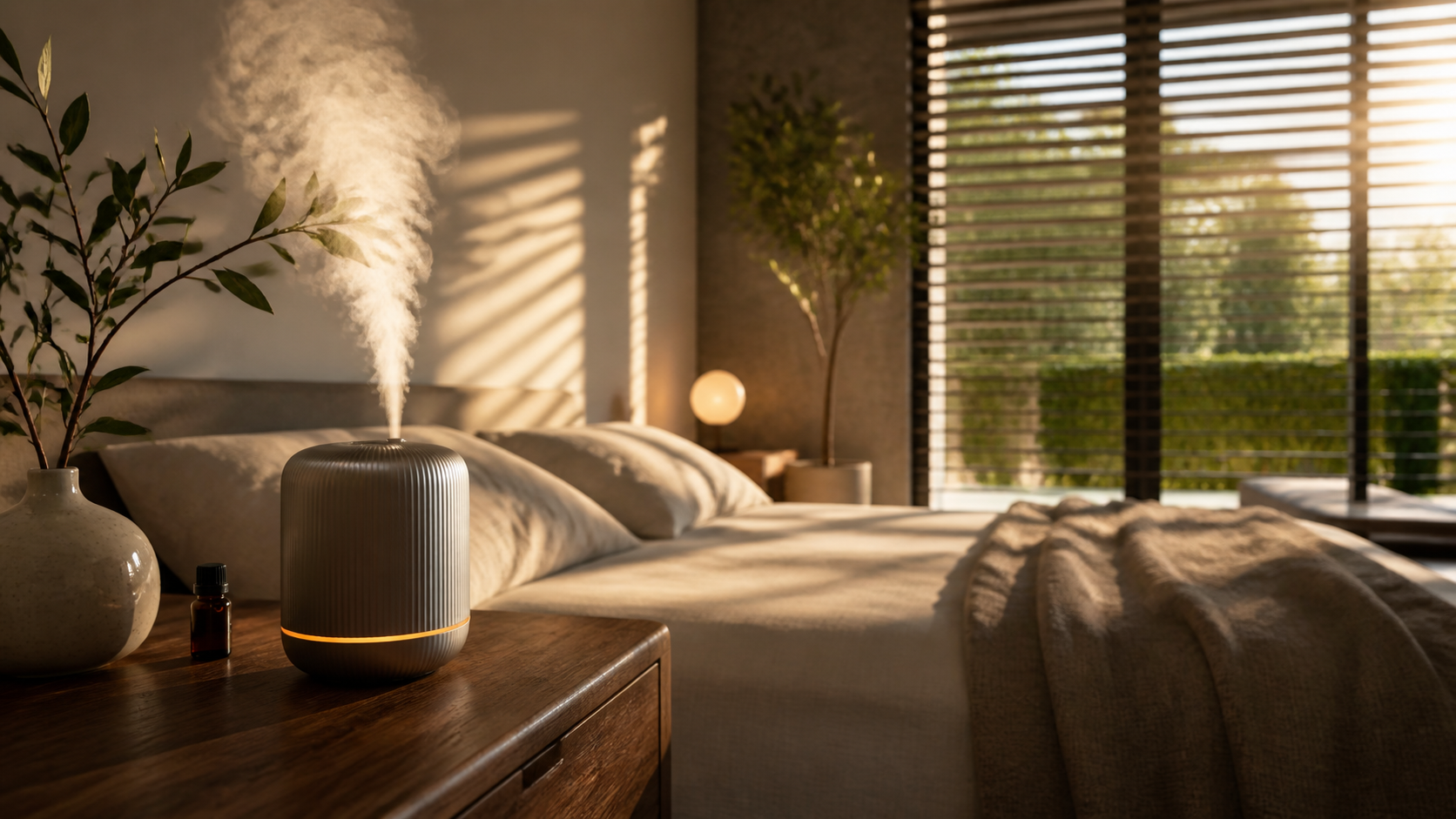
How to aroma diffuser is the kind of search phrase that looks unfinished at first glance, but the intent is clear: people want to know how to use an aroma diffuser well inside a modern home. The short answer is that a diffuser is not just a scent machine. In the right room, with the right oil and the right runtime, it becomes part of the home atmosphere, much like lighting, texture, or music.
That matters for smart homes because comfort is no longer only about automation and security. A polished home also manages mood, sound, light, and scent. The best interiors do this quietly. A diffuser on a console table, a shelf, or a bedroom dresser can soften a room in a way that feels intentional rather than decorative clutter.
What an Aroma Diffuser Actually Does
An aroma diffuser breaks essential oils into a fine mist or disperses them into the air so the scent spreads across a room. Ultrasonic models use water and vibration. Nebulizing models use air pressure and no water. Heat diffusers warm the oil. For most homes, ultrasonic diffusers are the easiest starting point because they are inexpensive, simple, and quiet.
The diffuser itself does not improve indoor air quality in the way an air purifier does. It changes the atmosphere of a room through scent. That distinction matters. People often group wellness devices together, but a diffuser, purifier, and humidifier are not the same product. One scents a space. One filters it. One adds moisture.
Best Places to Put One
Placement changes the result more than most buyers expect. Put a diffuser where air can move gently around it, not in a cramped corner where scent stalls. A living room sideboard, a bedroom dresser, or a bathroom shelf can all work. If the room is open plan, place it closer to the zone where people actually sit, not at the far edge of the space.
Interior designers usually favor stable, low visual zones. That means a flat tray, a ceramic base, or a wood surface with enough negative space around it. Do not crowd the diffuser with candles, storage bowls, and random accessories. It should read as a single object, not part of a visual pile.
Starter Diffusers and Real Prices
You do not need a pricey unit to begin. Good starter models are easy to find at Amazon, Target, Walmart, and wellness retailers. Here is a simple comparison.
| Model | Typical price | Best for | Why people buy it |
|---|---|---|---|
| ASAKUKI 500ml Ultrasonic Diffuser | About $24.99 | Living rooms and bedrooms | Large water tank and long runtime |
| Vitruvi Stone Diffuser | About $123 | Design-first spaces | Looks like decor instead of a gadget |
| Canopy Aroma Diffuser | About $90 | Minimal bedrooms | Simple profile and easy cleaning |
| Muji Ultrasonic Aroma Diffuser | About $59.90 | Small rooms | Quiet, compact, and restrained visually |
The most obvious split is between budget and design-forward units. If the diffuser is going in a guest room or office, a lower-cost model is fine. If it sits in a living room that already uses stone, oak, linen, and warm neutrals, the Vitruvi-style approach often looks better because the object itself feels more considered.
How Long Should You Run It?
Shorter sessions are usually better than running a diffuser all day. A common approach is 15 to 30 minutes on, then a pause. This keeps the scent present without overwhelming the room. In bedrooms, a pre-sleep session often works better than continuous overnight use. In living rooms, use it before guests arrive or during a quiet evening rather than blasting fragrance nonstop.
A lot of people make the same mistake with scent that they make with lighting: they set it too high and then adapt to the mistake. The room should smell pleasant, not like a candle store after closing time.
Best Oils for Different Rooms
Not every scent belongs everywhere. Bedrooms usually do better with lavender, chamomile, cedarwood, or a light bergamot blend. Living rooms can take citrus, eucalyptus, or cedar. Bathrooms handle eucalyptus or mint well because the scent reads clean rather than sweet. Offices do best with something restrained, such as rosemary or a soft citrus blend, because the goal is alertness without distraction.
Use high-quality essential oils from brands that disclose ingredients clearly. Look at places like Vitruvi, Plant Therapy, NOW Foods, and Rocky Mountain Oils if you want broad retail availability and simple labeling. The specific bottle matters less than the consistency of the brand and how strong the oil is at low dosage.
How a Diffuser Fits Into a Smart Home
Aroma diffusers are not the obvious core of a smart home system, but they fit well in a broader comfort setup. If you already use smart lighting, smart plugs, and a bedroom scene, a diffuser can sit inside that routine. For example, a bedtime scene can dim lights, lower the thermostat, and switch on the diffuser for 20 minutes.
That simple pairing gives the room a signature feel. It is not about spectacle. It is about making a space feel ready when you arrive. A good smart home should not only react to alarms and motion. It should also make ordinary evenings nicer.
What to Look For Before Buying
Buy a diffuser with a tank size that matches the room. Small tanks are fine for a desk or bathroom. Larger tanks make sense for living rooms and bedrooms. Check runtime, auto shutoff, noise level, and how easy the reservoir is to clean. A diffuser that is hard to wipe out will not stay pleasant for long.
Style matters too. A diffuser should match the room’s finishes. White ceramic suits soft modern interiors. Stone-like finishes work in Japandi or minimalist rooms. Darker matte shells can disappear nicely on walnut shelving. If your home is already visually busy, keep the diffuser simple.
Comparison: Diffuser vs Humidifier vs Air Purifier
| Device | Main job | Best use |
|---|---|---|
| Aroma diffuser | Adds fragrance to a room | Atmosphere, relaxation, hosting |
| Humidifier | Adds moisture to the air | Dry winter bedrooms and nurseries |
| Air purifier | Filters particles from the air | Allergies, dust, pet dander, smoke |
That table is the easiest way to avoid buying the wrong device for the wrong outcome. A diffuser makes a room smell better. It does not replace filtration or humidity control. The best homes often use all three, but each one has a different job.
Quotable Take
“A diffuser is less about fragrance and more about finishing a room.” That is the right way to think about it. In the same way a lamp changes the mood of a corner, a diffuser can make a room feel more intentional without demanding attention.
Simple Routine for First-Time Users
Start with water at the fill line, add two to five drops of oil, and run the device for a short session. If the scent is too subtle, increase the oil gradually rather than dumping in a large amount at once. Clean the tank regularly so oils do not build up and turn stale.
For households with pets, children, or fragrance sensitivities, be more cautious. Some oils are not appropriate for every home, and strong scent can be tiring. Good taste in home fragrance is usually about restraint.
FAQ
How to aroma diffuser if I want a stronger scent?
Use a larger room, a better oil, or a slightly longer cycle before increasing the number of drops.
Can I leave a diffuser on all night?
Technically yes for some models, but shorter cycles are usually better for comfort and cleanliness.
Where should I buy one?
Amazon has the widest range, but Vitruvi, Canopy, and Muji are worth checking if design matters.
Is it a smart home device?
Not by itself, but it becomes part of a smart home when paired with plugs, timers, or scenes.
Bottom Line
If you came here wondering how to aroma diffuser, the practical answer is simple: pick the right room, choose a model that fits the space, use a modest amount of oil, and run it in short sessions. Treated that way, a diffuser is not just a scented gadget. It is one more tool for making a room feel finished, calm, and lived in.