
How do smart sprinkler controllers work? In the simplest terms, they replace a fixed watering timer with software that can respond to weather, zone needs, and schedule changes. A smart sprinkler controller still turns valves on and off. The difference is that it can skip a cycle when rain is coming, shorten a run after cooler days, and keep separate schedules for lawn, beds, and drip lines without forcing you to reprogram the whole box every week.
That makes the category more useful than it first sounds. Many people only think about irrigation when the lawn turns patchy or the water bill climbs. A better controller can reduce both problems. It should not demand daily attention. It should quietly handle routine watering and get out of the way.
One irrigation contractor described the ideal setup this way: “The best controller is the one you forget about until you open the app and realize it already made the right decision.” That is a good test for how do smart sprinkler controllers work in a real home. If the software keeps asking for intervention, it is not saving time.
Standalone definition
A smart sprinkler controller is an irrigation timer with Wi-Fi, app control, and weather-aware scheduling. It usually connects to your existing valve wiring, then lets you manage zones from a phone or tablet. Better units use local weather data, rain skips, and seasonal adjustments. The result is more consistent watering with less waste.
The short answer
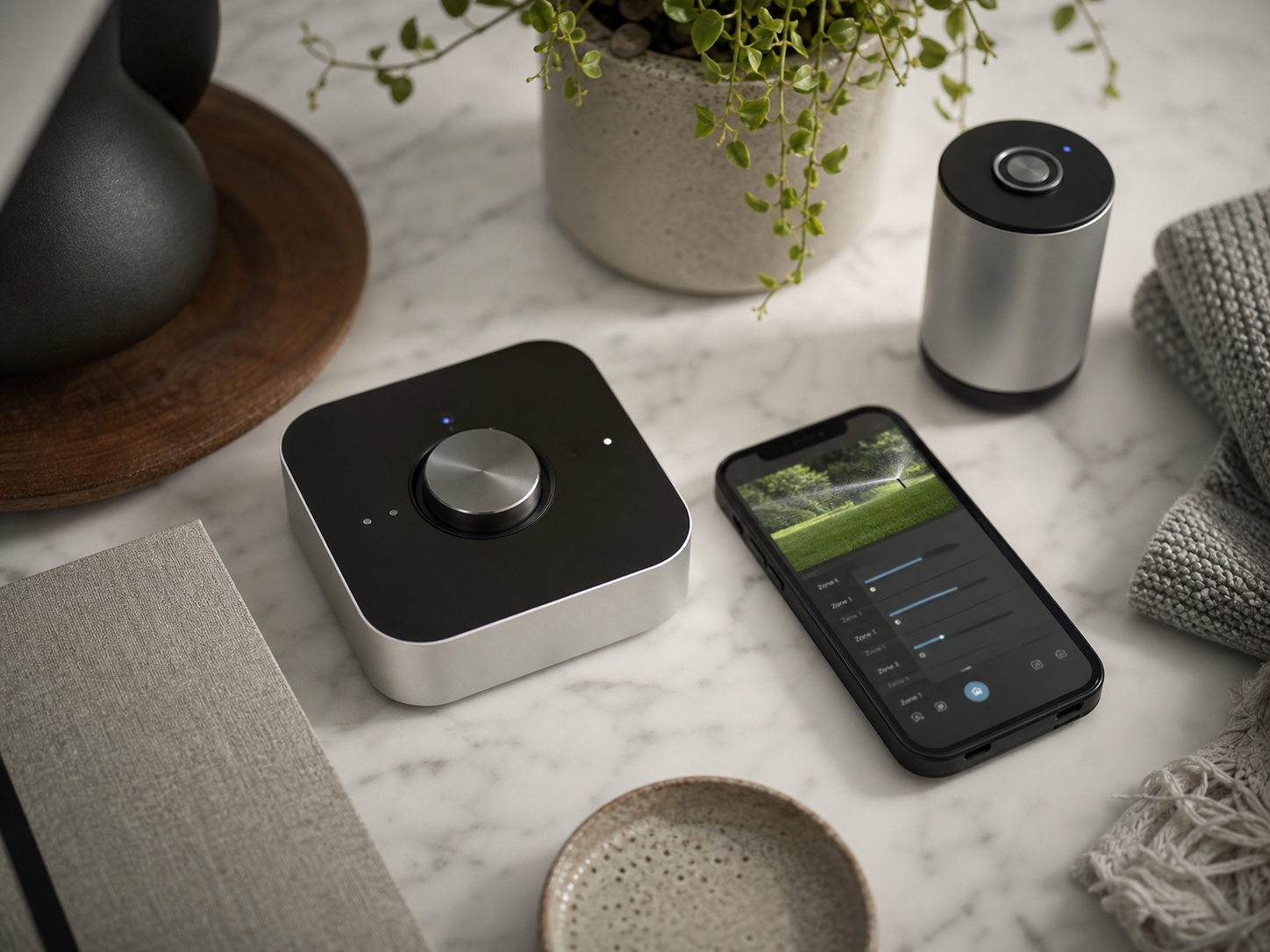
If you want the easiest answer to how do smart sprinkler controllers work in practice, start with Rachio. It is the reference model for clear app design and weather logic. Orbit B-Hyve is the budget route. Rain Bird stays close to dependable hardware. Hunter Hydrawise is the more technical, higher-control option. Eve Aqua works for small hose-based setups rather than full multi-zone systems.
Top picks at a glance
| Pick | Best for | Typical price | Where to buy |
|---|---|---|---|
| Rachio 3 | Best overall smart watering | $179 to $279 | Rachio.com, Home Depot, Amazon |
| Orbit B-Hyve | Budget-friendly control | $99 to $199 | Amazon, Lowe’s, OrbitOnline |
| Rain Bird ST8i-WIFI | Reliable zone management | $129 to $229 | Home Depot, Amazon |
| Hunter Hydrawise | Pro-style flexibility | $199 to $399 | HunterIndustries.com, irrigation dealers |
| Eve Aqua | Small gardens and hose zones | $99 to $129 | Apple Store, Amazon |
1. Rachio 3
Rachio remains the easiest answer for most homeowners asking how do smart sprinkler controllers work well in a normal house. The app is clear, the zone controls are easy to understand, and the weather logic is the main reason people buy it. A typical Rachio 3 setup sells around $179 to $279 depending on zone count and retailer. You will see it at Home Depot, Amazon, and direct from Rachio.
What makes it stand out is not flashy software. It is the confidence that the controller can skip a watering cycle because a storm is expected, then resume without you babysitting the schedule. That makes it strong for first-time buyers and anyone who wants a controller they can explain to a spouse or house sitter in under a minute.
Why it is easy to live with
Rachio is good at making the system readable. Each zone has a clear schedule, seasonal adjustments are easy to find, and the skip logic is presented in normal language. When a product answers how do smart sprinkler controllers work without extra reading, that is a real advantage.
2. Orbit B-Hyve
Orbit B-Hyve is the value option. It often sells between $99 and $199 through Amazon, Lowe’s, and Orbit’s own storefront. The hardware is straightforward, and the app gives you the core features most buyers need: weather-based skips, zone scheduling, and remote control.
If you only need a practical upgrade from a basic timer, Orbit is easy to justify. It is the sort of device that makes smart irrigation feel less like a luxury purchase and more like a sensible utility upgrade. For a starter home or smaller yard, that is enough.
Where Orbit fits best
Orbit works well when your main goal is to answer how do smart sprinkler controllers work without spending premium money. The experience is not as polished as Rachio, but it handles the job and keeps the setup cost down.
3. Rain Bird ST8i-WIFI
Rain Bird is a dependable middle ground. The ST8i-WIFI often sells for $129 to $229 at Home Depot and Amazon. Buyers who already trust Rain Bird valves and heads usually find the controller familiar and practical. It does the job without demanding a lot of software attention.
That matters in a mechanical category. Irrigation is one of those home systems where boring is useful. A controller that holds schedules, responds to weather, and keeps the zones consistent can be better than a slicker app if you mainly want reliability.
4. Hunter Hydrawise
Hunter Hydrawise is the more advanced choice. Pricing often lands in the $199 to $399 range depending on zone count and dealer configuration. Hunter sells through irrigation dealers and specialty retailers, which makes it feel a little more pro-grade than the mass-market options.
Hydrawise matters if the yard has mixed sun exposure, multiple plant types, or a more complex watering map. When people ask how do smart sprinkler controllers work on larger properties, this is the kind of answer they usually need. You get more control, but you also get more settings to understand.
Best use case
Use Hunter when you want tighter tuning rather than the easiest app. It is the better answer for larger homes, mixed irrigation needs, and buyers who are comfortable spending a little more for control.
5. Eve Aqua
Eve Aqua is not a full replacement for a multi-zone irrigation panel. It is a smart hose timer for smaller watering tasks, and that distinction matters. It typically sells for $99 to $129 through the Apple Store and Amazon. For planters, terrace beds, or a small yard with a single watering circuit, it can be the neatest answer in the room.
Eve Aqua is useful because not every homeowner needs the same version of smart watering. A smart sprinkler controller can be full-panel infrastructure or a simple hose-based device. The right choice is the one that matches the actual size of the job.
How the software makes decisions
To understand how do smart sprinkler controllers work, think of three layers. The first layer is the schedule you create. The second layer is the weather or seasonal logic that modifies that schedule. The third layer is the manual override, which lets you pause, resume, or fine-tune zones from the app. Better units stack those layers cleanly so you can see what was changed and why.
That structure is why smart controllers save water. They are not magic. They simply stop rigid schedules from watering when conditions do not justify it. That alone can trim waste enough to matter over a season.
Comparison table
| Model | Zone support | Weather logic | App quality | Best fit |
|---|---|---|---|---|
| Rachio 3 | Strong | Excellent | Best in class | Most homeowners |
| Orbit B-Hyve | Good | Good | Solid | Budget buyers |
| Rain Bird ST8i-WIFI | Good | Good | Practical | Reliable everyday use |
| Hunter Hydrawise | Very strong | Very strong | Technical but useful | Larger or mixed yards |
| Eve Aqua | Single zone | Basic | Clean | Small gardens |
Installation checks
Before you buy, count zones carefully. If the current timer handles six zones but you expect to add more later, do not buy the smallest controller available. Check the Wi-Fi signal in the utility closet or garage, because weak signal causes more annoyance than bad marketing ever will. Confirm whether your current wiring is labeled cleanly, because that is what separates an easy swap from a long afternoon.
If the box is already mounted and the valve wires are tidy, a controller swap can be a straightforward DIY project. If the panel is cramped, unlabeled, or tied to older outdoor hardware, a quick electrician or irrigation tech visit is worth the cost.
Where to buy
Rachio and Hunter are strongest direct or through specialty channels. Orbit and Rain Bird are easier to find at Amazon, Home Depot, and Lowe’s. For Eve Aqua, the Apple Store is the cleanest retail source. Buying from a known retailer matters because the wiring fit and zone count need to match the box you actually bring home.
Editor note
Editor’s note: this guide is built from current product listings, published specs, app feature sets, and standard install patterns. The comparison focuses on how do smart sprinkler controllers work in real homes, not on lab claims that only matter in a brochure. That keeps the buying advice practical for readers who want a working system rather than a spec sheet.
Q&A
Are smart sprinkler controllers worth it?
Yes, if you already manage a yard, care about water use, or want less manual scheduling. The payoff is strongest when weather changes often.
Do they work in the rain?
Good models usually skip watering when rain is forecast or recently detected. That skip logic is one of the biggest reasons to upgrade.
Can I use one with drip irrigation?
Yes, if the controller and valves support that zone properly. Drip zones are often where smart scheduling pays off fastest.
Which one is easiest for a new homeowner?
Rachio is the easiest first pick for most people. Orbit is the budget-friendly fallback.
How do smart sprinkler controllers work if Wi-Fi goes down?
Most will keep the last stored schedule locally and continue basic watering, but app access and remote changes may pause until the connection returns.
Bottom line
How do smart sprinkler controllers work? They replace fixed irrigation timers with weather-aware software that can adjust watering in response to the yard and the forecast. For most homes, Rachio 3 is the best overall pick. Orbit B-Hyve is the value option. Rain Bird is the reliable middle ground. Hunter Hydrawise is stronger for more complex yards. Eve Aqua is the compact answer for smaller watering jobs.
If you want one takeaway, make it this: the best smart sprinkler controller is the one that matches your zones, your wiring, and the amount of attention you actually want to give the lawn.