
What Is Smart Ceiling Fan Technology? A Designer’s Guide to Quiet Connected Airflow
What is smart ceiling fan technology? A smart ceiling fan is a hardwired or retrofit ceiling fan that can be controlled by an app, voice assistant, schedule, wall control, remote, temperature sensor, occupancy sensor, or home automation platform. The best versions do more than turn blades on and off. They adjust speed, reverse direction by season, coordinate with air conditioning, dim an integrated LED, and look intentional in a finished room.
For design-minded homes, the question is not only whether a fan connects to Wi-Fi. It is whether the motor is quiet, the canopy is clean, the blade span fits the room, the finish works with the furniture, and the controls do not make guests feel as if they need a manual. In 2026, smart ceiling fan technology sits at the intersection of climate comfort, energy habits, and interior styling.
“A good smart fan should disappear into the room visually, then show its intelligence in how calmly it manages air.”
Quick Definition: Smart Ceiling Fan
A smart ceiling fan is a ceiling-mounted fan with connected controls. It may include built-in Wi-Fi, Bluetooth, RF remote control, Matter support, Apple Home, Amazon Alexa, Google Home, Samsung SmartThings, or a brand app. Some models are sold as complete smart fans, while traditional fans can be made smart with a compatible wall switch, canopy module, or bond bridge.
The key difference from a standard fan is automation. A regular fan waits for a person to pull a chain or press a wall switch. A smart fan can run at 20 percent overnight, pause when a room is empty, reverse for winter destratification, or turn on when a thermostat senses the room is getting stuffy.
How the Technology Works
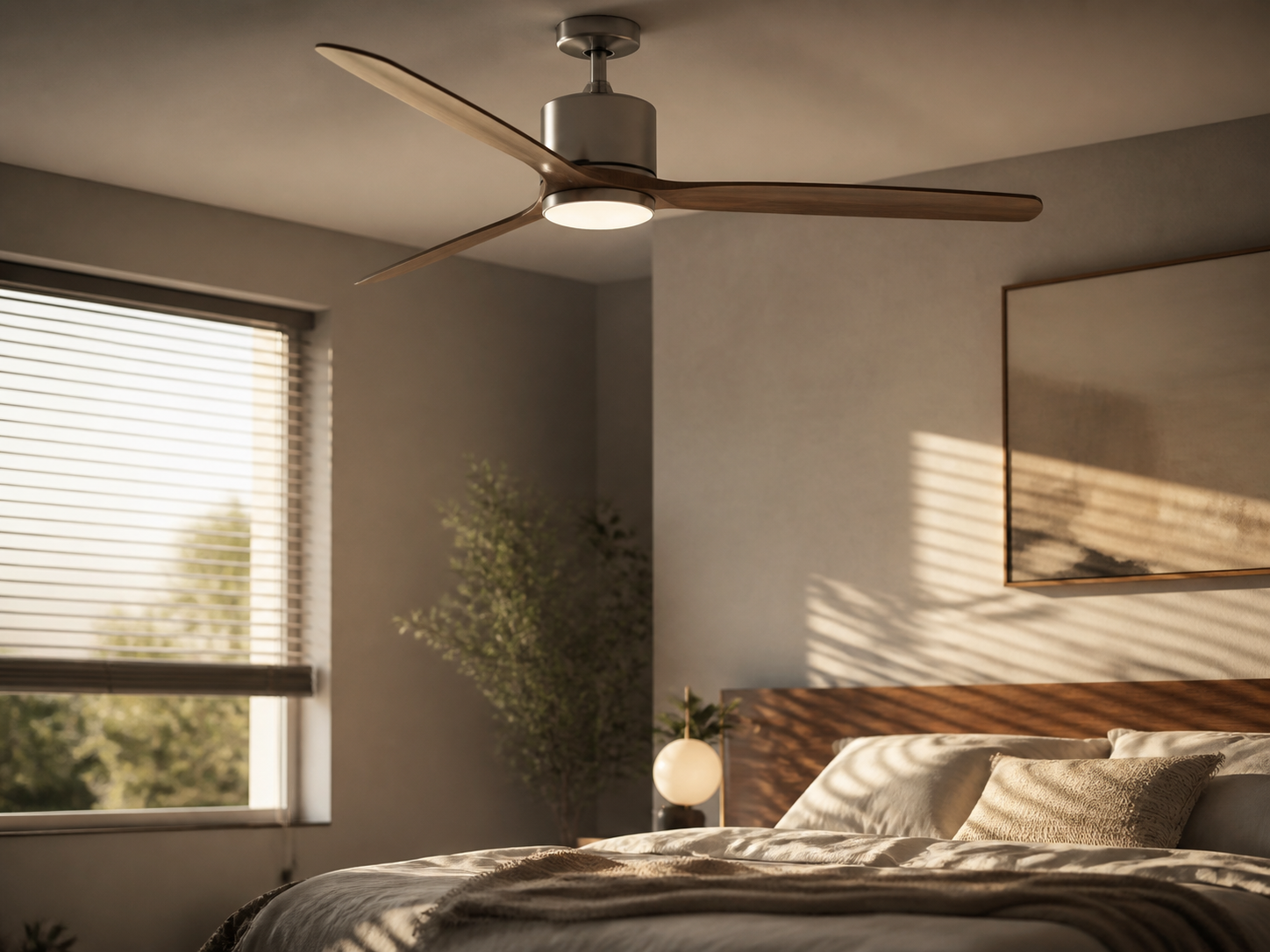
Most smart fans combine five parts: a motor, a control receiver, wireless radio, software, and a user interface. DC motor fans, common in premium models, use less electricity and tend to offer finer speed control than older AC motor designs. The receiver listens for commands from the remote, app, or wall control. The wireless radio handles Wi-Fi, Bluetooth, Zigbee, Thread, or a proprietary signal. The app manages schedules, scenes, firmware updates, and voice assistant linking.
Smart ceiling fan technology is especially useful when paired with environmental triggers. A fan can start when the room reaches 75°F, slow down after midnight, or work with an Ecobee Smart Thermostat Premium, Google Nest Learning Thermostat, or Apple Home sensor. That does not replace air conditioning, but it can make a room feel cooler at a higher thermostat setpoint.
Best Smart Ceiling Fan Products to Know in 2026
Prices change often, but these are realistic street-price ranges and buying channels as of 2026.
| Model | Typical price | Best for | Where to buy | Design note |
|---|---|---|---|---|
| Big Ass Fans Haiku L, 52 inch | $849 to $1,099 | Quiet premium rooms | Big Ass Fans, Amazon, authorized dealers | Sculptural blades, excellent motor polish |
| Modern Forms Wynd, 52 inch | $399 to $599 | Contemporary bedrooms and offices | Lumens, Build.com, Home Depot | Slim housing and matte finishes |
| Hunter Aerodyne, 52 inch | $179 to $249 | Budget smart bedrooms | Home Depot, Lowe’s, Amazon | Traditional silhouette with app controls |
| Carro Aspen or Striver smart fan | $179 to $329 | Affordable Wi-Fi installs | Home Depot, Amazon, Carro USA | Good value, broad style range |
| Atomi Smart Ceiling Fan | $199 to $299 | Simple app and voice control | Atomi, Costco when stocked, Amazon | Clean enough for rentals and family rooms |
| Bond Bridge with existing RF fan | $99 to $119 | Making old fans app-controlled | Amazon, Bond, Best Buy | No visible design change |
Built-In Smart Fan vs Retrofit Controller
A built-in smart fan is the neatest path if you are already replacing the fixture. You get a matched motor, receiver, light kit, remote, and app. The downside is cost and brand lock-in. If the app gets abandoned, the fan still usually works with the remote, but some features may feel dated.
A retrofit controller is better when the fan already looks good. Bond Bridge, for example, learns many RF remote commands and turns them into app and voice actions. Lutron Caséta Fan Speed Control, usually around $65 to $75, is another strong option for compatible single-pole fan circuits, though it controls fan speed rather than every brand-specific feature. Treat retrofit gear as electrical hardware, not a decorative afterthought: compatibility matters.
Design Rules: Size, Finish, and Placement
Smart ceiling fan technology only feels premium when the fan fits the room. For bedrooms under 100 square feet, a 44 inch fan often looks better than a huge 60 inch model. For rooms around 150 to 225 square feet, 52 inches is the practical sweet spot. Great rooms may need 60 to 72 inches, but blade sweep should still clear cabinets, tall beds, and pendant lights.
Finish is the visual tell. Matte white fades into white ceilings and Scandinavian interiors. Matte black works with black window frames, dark hardware, and industrial shelving. Brushed nickel is safe but can feel builder-grade if every other metal in the room is warmer. Wood-tone blades soften tech-heavy spaces, especially when paired with oak desks, cane chairs, linen bedding, or travertine tables.
What Smart Features Are Actually Useful?
- Schedules: Run low at night, off in the morning, and higher during late afternoon heat.
- Voice control: Useful in bedrooms, nurseries, and kitchens when hands are full.
- Seasonal reverse: Push warm air down in winter without climbing a ladder.
- Thermostat coordination: Pair with Ecobee, Nest, or Home Assistant to reduce AC overuse.
- Dimmable light: Helpful if the fan is the room’s main fixture, but check color temperature before buying.
- Scene control: Combine fan speed, lamps, blinds, and temperature for sleep or movie modes.
The least useful feature is usually a flashy app screen. The best setup is boring in daily use: a wall control for guests, voice for quick changes, and automation in the background.
Energy and Comfort Math
A ceiling fan does not lower room temperature. It cools people by moving air across skin. That distinction matters. Running a fan in an empty room wastes electricity, even if the motor is efficient. The savings come when air movement lets you raise the thermostat by 2°F to 4°F while feeling comfortable.
Many DC motor fans draw roughly 3 to 35 watts depending on speed, while older AC fans can use far more at high speed. If a smart fan helps you run air conditioning less aggressively, the payoff can be real. If it spins all day in an empty room because the schedule is sloppy, the smart label is doing nothing.
Installation Notes Before You Buy
Most smart ceiling fans need a fan-rated electrical box, secure mounting, correct wire connections, and enough ceiling clearance. If your current fixture is only a light, do not assume the box can hold a moving fan. For low ceilings, look for hugger or flush-mount designs. For sloped ceilings, check the maximum slope angle and downrod requirements.
Also check the wall switch situation. Some smart fans require the wall switch to stay on while control moves to the app or remote. Others support a dedicated smart wall control. If a household member hates app-only devices, choose a fan with a real wall keypad or remote dock. That single choice can prevent years of small irritation.
Comparison: Which Route Should You Choose?
| Situation | Best choice | Why | Budget |
|---|---|---|---|
| You are remodeling a bedroom | Modern Forms Wynd or Hunter Aerodyne | Clean look, built-in smart controls | $179 to $599 |
| You want the quietest design piece | Big Ass Fans Haiku L | Premium motor feel and strong styling | $849+ |
| You like your current fan | Bond Bridge or Lutron fan control | Keeps the fixture and adds control | $65 to $119 |
| You rent or may move soon | Budget smart fan with remote, or no hardwired change | Lower sunk cost | $150 to $300 |
| You use Apple Home heavily | Matter-ready control path or Homebridge-compatible option | Better automation fit | Varies |
Where to Buy
Home Depot and Lowe’s are easiest for Hunter, Carro, Hampton Bay, and installation-friendly returns. Amazon is useful for Bond Bridge, Atomi, and price checks, but verify seller reputation. Lumens, Build.com, and YLighting are better for design-led brands such as Modern Forms and premium finishes. Costco occasionally has strong Atomi or Hunter deals, though inventory can be seasonal.
Common Mistakes
- Buying a fan too large for the room because the spec sheet looks impressive.
- Ignoring the light temperature, then living with a harsh blue-white bedroom fixture.
- Choosing app-only control for a guest room.
- Installing on a light-rated box instead of a fan-rated box.
- Assuming every smart fan works perfectly with every voice assistant.
Q&A
Do smart ceiling fans work without Wi-Fi?
Usually, yes. Most still work with a remote or wall control. Wi-Fi is needed for app control, voice commands, remote access, and cloud-based automations.
Can a smart ceiling fan lower my energy bill?
It can help if you raise the thermostat and use the fan only when people are in the room. The fan itself does not cool the air.
Is a DC motor worth paying for?
Often, yes. DC motors are usually quieter, more efficient, and better at low-speed comfort. They are especially nice in bedrooms.
Can I make an old ceiling fan smart?
Often. A Bond Bridge can control many RF remote fans, and some wall controls can manage fan speed. Check wiring, remote type, and whether the fan has separate light and motor controls.
What is the best smart ceiling fan technology for most homes?
For most people, the best mix is a quiet DC motor fan with app control, a physical remote or wall control, dimmable warm light, and compatibility with the voice assistant already used at home.
Bottom Line
Smart ceiling fan technology is worth it when it improves comfort without adding daily friction. Buy for motor quality, correct size, physical controls, and room style before chasing app features. A good model should look like furniture, behave like climate equipment, and need very little attention after the first week.