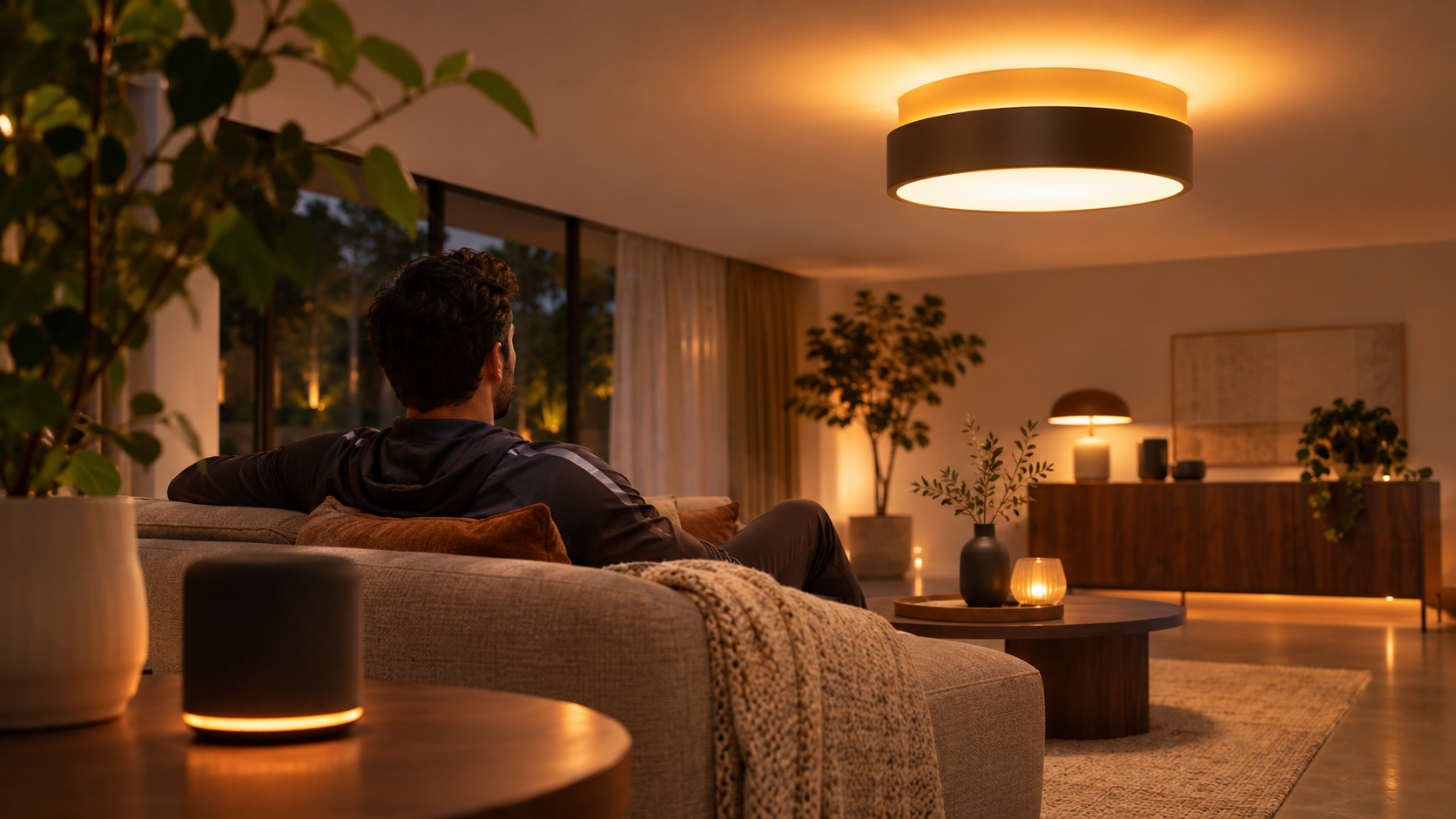
Ceiling lights with separate uplight and downlight are designed to direct light in two distinct directions: upward toward the ceiling and downward toward the room, furniture, or work surface. This simple division gives homeowners more control over brightness, atmosphere, and visual comfort than a conventional single-direction ceiling fixture.
In a smart home, the two light sources can often be controlled independently through separate switches, dimmers, scenes, sensors, or a connected lighting platform. The uplight can provide a soft layer of ambient illumination, while the downlight can support tasks such as reading, cooking, working, or dressing. Used together, they can make a room feel brighter and more balanced without relying on one intense overhead beam.
What Are Ceiling Lights With Separate Uplight and Downlight?
Ceiling lights with separate uplight and downlight contain two independently controlled light directions within one fixture. The uplight usually sends light toward the ceiling, where it reflects back into the room. This creates indirect illumination with softer shadows. The downlight sends light directly below the fitting and is generally used for functional or task lighting.
The word separate can describe different hardware arrangements. Some fixtures use two independently wired circuits connected to separate wall switches. Others include two dimming channels controlled by a remote, app, or smart-home hub. In more advanced products, the uplight and downlight may also support different colour temperatures or colours, although this should be verified before purchase.
This arrangement is different from a ceiling fixture that merely has a decorative upper glow. For a truly flexible setup, the uplight and downlight should be separately controllable, dimmable, or both. Check the installation instructions and control requirements rather than relying only on product photographs.
Why Two Light Directions Matter
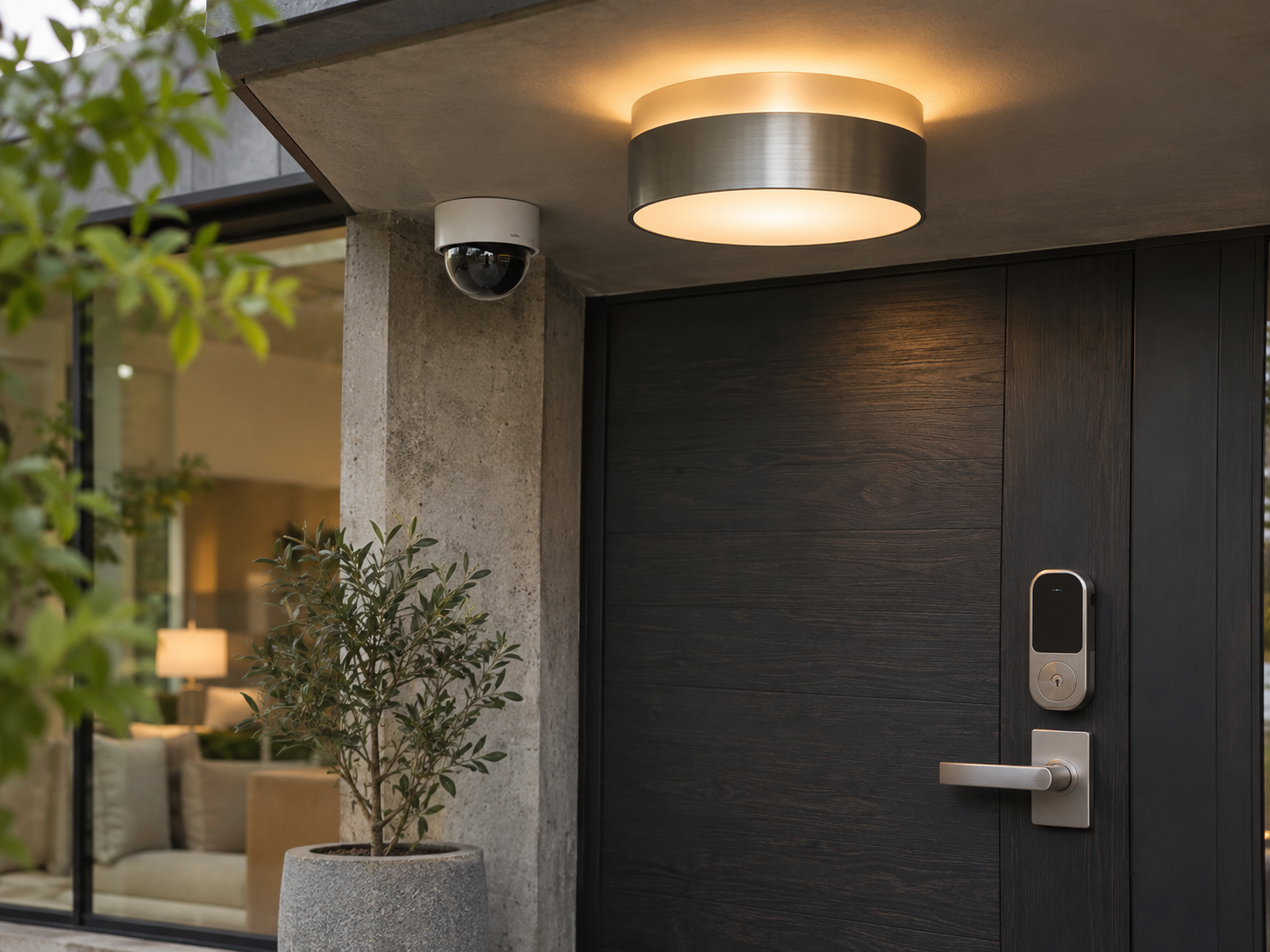
Lighting affects how people use and perceive a space. A single bright ceiling source can illuminate a room, but it may also create hard shadows, glare, and a flat appearance. Separate uplight and downlight gives you the option to layer illumination according to the activity and time of day.
Uplight for atmosphere
Uplight is useful when the room needs a calmer background level of illumination. Light reflected from a pale ceiling can soften contrast and make walls, furniture, and artwork easier to read visually. It can be useful in living rooms, bedrooms, hallways, and dining areas where full task brightness is not always necessary.
Its effect depends heavily on the ceiling surface. A light-coloured, matte ceiling generally reflects light more evenly than a dark, textured, or glossy surface. Ceiling height also matters: a high ceiling may require more output to create a noticeable effect, while a low ceiling can make the uplight feel stronger and more immediate.
Downlight for tasks
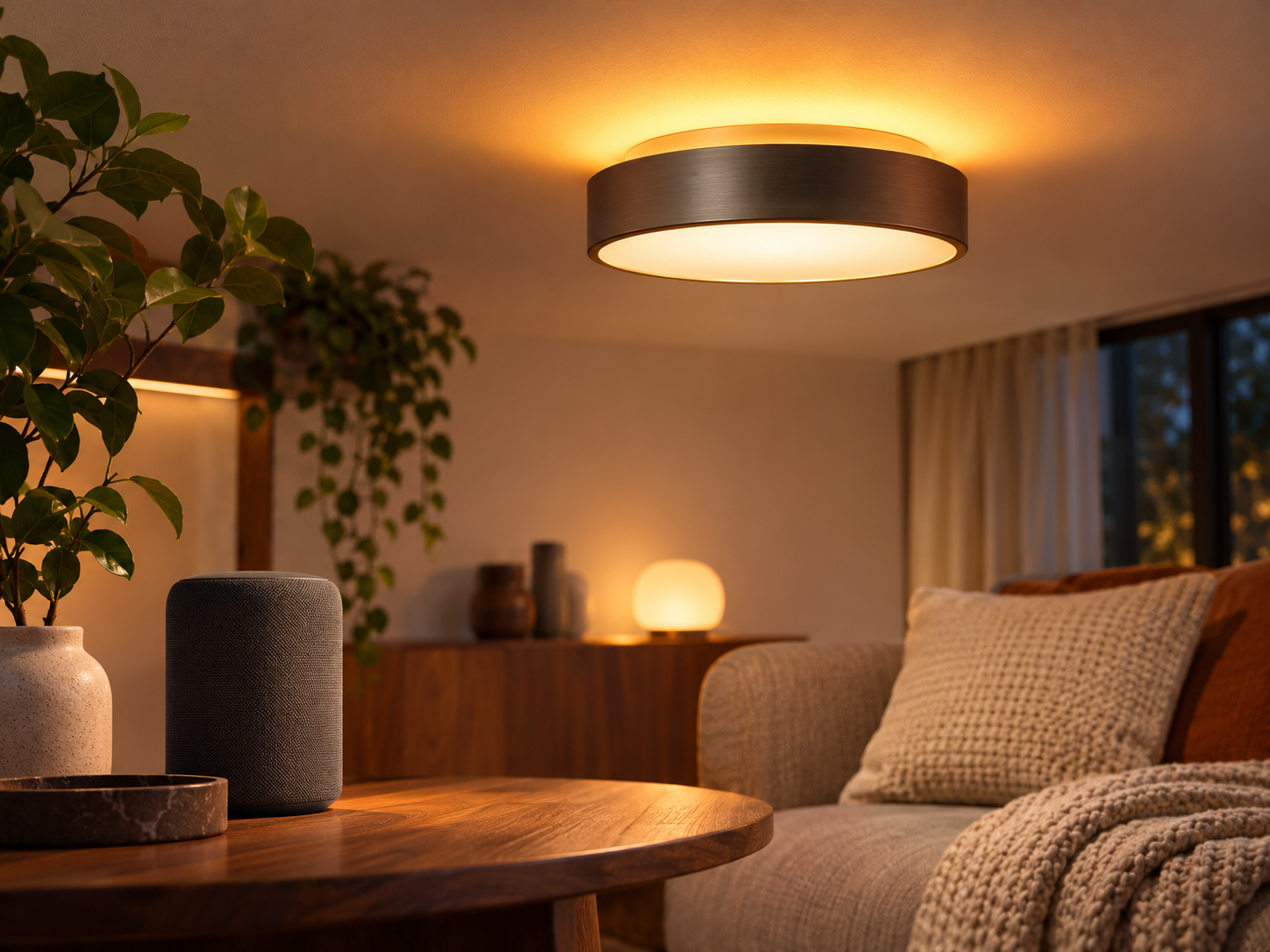
Downlight is the practical component. It can illuminate a desk, kitchen island, dining table, reading chair, wardrobe, or circulation area. The beam angle and fixture position affect whether the light is useful or produces glare. A narrow beam may highlight a specific area, while a broader beam can provide more even coverage.
Downlight should not automatically be treated as a replacement for every other light source. A home office may still benefit from a desk lamp, and a kitchen may need under-cabinet lighting to reduce shadows on worktops. A ceiling fixture works best as part of a wider lighting plan.
Smart Lighting and Atmosphere
Smart controls make the two-channel design more useful. For example, a living-room scene might set the uplight to a low level while keeping the downlight off. A cleaning scene could raise both channels. A reading scene could keep the downlight moderate and use a warmer uplight to prevent the room from feeling stark.
Look for compatibility with the smart-home system already in use. Important details include whether the light requires a proprietary bridge, supports a common wireless protocol, works with voice assistants, and remains usable from a physical wall switch. Some connected fixtures become unavailable when power is cut at the switch, while others require a permanently powered circuit and smart control at the fixture or wall-box level.
The Bluetooth SIG article on creating healthier spaces with Bluetooth networked lighting control describes how networked lighting can support flexible control, automation, and more responsive environments. It is useful background for understanding the control layer, although it should not be read as proof that any particular consumer fixture will improve health outcomes.
Lighting control can also be part of a broader atmosphere strategy. The Signify discussion of hospitality and workspace design considers how lighting, spatial planning, and user experience work together. The practical lesson for a home is that brightness, direction, glare, and context should be considered together with furniture and room layout.
Spatially aware lighting is another developing idea. In its coverage of Philips Hue SpatialAware, Stuff describes an approach that treats smart lights as spatially distributed sources. This comparison helps explain why the position and direction of several light sources can matter as much as their individual brightness. It does not mean that a two-direction ceiling fixture automatically provides the same capabilities as a multi-light spatial system.
Practical Steps for Choosing a Fixture
1. Define the room’s main activities
Start with how the room is used. A bedroom may prioritise gentle evening light and low-glare illumination. A kitchen may need stronger downward light for preparation areas. A minimalist desk setup may need a ceiling fixture that supports general visibility without creating reflections on a monitor.
Write down the activities that happen at different times rather than choosing a fixture based only on its appearance. This makes it easier to decide whether independent dimming is essential or whether separate on-and-off control will be sufficient.
2. Check the wiring and control method
Confirm whether the uplight and downlight need two switched live circuits, one circuit with an electronic controller, or a dedicated smart module. Existing wiring may limit the simplest installation route. If the property has only one switched circuit, a fixture designed for two traditional switches may not operate as intended without electrical changes.
For mains-powered installation, use a qualified electrician where local rules or the complexity of the circuit require one. Do not assume that a wireless control option eliminates electrical safety requirements.
3. Compare light quality, not only brightness
Review colour temperature, colour rendering, dimming range, flicker behaviour, beam spread, and diffuser design. A fixture with a wide dimming range may be more useful than one with a higher maximum output. Colour rendering is especially relevant in kitchens, bedrooms, wardrobes, and work areas where the appearance of food, clothing, or printed material matters.
Also consider whether the uplight and downlight use replaceable lamps or integrated LEDs. Integrated LEDs can allow a slim design, but replacement may involve changing the entire fitting if the light source or driver fails. Replaceable lamps can simplify maintenance but may create a larger or less uniform fixture.
4. Consider the ceiling and room proportions
Uplight is most predictable when the ceiling provides a reasonably even reflective surface. Dark ceilings absorb more light and can reduce the effect. Very high ceilings may make uplight less visible at lower settings. The fixture should also be positioned so that the downlight reaches the intended area without shining directly into seated users’ eyes.
In a compact room, a low-profile fixture can preserve headroom and support a minimalist interior. In a larger room, one central fitting may leave corners underlit. Additional wall, floor, or furniture lighting may produce a more balanced result than choosing one extremely bright ceiling light.
5. Build scenes around real routines
Useful scenes should reflect activities rather than novelty. Examples include arrival, cooking, focused work, evening relaxation, bedtime, and cleaning. A motion sensor might activate a low uplight in a hallway at night, while a timer could reduce bedroom downlight after a chosen hour.
Keep manual control available. A wall switch, physical remote, or local button is valuable when a phone is unavailable, a network is down, or another household member does not use the app. Voice control can be convenient, but it should be treated as an additional interface rather than the only way to operate essential lighting.
How the Fixture Fits Into a Smart Home
Ceiling lights are one part of a wider smart-living system. In a home office, lighting scenes can work alongside a smart thermostat and window coverings to support comfort without unnecessary energy use. In a bedroom, a low uplight scene can coordinate with a sleep schedule, while a separate reading lamp provides more precise light.
Lighting should not be used to disguise poor ventilation, excessive heat, or inadequate daylight. Home wellness also depends on air quality, temperature, noise, and the suitability of the room for its purpose. An air purifier can address particulate filtration, for example, while lighting only changes visual conditions. These systems can coexist, but they solve different problems.
In kitchens, downlight can support food preparation, while under-cabinet lighting reduces shadows on work surfaces. Smart appliances and kitchen organisation may improve workflow, but they do not remove the need for safe visibility around knives, hot surfaces, and spills. In cleaning routines, brighter downlight can help reveal dust for a robot vacuum or manual cleaning pass, but it does not improve the robot’s navigation by itself.
For home security, lighting can be combined with door sensors, cameras, alarms, and presence-based automation. A sudden exterior or hallway lighting change may be useful as part of an alert routine, but a ceiling light is not a security system. Avoid relying on lighting alone to protect property or people. Review privacy settings, account security, local storage options, and network access when connecting fixtures to a home platform.
Pros and Cons
Advantages
- Flexible atmosphere: Indirect uplight can create a softer setting while downlight remains available for practical tasks.
- Efficient control: You can illuminate only the direction required instead of running both sources at full output.
- Cleaner visual design: One coordinated fixture may reduce the need for several visible fittings.
- Useful automation: Independent channels support scenes for work, relaxation, cleaning, and nighttime movement.
- Better adaptability: The same room can support different activities without changing the furniture layout.
Disadvantages
- Higher complexity: Two channels, smart controls, or a bridge can make installation and troubleshooting more involved.
- Potential compatibility limits: A fixture may not work with every dimmer, hub, voice assistant, or wireless protocol.
- Ceiling dependence: The uplight effect can be weak on dark, uneven, or very high ceilings.
- Maintenance concerns: Integrated LED fittings may require full fixture replacement if a driver or light source fails.
- Control failure risk: Network, app, or account problems can affect smart features if local controls are not provided.
Limitations and Common Mistakes
The most common mistake is treating separate uplight and downlight as a complete lighting plan. The fixture may still create shadows at walls, under cabinets, or beside furniture. Room size, ceiling reflectance, colour scheme, and furniture arrangement all influence the result.
Another limitation is that independent control does not guarantee independent colour adjustment. Some products allow separate brightness levels but use one fixed colour temperature. Others may permit colour changes only through an app or proprietary controller. Read the technical specification for channel count, dimming method, minimum load, and colour control before purchase.
Smart functionality can also become obsolete. Cloud-dependent products may lose features if a manufacturer changes its service, while older wireless standards may have limited integration with newer platforms. A product that supports local control, documented integration, and a standard electrical fallback may be easier to maintain over time.
Finally, avoid using a very bright downlight to compensate for poor placement. Glare can make a space less comfortable even when it appears well lit. Test the fitting at several brightness levels and from the positions where people will sit, stand, read, cook, or work.
Concise Q&A
Are separate uplight and downlight worth it?
They can be worthwhile when one room serves several purposes or when you want both soft ambient light and focused illumination from one fitting. The benefit is smaller if the room already has a well-designed layered lighting system.
Can I install one on an existing single-switch circuit?
Some fixtures support single-circuit operation with wireless or electronic control, while others require separate wiring. Check the manufacturer’s installation instructions and ask a qualified electrician before changing mains wiring.
Is uplight better for sleep?
Low, warm, indirect light may feel less harsh in the evening, but lighting preferences and sleep responses vary. It is not a treatment for sleep problems, and it should not be presented as a medical solution.
Can these lights replace task lamps?
Sometimes they can provide adequate general task illumination, but a dedicated desk, reading, or under-cabinet lamp may give better positioning and lower glare for detailed work.
Final Considerations
Ceiling lights with separate uplight and downlight offer a practical way to combine atmosphere and function in a single ceiling position. Their value comes from independent control, suitable placement, good light quality, and compatibility with the rest of the room rather than from smart branding alone.
Before buying, confirm the wiring, control protocol, dimming behaviour, ceiling conditions, maintenance plan, and fallback operation. Then design a small number of scenes around real household routines. Used alongside sensible furniture placement, smart thermostats, air-quality tools, security equipment, and efficient appliances, this type of fixture can support a more adaptable and comfortable smart space.
Safety and information disclaimer: Electrical installation, dimmer compatibility, and mains-powered modifications should be assessed by a qualified professional where required by local law or the installation conditions. Lighting advice is general information and is not medical, security, energy-saving, or financial advice. Product features and smart-home compatibility can change, so verify current specifications with the manufacturer before purchase.