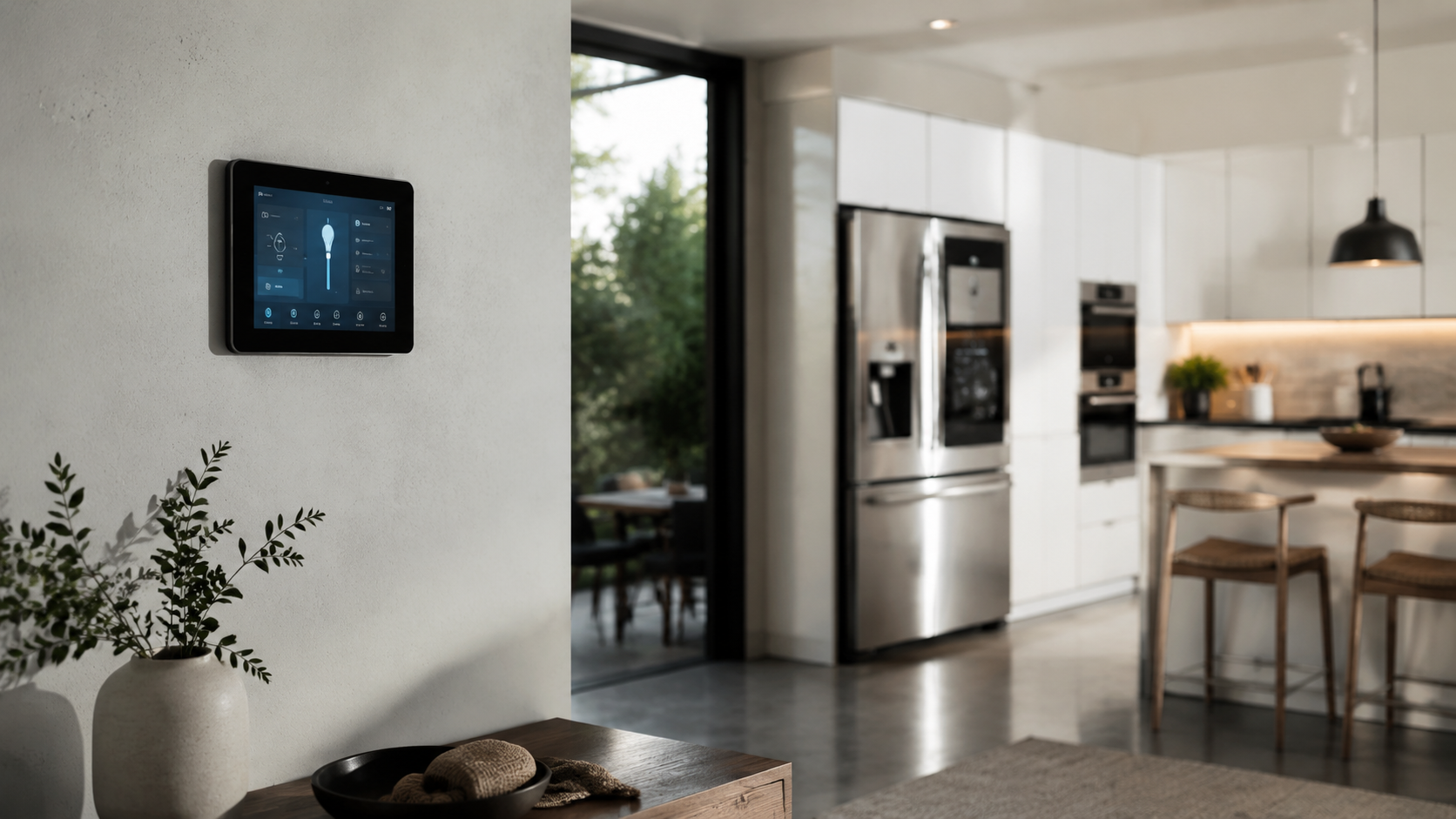
The Art and Architecture of Connected Illumination
Light is the ultimate interior design element. It has the unique power to alter the perceived size of a room, shift our mood from high productivity to deep relaxation, and accent our most valued decor choices. Yet, for over a century, our control over this vital force remained restricted to manual switches and simple dial dimmers. The rise of modern wireless technology has changed this dynamic, giving rise to systems that are both highly functional and aesthetically pleasing. Understanding how these systems work is essential for anyone looking to modernize their home.
As a design and technology journalist, I have spent years observing how technology alters our physical spaces. The shift from basic switches to advanced digital networks represents a major step forward. When we discuss smart lighting, we are not just talking about controlling lamps from a mobile application. We are talking about designing an ecosystem where light adapts to our biology, our daily schedules, and our architectural surroundings.
\n\n
What is Smart Lighting?
Smart lighting is a connected illumination system that utilizes wireless communication, software scheduling, and automated sensors to control light fixtures. Unlike traditional systems that rely on mechanical wall switches to cut power, smart lighting keeps power running to the fixture constantly, allowing users to adjust brightness, color temperature, and scheduling via voice, automation, or software applications.
\n\n
The Three Main Paths to Connected Home Lighting
When planning a modern lighting layout, homeowners typically choose between three distinct implementation paths. Each path offers specific benefits depending on budget, installation complexity, and whether the residence is a temporary rental or a permanent home.
1. The Wireless Bulb Path
Smart bulbs represent the most straightforward entry point. By replacing standard incandescent or LED bulbs with wirelessly enabled equivalents, you can establish instant control over individual light sources. This method is ideal for renters because it requires no electrical modifications. These bulbs contain onboard radio receivers that communicate directly with a home router or a dedicated bridge. Premium models offer adjustable color temperatures and millions of color options, enabling you to tune your rooms to match the natural pattern of daylight.
2. The Smart Switch and Dimmer Path
For permanent homes with extensive overhead lighting, replacing wall switches is often a superior strategy. Standard smart bulbs lose their connectivity if someone flips the physical wall switch off. By installing smart switches, you control the electrical current at the wall level. This means you can use inexpensive, standard light bulbs while retaining full digital control, scheduling, and dimming capabilities. The physical switches still function normally, ensuring that guests or family members can operate the lights without needing a smartphone or voice commands.
3. Decorative and Accent Light Strips
Accent lighting is the secret to high-end interior styling. Smart LED strips and modular wall panels allow you to wash walls with color, highlight architectural features, or add under-cabinet lighting to kitchens. Because these light strips can be cut to custom lengths and adhered to almost any surface, they offer unparalleled creative flexibility. When integrated into a broader home network, they can coordinate with your main light fixtures to create unified atmospheric scenes.
\n\n
Curated Selections for Modern Spaces
To build a reliable system, it helps to focus on proven hardware. Below are some of the most stable, design-friendly products available on the market, detailed with real pricing and trusted purchase locations.
Philips Hue White and Color Ambiance Starter Kit
For those who value color accuracy and precise control, Philips Hue is the industry benchmark. This starter kit includes several color bulbs and the Hue Bridge, which uses Zigbee wireless technology to manage your network without crowding your Wi-Fi router. The bulb produces rich, natural colors and is exceptional at rendering warm whites that mimic traditional tungsten lamps.
Price: $129.99
Where to Buy: Available directly from Philips-Hue.com, Best Buy, and Amazon.
Lutron Caséta Wireless Dimmer Starter Kit
Lutron is the choice of professional integrators. Operating on a proprietary Clear Connect radio frequency, Lutron switches are incredibly fast and never suffer from connection dropouts. This kit includes the Lutron Smart Bridge, a wall dimmer switch, and a Pico remote. It is the best choice for large open-plan living rooms with multiple overhead recessed lights.
Price: $99.95
Where to Buy: Available at Home Depot, Lowe’s, and Amazon.
Govee RGBIC LED Strip Lights M1
If you want to add indirect atmospheric lighting behind media consoles, under bed frames, or beneath kitchen counters, the Govee M1 is an outstanding option. It utilizes RGBIC technology, meaning multiple colors can be displayed on a single strip simultaneously. It connects directly via Wi-Fi and Bluetooth, making it easy to set up without a hub.
Price: $49.99
Where to Buy: Sourced from Govee.com and Amazon.
Nanoleaf Shapes Triangles Starter Kit
Nanoleaf turns lighting into physical art. These modular, touch-sensitive LED panels mount directly to your walls in custom geometric configurations. They act as bold accent pieces during the day and dynamic light sources at night, supporting custom color scenes and physical touch controls.
Price: $199.99
Where to Buy: Sourced from Apple Store, Best Buy, and Nanoleaf.me.
\n\n
Smart Lighting Systems Comparison
| System/Product | Protocol | Best Application | Price | Retailer |
|---|---|---|---|---|
| Philips Hue Starter Kit | Zigbee | Color and Mood Tuning | $129.99 | Best Buy |
| Lutron Caséta Dimmer | Clear Connect | Overhead Ceiling Lights | $99.95 | Home Depot |
| Govee M1 Light Strip | Wi-Fi & Bluetooth | Under-Cabinet & Accent | $49.99 | Amazon |
| Nanoleaf Shapes | Thread & Wi-Fi | Modular Wall Art | $199.99 | Apple Store |
\n\n
“Light is the invisible architect of interior emotion. Controlling it dynamically is no longer a luxury; it is the foundation of modern habitability.”
Marcus Thorne, Senior Lighting Designer at Atelier Thorne
“The error of the early connected home was treating lighting as an IT problem. Today, we treat it as an atmospheric design discipline.”
Helen Vance, author of The Ambient Space
\n\n
The Art of Layering: Kelvin Scales and Color Quality
To make the most of connected lights, one must understand how light temperature affects a room. Light is measured on the Kelvin scale, which dictates whether a bulb emits a warm yellow light or a cool blue glow. Traditional residential lighting typically resides at 2700K (Warm White), which creates a cozy, intimate environment suitable for living spaces and bedrooms. Office environments and kitchens often benefit from 3000K to 4000K (Neutral White), which improves alertness and focus.
Modern connected bulbs allow you to cycle through these white tones automatically. This feature is crucial for maintaining circadian rhythms. By programming your lights to start at a bright 4000K white in the morning and gradually transition to a soft 2200K amber by evening, you support your body’s natural sleep preparation. Furthermore, design-conscious individuals should seek out fixtures with a high Color Rendering Index (CRI) of 90 or above. A high CRI ensures that fabrics, paint colors, and wood grains appear natural and vibrant, preventing your home from feeling cold or commercial.
\n\n
Practical Operational Questions
Do smart bulbs consume electricity when turned off?
Yes. Because these bulbs must remain alert to receive wireless signals, they draw a tiny amount of standby power, often referred to as vampire draw. However, this is typically less than 0.5 watts per bulb, which has a negligible effect on monthly utility bills compared to the energy saved by automating your lighting schedules.
Can I use smart bulbs with traditional wall dimmers?
No. Standard wall dimmers lower the electrical voltage to control brightness. Smart bulbs require a constant, stable voltage to power their internal microchips. If you put a smart bulb on a standard dimmer circuit and lower the switch, the bulb will flicker, lose connection, or suffer permanent hardware damage. Always use smart bulbs on standard, non-dimming switches and use software or smart switches to adjust brightness.
What is the difference between Zigbee, Wi-Fi, and Thread protocols?
Wi-Fi bulbs connect directly to your home network, which is simple but can slow down your internet speed if you install dozens of bulbs. Zigbee is a low-power wireless mesh network that requires a central hub to communicate with your router, keeping your Wi-Fi free. Thread is the newest protocol, offering a fast, self-healing mesh network that integrates with modern platforms without requiring a proprietary hub.
Do I need a neutral wire to install smart wall switches?
Many modern smart switches require a neutral wire to power their wireless radios while the lights are off. However, older homes often lack neutral wires behind wall plates. Fortunately, manufacturers like Lutron offer specialized models, such as the Lutron Caséta dimmer, that operate safely without a neutral wire, making them compatible with almost any home electrical system.
\n\n
A Bright Path Forward
Connected lighting is no longer just for technology enthusiasts. It has matured into a sophisticated tool for interior design, offering a unique blend of safety, energy savings, and customizable beauty. By selecting a system that aligns with your lifestyle and dwelling type, you can dramatically improve how your rooms look and feel. Whether you begin with a simple starter kit of color-shifting bulbs or refit your entire home with high-end wall dimmers, the ability to tailor your ambient environment to your daily needs is a worthwhile upgrade for any modern home.