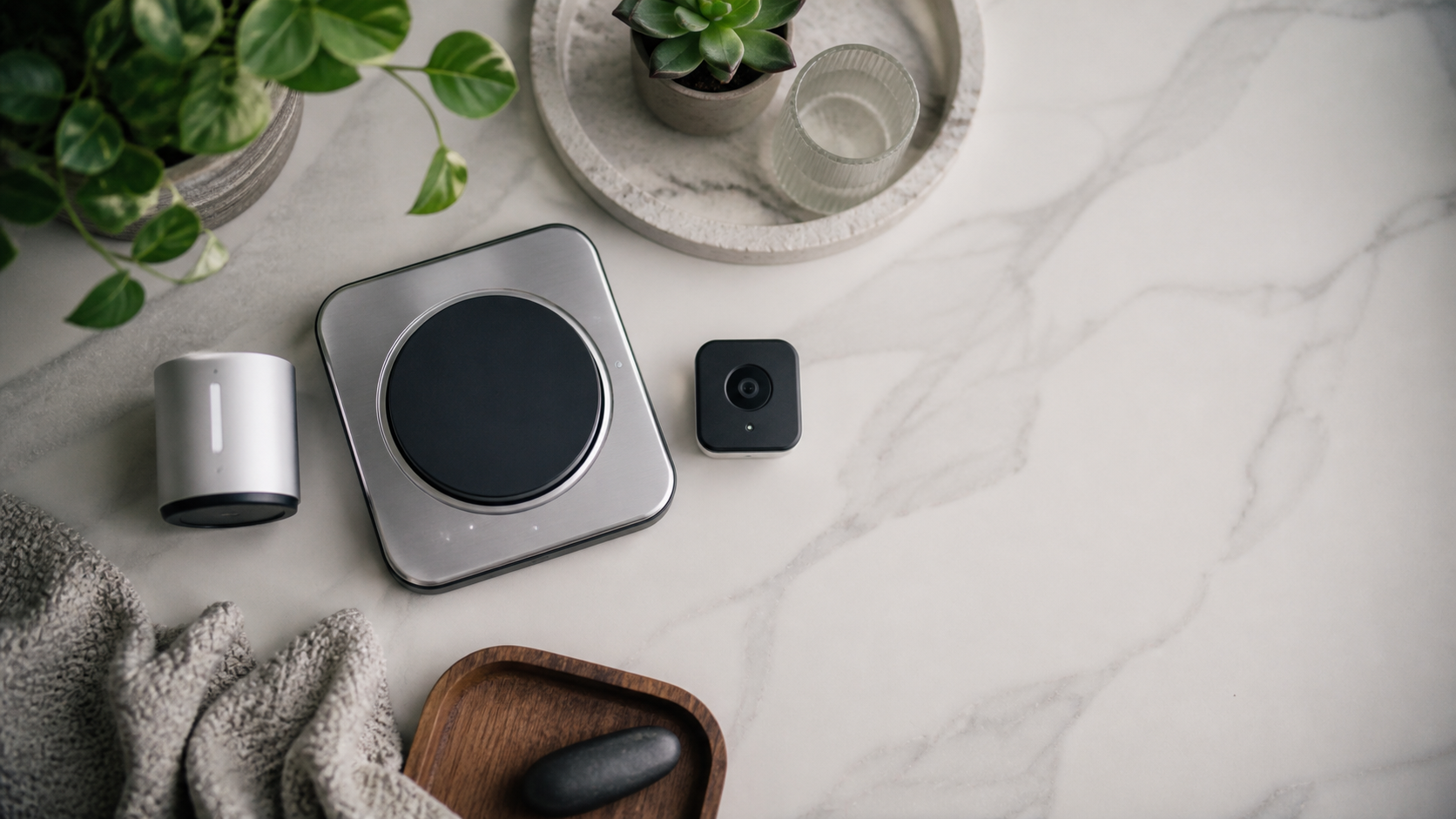
What is a smart sprinkler controller? A smart sprinkler controller is the wall-mounted or outdoor irrigation timer that replaces an old dial controller and uses Wi-Fi, local weather data, soil inputs, app schedules, and zone-by-zone rules to decide when your lawn, planters, or drip lines should run. In plain design terms, it is the thermostat of the yard: quiet, usually hidden in a garage or utility closet, but responsible for whether the garden looks cared for or overwatered.
The category has matured fast because it solves two different household problems at once. First, it cuts waste by skipping watering before rain, during freeze warnings, or after a zone has already had enough moisture. Second, it makes irrigation less mysterious. A homeowner can name zones as “front olive tree bed” or “north lawn, shade” instead of guessing which numbered wire controls which part of the property.
“A good smart sprinkler controller should disappear visually, but its schedule should feel edited by someone who knows the garden.”
Definition: smart sprinkler controller
A smart sprinkler controller is an internet-connected irrigation controller that opens and closes sprinkler valves according to programmable schedules, local weather, plant type, soil type, sun exposure, slope, and municipal watering rules. Put another way, a smart sprinkler controller turns a fixed sprinkler timer into a zone-aware watering manager. Most models connect to existing 24-volt irrigation wiring, so they usually replace a traditional Rain Bird, Hunter, Orbit, or Toro timer without requiring new underground plumbing.
The key word is controller. It does not push water by itself. It tells each irrigation valve when to open. If your home already has in-ground sprinklers with multiple zones, the controller is the brain. If you only have a hose bib, you need a smart hose timer instead, such as the Orbit B-hyve XD or Rachio Smart Hose Timer.
How it works in a real home
Most smart sprinkler controllers are installed where the old timer lived: garage wall, basement mechanical room, exterior cabinet, or mudroom utility panel. A smart sprinkler controller does not need to be visible to guests, but it does need enough Wi-Fi signal and clearance for service. Each zone wire goes into a labeled terminal. Once powered, the controller joins Wi-Fi and the app walks you through zone names, plant type, sprinkler head type, soil, shade, and preferred watering windows.
After setup, the controller checks weather services and, on some systems, optional sensors. It can delay watering after measurable rainfall, shorten a schedule during cool weather, or add runtime during dry heat. Better apps show water history by zone, upcoming schedules, and skipped cycles. That transparency matters because irrigation can otherwise become invisible until a brown patch or soggy side yard appears.
What to buy: strong models in 2026
The strongest choice depends on wiring location, number of zones, and how much control you want. These are the models I would put on a short list for a design-conscious smart home where reliability matters as much as the app.
| Model | Typical price | Zones | Best for | Where to buy |
|---|---|---|---|---|
| Rachio 3 | $149 to $249 | 8 or 16 | Most homes that want strong weather-based scheduling | Amazon, The Home Depot, Rachio |
| Orbit B-hyve XR | $99 to $169 | 8 or 16 | Budget installs and exterior garage walls | Lowe’s, Amazon, Walmart |
| Rain Bird ARC8 | $129 to $179 | 8 | Homeowners who already trust irrigation-store brands | Rain Bird dealers, Amazon, irrigation suppliers |
| Hunter Hydrawise HC | $170 to $300+ | 6, 12, or more | Larger systems and pro-installed yards | Irrigation contractors, Sprinkler Warehouse |
| Moen Flo Smart Water Monitor plus compatible irrigation shutoff planning | $399 to $599 for main-water monitoring | Not a zone controller | Homes focused on leak awareness as well as watering discipline | Moen, Amazon, Best Buy |
Rachio 3 remains the easiest recommendation for most homeowners because the app is clean, the zone setup is understandable, and the Weather Intelligence features are simple to explain to guests or contractors. Orbit B-hyve XR is the value pick, especially when the controller sits in a hot garage or outdoor cabinet. Hunter Hydrawise is the more contractor-friendly route, particularly for big yards with complex hydrozones.
Smart controller vs old irrigation timer
| Feature | Traditional timer | Smart sprinkler controller |
|---|---|---|
| Rain delay | Manual or sensor-based | Automatic weather-based skips on many models |
| Zone names | Usually numbers only | Custom room-like labels in the app |
| Seasonal adjustment | Manual percentage changes | Weather and seasonal logic, depending on brand |
| Remote control | At the wall | Phone, tablet, and sometimes voice assistant |
| Design impact | Often a beige utility box | Still a utility device, but tidier and easier to hide |
| Best use | Simple fixed schedules | Mixed plantings, water rules, second homes, busy households |
Costs beyond the box
The controller itself is only part of the budget. A straightforward DIY replacement can cost $100 to $250 for the device and about an hour of careful work. A professional swap often lands around $200 to $500 including labor, depending on local rates and how tidy the existing wiring is. Larger systems with failed valves, missing labels, or damaged rain sensors can cost more because the installer has to diagnose the yard, not just mount a new box.
There can also be water-district rebates. Many US utilities offer $50 to $150 back for WaterSense-labeled irrigation controllers, especially in drought-prone regions. Before buying, search your city or water agency name plus “smart irrigation controller rebate.” Rachio, Orbit, Rain Bird, and Hunter models commonly appear on rebate lists, but eligibility changes by region.
Design notes: where it belongs
A smart sprinkler controller is not a showpiece, yet the installation still affects how a home feels. Mount it where it can be serviced without dominating a finished room. Garages, laundry rooms, mechanical closets, and covered exterior utility zones are ideal. If the old timer sits in a visible hallway, this is a good moment to ask an electrician or irrigation tech whether the controller can move to a cleaner location.
White and gray plastic boxes are common, so treat the controller like a breaker panel or router. Keep the wiring straight, label each zone, leave the transformer accessible, and avoid placing baskets, hooks, or garden tools where they block the faceplate. A neat installation makes future repairs easier and looks less like a rushed retrofit.
Features worth paying for
Weather skips: The controller should skip watering when rain, freeze, or strong wind makes irrigation wasteful or risky. This is the headline feature and the main reason to upgrade.
Zone-specific schedules: A sunny strip of lawn, a shaded fern bed, and a raised herb planter do not need the same runtime. Good software lets each zone behave differently.
Easy manual run: During sprinkler repairs, you should be able to turn on zone three from your phone while standing in the yard. This saves a lot of walking.
Watering rules: If your municipality allows watering only on certain days, the controller should respect that. This is especially useful in California, Arizona, Nevada, Texas, Colorado, and parts of Australia.
App sharing: Contractor access or shared household access helps when a garden technician needs to test zones without borrowing your phone.
When not to buy one
Do not buy a wall-mounted smart sprinkler controller if you do not have existing irrigation valves and wiring. A smart sprinkler controller is made for wired zone valves, not a single patio hose. Apartment balconies, container gardens, and single hose setups are better served by hose timers or self-watering planters. Also wait if your valves are failing, water pressure is poor, or sprinkler heads are badly misaligned. A smart controller cannot fix broken coverage. It will only run a bad system on a smarter schedule.
If your Wi-Fi does not reach the garage or exterior wall, solve that first with a better router placement, mesh node, or Ethernet-backed access point. Irrigation schedules often continue locally during short outages, but setup and weather adjustments depend on a stable connection.
Best setup process
- Photograph the old controller wiring before removing anything.
- Label every zone wire with tape, even if the old controller has printed zone numbers.
- Check whether the transformer, common wire, and rain sensor wires are in good condition.
- Mount the new controller level, with enough clearance to open the cover.
- Connect one zone at a time, then test each valve from the app.
- Name zones by location and plant type, not by number.
- Run short test cycles and look for overspray, misting, clogged heads, and pooling.
- Turn on weather-based scheduling only after the physical system checks out.
Q&A
Does a smart sprinkler controller save water?
Often, yes. The savings come from skipped cycles, better seasonal adjustments, and fewer forgotten manual changes. The biggest gains usually appear in homes that still run a fixed summer schedule during cooler or rainy weeks.
Can I install one myself?
Many homeowners can replace a simple 24-volt controller themselves if they are comfortable labeling low-voltage wires and following the manual. Hire a pro if the wiring is unlabeled, the controller is hardwired to mains power, the system has a pump relay, or local code requires it.
Does it work with Alexa, Google Home, or Apple Home?
Rachio and Orbit offer voice assistant support, though irrigation is usually better managed in the brand app. Apple Home support is less common in this category, so HomeKit buyers should check current compatibility before purchasing.
What is the difference between a sprinkler controller and a sprinkler timer?
A timer runs preset watering times. A smart sprinkler controller can still run a preset schedule, but it can also adjust or skip watering based on weather, zone details, and app settings.
Is Rachio better than Orbit B-hyve?
Rachio usually has the cleaner app and stronger mainstream smart-home reputation. Orbit B-hyve is often cheaper and has practical outdoor-ready models. For most polished residential installs, I would start with Rachio 3, then price-check Orbit if budget is tight.
Bottom line
A smart sprinkler controller is a practical upgrade when the yard already has working irrigation and the household wants less waste, fewer seasonal adjustments, and better visibility into what each zone is doing. The simplest answer to what is a smart sprinkler controller is this: it is the small irrigation box that stops the yard from watering like every week has the same weather. The best models are not glamorous, but they make a garden feel more intentional. Buy Rachio 3 for the most balanced app experience, Orbit B-hyve XR for value, and Hunter Hydrawise when a contractor manages a larger system.