A comfortable bedroom does not require a complete renovation or expensive designer furniture. With a few thoughtful changes, you can improve warmth, lighting, storage, air quality, and sleep-friendly comfort while keeping spending under control. The best cozy bedroom decor ideas on a budget combine familiar decorating principles with practical smart-home tools: layered lighting, efficient temperature control, safer connected devices, useful storage, and durable materials.
This guide focuses on affordable changes that can be completed gradually. It also explains where smart bedroom gadgets are useful, where they add unnecessary complexity, and what to check before buying connected products.
What Does Cozy Bedroom Decor Mean?
Cozy bedroom decor is an approach to arranging and furnishing a bedroom so it feels comfortable, restful, warm, and easy to use. It is not a single color scheme or a requirement to fill the room with blankets and decorations. A cozy room usually has comfortable surfaces, soft but controllable lighting, an appropriate temperature, limited visual clutter, and a layout that supports relaxation.
On a budget, coziness comes mainly from improving the sensory details that have the greatest effect: light direction and color, bedding texture, floor comfort, sound, air movement, and organization. A small lamp, a washable rug, or a better arrangement of existing furniture may contribute more than an expensive statement piece.
Start With a Low-Cost Room Assessment
Before shopping, spend a few minutes identifying what currently makes the room feel uncomfortable. Check the following areas:
- Lighting: Is the ceiling light harsh? Is the bedside area too dark for reading? Can the light be dimmed without getting out of bed?
- Temperature: Does the room become too warm or too cold at night? Are vents blocked by furniture or bedding?
- Clutter: Are chargers, clothing, books, and small items collecting on visible surfaces?
- Texture: Does the room lack a soft rug, curtains, layered bedding, or a comfortable place to sit?
- Air and odors: Is there visible dust, stale air, excess humidity, or a persistent source of odor?
- Safety: Are extension cords overloaded? Do rugs slide? Are heaters, candles, or charging devices positioned near bedding?
Use this assessment to create a short priority list. For many rooms, the first improvements should be better bedside lighting, cleaner surfaces, and more comfortable bedding rather than new furniture.
Practical Cozy Bedroom Decor Ideas on a Budget
1. Layer the lighting
A single overhead fixture often makes a bedroom feel functional but not relaxing. Add at least one lower-level light source, such as a bedside lamp, floor lamp, or wall-mounted reading light. A lamp with a shaded bulb can reduce glare, while a directional reading light prevents you from lighting the entire room when you only need a small area illuminated.
Smart lighting can make this arrangement more convenient. A smart bulb or plug may allow scheduling, dimming, and voice or app control. If you buy one, choose a product that works with your existing platform and can still be operated manually if the internet or app is unavailable. Set a warm evening scene at a low brightness and use brighter, cooler or neutral light earlier in the day when you need to dress or clean.
Do not assume that every smart bulb improves sleep. Bright light late at night may be distracting, and a complex app can be less convenient than a simple dimmer. Compare the bulb’s controls, local operation, privacy settings, and compatibility before purchase.
2. Refresh textiles instead of replacing the room
Textiles provide some of the most visible comfort for relatively little cost. Wash existing bedding, rotate the mattress if the manufacturer permits it, and add one or two carefully chosen layers. A duvet cover, cotton blanket, quilt, or washable throw can change the room’s appearance without requiring a new bed frame.
Use a restrained combination of textures rather than buying many decorative pillows. For example, smooth sheets, a textured blanket, and one supportive pillow can create visual depth while remaining practical. Choose materials that match your climate and laundering habits. Breathable fabrics may be more comfortable in warm rooms, while a heavier blanket can help in cooler conditions.
For an eco-luxury feel on a budget, look for durable goods made from materials such as certified organic cotton, linen, wool, recycled fibers, or responsibly sourced wood. Verify the certification rather than relying only on words such as “natural” or “green.” Products from the Global Organic Textile Standard and wood products certified through the Forest Stewardship Council are examples of systems with published standards. Certification does not make every product suitable, but it gives shoppers more information than vague environmental claims.
3. Create a soft landing for your feet
A small rug beside the bed can make a cold or hard floor more comfortable in the morning. Look for a washable or easy-to-clean design that fits beneath the area where your feet land. Use a non-slip pad or another appropriate securing method, especially on smooth floors. Avoid placing loose rugs near doors, where they can catch on feet.
If a new rug is outside your budget, clean the existing floor thoroughly and place a folded washable runner or mat where it will have the greatest practical effect. Comfort comes from placement as much as appearance.
4. Reduce visual clutter with simple zones
Cozy does not have to mean crowded. Assign a clear purpose to each surface: the nightstand holds only nighttime essentials, the dresser holds daily items, and a designated basket collects clothing that is not ready for washing. Use trays, boxes, or reused containers to group small objects.
Keep charging cables together with clips or a cable sleeve, but leave ventilation around power adapters. Avoid running cords under rugs or across walkways. A small wall hook, over-door organizer, or under-bed container can add storage without consuming floor space.
5. Improve the bedside station
A functional bedside setup supports comfort and reduces late-night distractions. Keep a lamp, water glass, book, alarm control, and any essential items within reach. A narrow shelf can replace a bulky nightstand in a small room. If you use a phone as an alarm, place it where the screen is not constantly visible and enable the least disruptive notification settings that meet your needs.
Smart bedroom gadgets can include a sunrise-style lamp, a programmable outlet, a temperature sensor, or a simple white-noise machine. These tools are most useful when they solve a specific problem. Avoid buying multiple devices that duplicate functions or require different apps.
6. Add a quiet work corner without making the bedroom feel like an office
If the bedroom also contains a desk, separate work and rest visually. A compact desk with a clear surface, a comfortable chair, and a small task light is usually enough. Use vertical storage or a closed box for work accessories so the desk can be reset at night.
A minimalist desk setup should prioritize posture, cable management, and easy cleanup over decorative equipment. Position the monitor to reduce glare, keep frequently used items close, and avoid bright status lights facing the bed. A smart plug can schedule a desk lamp or charging station, but it should not be used to control equipment that requires continuous ventilation or safe shutdown unless the manufacturer permits it.
Smart Temperature and Air Quality
Smart thermostats and energy
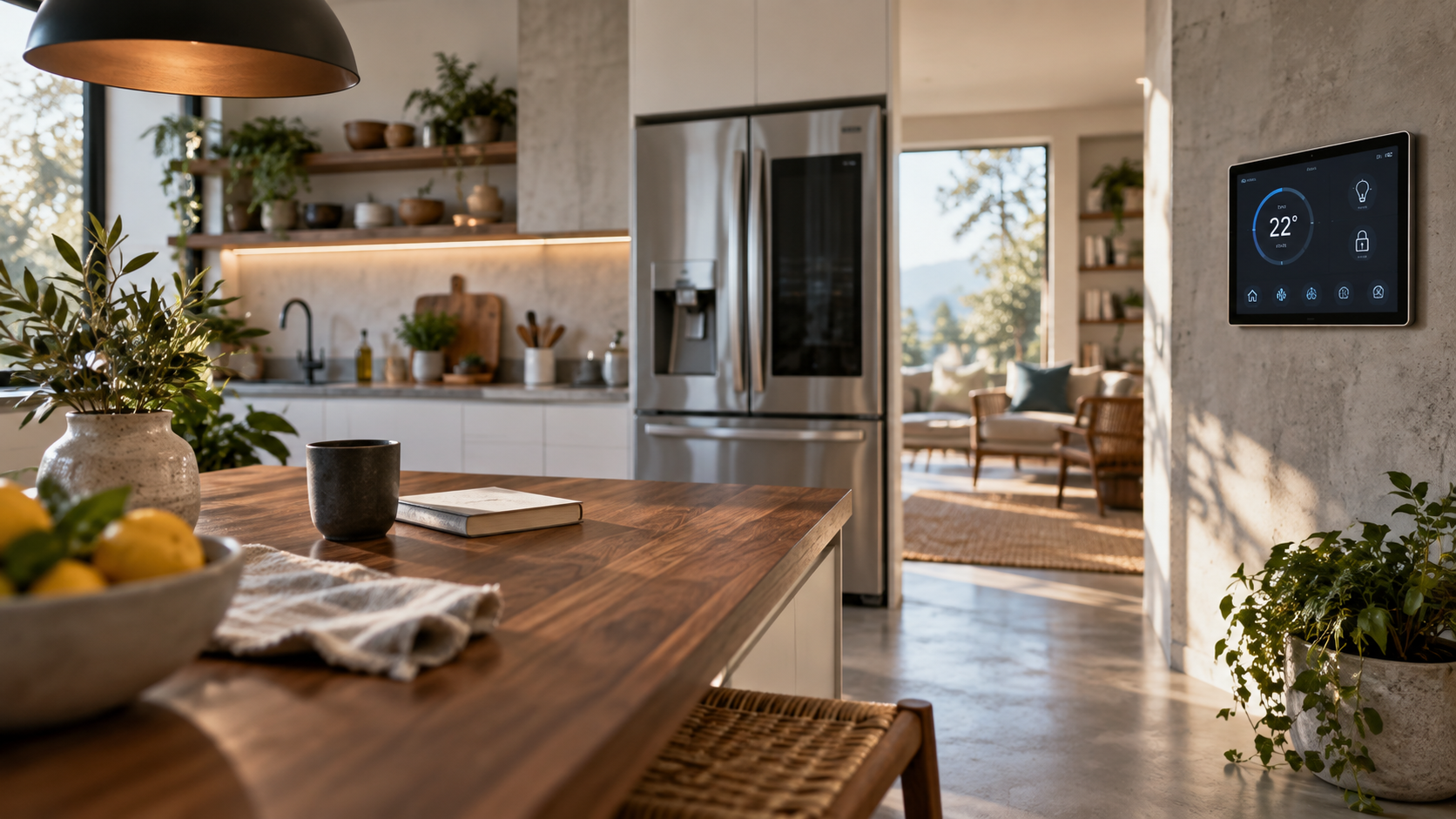
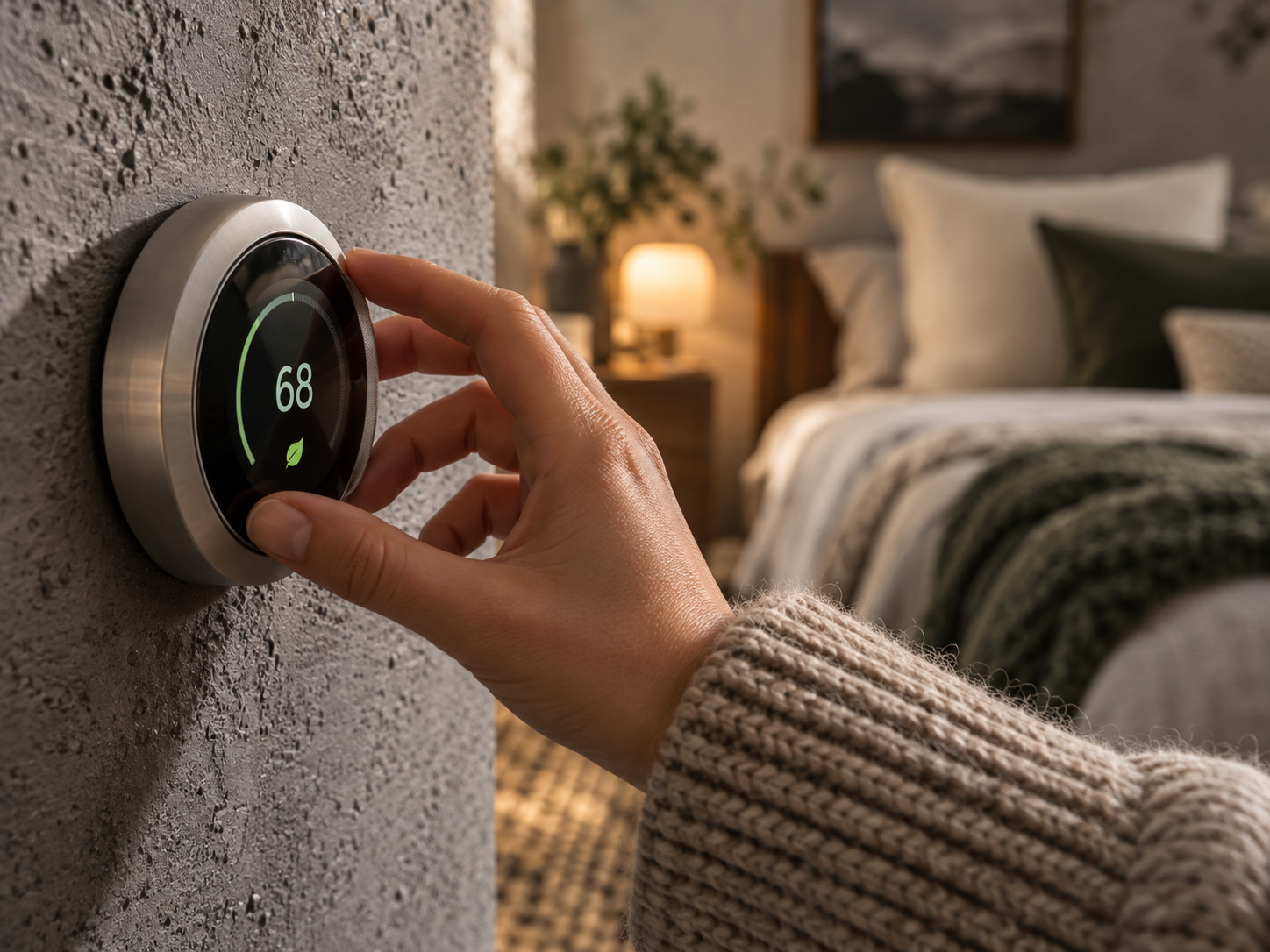
Temperature has a major effect on comfort, but a smart thermostat is not automatically a good purchase for every home. It may be useful if your heating or cooling system is compatible, the household has predictable schedules, and you want automatic setpoint changes. A basic programmable thermostat may provide similar practical control at a lower cost.
Before buying, check compatibility with the heating and cooling equipment, wiring requirements, subscription terms, and whether the device continues to provide basic control during an internet outage. Do not block vents with beds, rugs, or storage. The U.S. Department of Energy’s Energy Saver guidance on programmable thermostats is a useful starting point for understanding scheduling and temperature management.
Air purifiers and home wellness
An air purifier may help reduce airborne particles in a bedroom, but it is not a substitute for ventilation, moisture control, cleaning, or professional medical care. Select a unit based on the room size and the manufacturer’s stated filtration information. A true high-efficiency particle filter can capture many particles, while activated carbon is used for some gases and odors; performance depends on the entire device and how it is operated.
The U.S. Environmental Protection Agency’s guide to air cleaners and air filters in the home explains important considerations, including filter replacement and ozone concerns. Avoid products that intentionally generate ozone in occupied rooms. Keep purifier noise, filter cost, and replacement availability in mind before purchasing.
Security Without Making the Bedroom Feel Technical
Smart home security systems may include connected door sensors, cameras, locks, alarms, and motion detectors. In a bedroom, the most relevant choices are often a reliable smoke and carbon monoxide alarm, secure windows and doors, and a clear emergency-lighting path. A camera should not be placed in a private bedroom unless there is a carefully considered reason, strong access control, and agreement from everyone affected.
For connected security products, use unique passwords, multi-factor authentication where available, automatic firmware updates, and the minimum permissions necessary. Review who can view recordings or control locks. The National Institute of Standards and Technology’s IoT cybersecurity work provides useful background on device security and consumer connected products.
Related Smart-Home Improvements for the Rest of the Home
A comfortable bedroom is easier to maintain when nearby areas are organized. In the kitchen, drawer dividers, shelf risers, and labeled containers can reduce clutter without replacing cabinets. Energy-efficient appliances may lower operating costs over time, but compare the full purchase price, expected use, repairability, and manufacturer support instead of assuming a connected appliance will pay for itself.
Robot vacuums and cleaners can reduce routine floor maintenance, particularly in homes with pets or frequent dust. They work best when cords, loose fabrics, and small objects are removed from the floor. A robot vacuum is not a replacement for deep cleaning, and its noise or navigation limitations may make scheduling important near bedtime.
These additions should support the bedroom rather than turn it into a display of technology. A well-placed lamp, a clean floor, and organized storage generally provide more daily value than a collection of devices that are rarely used.
Advantages and Limitations
Potential advantages
- Small changes can improve comfort without a full renovation.
- Layered lighting and organized storage can make daily routines easier.
- Smart controls may help automate lighting, temperature, and cleaning schedules.
- Durable, certified materials can support longer product life and more informed purchasing.
- Energy and air-quality tools can be useful when selected for the actual room and household.
Limitations to consider
- Smart devices may need compatible wiring, a stable network, an app, or ongoing software support.
- Automation can fail during outages or become inconvenient when different brands use separate platforms.
- Connected products create privacy and account-security responsibilities.
- Air purifiers, thermostats, and lighting cannot solve every source of discomfort or health problem.
- Low-cost furniture and textiles may have shorter lifespans, so replacement costs matter.
A Simple Budget Sequence
- Declutter visible surfaces and clean the room thoroughly.
- Improve the existing lighting with a lamp, dimmer, or suitable bulb.
- Refresh bedding and add one practical layer of texture.
- Secure rugs, organize cables, and create a dedicated clothing or storage zone.
- Address temperature, humidity, or air quality only after identifying the specific problem.
- Add smart devices one at a time, checking compatibility, privacy, maintenance, and offline controls.
This sequence keeps purchases focused on actual needs. It also makes it easier to evaluate whether a product helped before adding another device.
Quick Q&A
What is the cheapest way to make a bedroom feel cozier?
Start with cleaning, decluttering, rearranging furniture, improving bedside lighting, and washing or layering existing textiles. These changes often produce a noticeable improvement without buying large furniture.
Are smart bulbs worth buying for a bedroom?
They can be worthwhile if you want dimming, schedules, or remote control and the bulb remains usable with a wall switch or local control. A normal dimmable bulb may be better for a simpler setup.
Do I need an air purifier for a cozy bedroom?
No. An air purifier is an optional tool for specific particle or odor concerns. Address visible dust, moisture, ventilation, and pollution sources first, then compare a properly sized unit and its filter costs.
How can I make a small bedroom feel less crowded?
Use furniture with a clear purpose, keep walking paths open, store infrequently used items under the bed or vertically, and limit the number of visible objects on the nightstand and dresser.
Safety and Information Note
Check manufacturer instructions for lamps, heaters, chargers, thermostats, air purifiers, and connected security equipment. Keep heat-producing devices away from bedding and curtains, do not overload outlets, secure loose rugs, and maintain working smoke and carbon monoxide alarms. Product features, compatibility, energy use, and privacy practices vary by model and location. The sources linked above provide general information, not individualized medical, financial, electrical, or security advice.