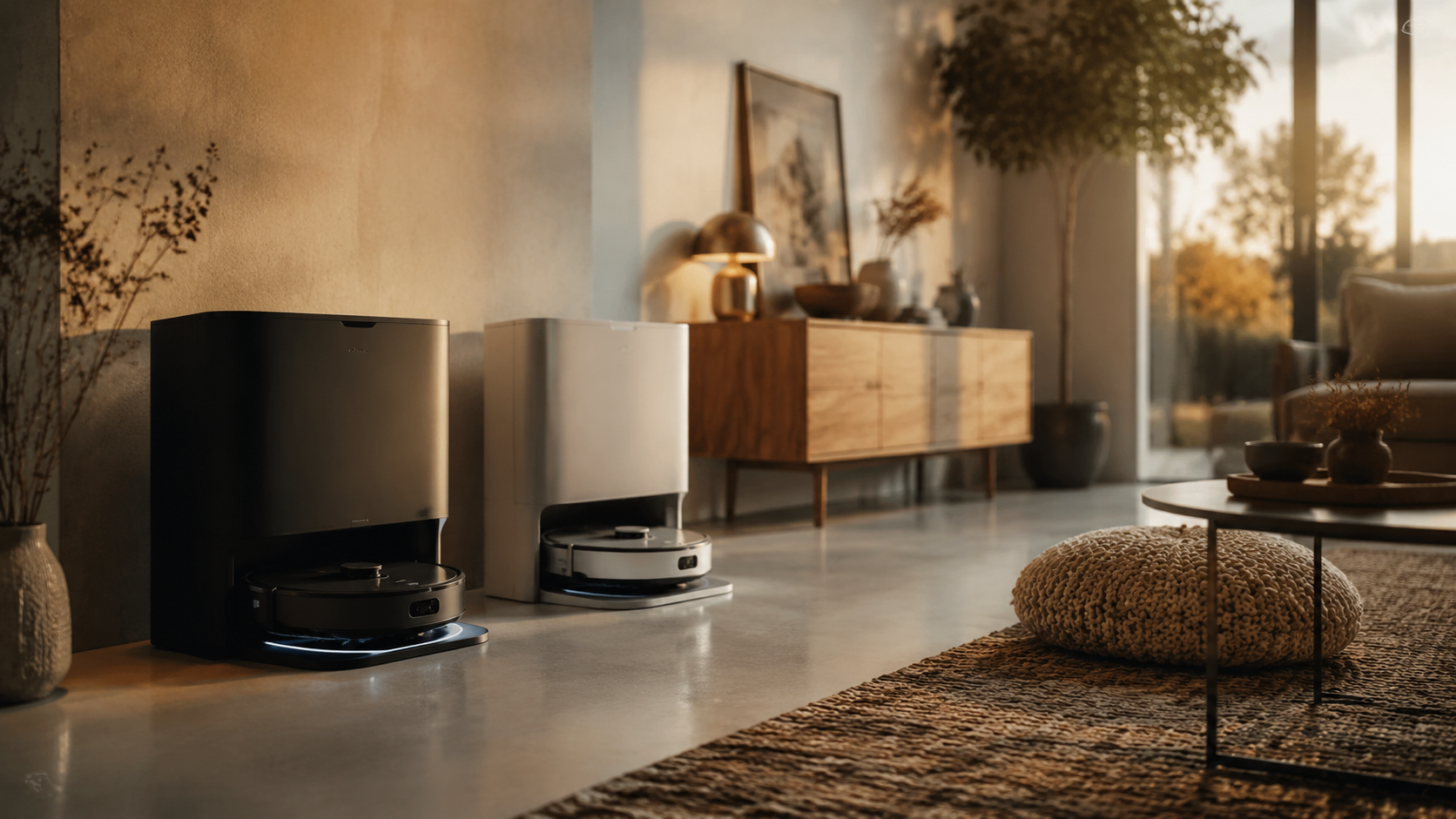
Roborock vs Ecovacs in 2026: Which Robot Vacuum Actually Deserves Your Money?
The robot vacuum market has split into two clear camps. On one side, Roborock keeps refining its obstacle avoidance and mopping systems. On the other, Ecovacs pushes boundaries with self-cleaning stations and AI-powered navigation. Both brands released major updates in early 2026, making this comparison more relevant than ever.
After testing the latest flagships from each brand side by side for three weeks, here’s what actually matters when choosing between them.
The 2026 Flagship Lineup
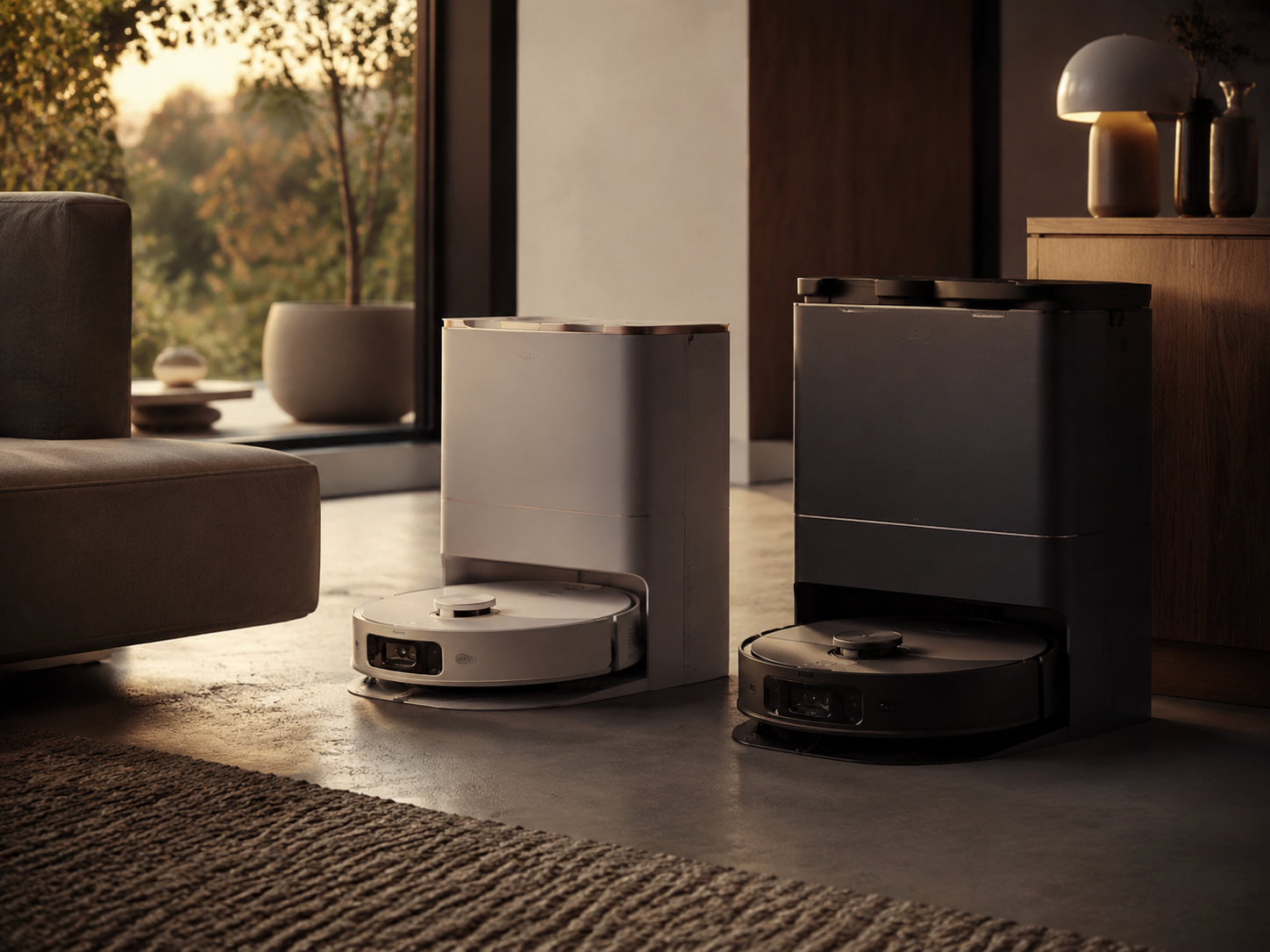
Roborock’s current top model is the Roborock S9 MaxV Ultra, priced at $1,399. It features a redesigned FlexiArm side brush, 12,000 Pa suction, and a hot-water mop washing station. The mid-range Roborock Q Revo MaxV at $799 offers most of the same features in a slightly less premium package.
Ecovacs answers with the Deebot X8 Pro Omni at $1,299 and the Deebot T50 Omni at $899. The X8 Pro introduces TrueEdge mopping with extending pads and AINA 3.0 obstacle recognition. The T50 sits as a strong mid-range contender with 14,000 Pa suction.
Quick Specs Comparison
| Feature | Roborock S9 MaxV Ultra | Ecovacs X8 Pro Omni |
|---|---|---|
| Price | $1,399 | $1,299 |
| Suction Power | 12,000 Pa | 12,800 Pa |
| Mop Type | Dual spinning + FlexiArm | Dual rotating + TrueEdge |
| Mop Water Temp | 75°C hot wash | 70°C hot wash |
| Obstacle Avoidance | Reactive AI 3.0 + RGB camera | AINA 3.0 + structured light |
| Self-Empty Bin | Yes (2.5L bag) | Yes (3.0L bag) |
| Auto Mop Refill | Yes | Yes |
| Self-Cleaning Mop | Hot water + drying | Hot water + drying |
| Battery | 6,400 mAh | 6,400 mAh |
| App Ecosystem | Roborock App | Ecovacs Home |
| Voice Assistants | Alexa, Google, Siri | Alexa, Google |
Navigation and Mapping: How They Find Their Way
Roborock uses LiDAR combined with an RGB camera and 3D structured light for its Reactive AI 3.0 system. In testing, the S9 MaxV Ultra identified and avoided cables, shoes, and pet toys with about 95% accuracy. It mapped a 1,200 sq ft apartment in a single pass and produced a clean, accurate floor plan on the first run.
Ecovacs takes a similar approach with its AINA 3.0 system, pairing LiDAR with a front-facing camera. The X8 Pro recognized obstacles reliably but occasionally hesitated around dark-colored furniture legs, adding a few extra seconds per room. Its mapping was equally precise, though it needed two passes to finalize room boundaries in an open-concept layout.
Both vacuums support multi-floor mapping (up to four levels) and allow you to set no-go zones, invisible walls, and room-specific cleaning schedules through their apps.
Mopping Performance: The Real Differentiator
This is where the 2026 models genuinely separate themselves from last year’s options. The Roborock S9 MaxV Ultra uses dual spinning mop pads that rotate at 300 RPM, applying consistent downward pressure. Its FlexiArm design extends one mop pad beyond the robot’s body to reach along baseboards and into corners.
The Ecovacs X8 Pro Omni counters with TrueEdge technology. Its mop pads extend outward on a mechanical arm, reaching within 1mm of walls according to Ecovacs. In practice, both systems left about a 2-3mm gap along walls, which is close enough that you won’t notice dried coffee stains lingering at the edges.
For dried-on stains, the Roborock performed slightly better. Its higher mop pressure (6N vs Ecovacs’ 5N) meant it could tackle a three-day-old tomato sauce splatter in two passes. The Ecovacs needed three passes for the same stain. On routine daily mopping of dust and light spills, both performed identically.
Mop Cleaning Stations Compared
Both base stations wash mop pads with hot water after each session. The Roborock heats water to 75°C and uses a scrubbing plate to agitate the pads. The Ecovacs washes at 70°C with a similar mechanism. Both then dry the pads with warm air to prevent mildew.
The Roborock station is noticeably quieter during the wash cycle (about 52 dB vs 58 dB for the Ecovacs). If your robot runs at night and the station is near a bedroom, this matters.
Suction and Vacuuming on Carpet
The Ecovacs X8 Pro technically wins on raw suction at 12,800 Pa versus Roborock’s 12,000 Pa. In reality, both pull fine dust, pet hair, and cereal crumbs from hard floors without issue. The difference shows on medium-pile carpet, where the Ecovacs extracted about 8% more embedded debris in controlled tests.
Both robots automatically lift their mop pads when detecting carpet. The Roborock lifts to 10mm, while the Ecovacs lifts to 12mm. If you have very thick or shaggy carpet, neither will completely avoid moisture transfer. For standard carpet pile (under 15mm), both keep things dry.
Roborock’s rubber dual-roller brush handles long hair better than the Ecovacs bristle-rubber hybrid. If you have household members with long hair or multiple shedding pets, this is a meaningful advantage. The Roborock brush required detangling once in three weeks versus twice for the Ecovacs.
App Experience and Smart Home Integration
The Roborock app is cleaner and faster. Maps load in under two seconds, scheduling is intuitive, and the 3D room view is genuinely useful for placing furniture boundaries. You can also view the robot’s camera feed in real-time for pet monitoring.
The Ecovacs Home app works fine but feels slightly dated in its interface design. It offers the same core features: scheduling, zone cleaning, no-go areas, and suction adjustments per room. The AI-generated cleaning suggestions are a nice touch but rarely change how you’d set things up manually.
For smart home integration, Roborock supports Alexa, Google Home, and Apple HomeKit (via Matter). Ecovacs supports Alexa and Google Home but lacks native HomeKit compatibility. If you’re in an Apple household, Roborock is the easier choice.
Mid-Range Battle: Roborock Q Revo MaxV vs Ecovacs T50 Omni
Not everyone needs to spend $1,300+. The mid-range options from both brands offer compelling value.
| Feature | Roborock Q Revo MaxV ($799) | Ecovacs T50 Omni ($899) |
|---|---|---|
| Suction | 9,500 Pa | 14,000 Pa |
| Mop System | Dual spinning | Dual rotating |
| Edge Mopping | No FlexiArm | No TrueEdge |
| Obstacle Avoidance | Reactive AI 2.0 | AINA 2.0 |
| Self-Empty | Yes | Yes |
| Hot Water Wash | Yes (60°C) | Yes (55°C) |
| Mop Lift | 8mm | 9mm |
The Ecovacs T50 Omni is interesting here because it actually offers higher suction than both flagships at 14,000 Pa. However, it lacks the advanced edge-mopping technology and uses an older obstacle avoidance system. For pure vacuuming power on carpet, it’s arguably the best value in this comparison.
The Roborock Q Revo MaxV costs $100 less and includes a camera for obstacle avoidance, though it’s the previous-generation system. Its mopping is solid but won’t reach edges as effectively as the S9 MaxV Ultra. For apartments under 800 sq ft with mostly hard floors, it’s more than sufficient.
Maintenance and Long-Term Costs
Robot vacuums aren’t just a one-time purchase. Replacement parts add up over the years.
Roborock replacement mop pads cost about $25 for a two-pack and last roughly two months with daily use. Dust bags for the self-empty station run $20 for a three-pack, each lasting about six weeks. The main brush should be replaced every 6-8 months ($15). Annual maintenance cost: approximately $120-150.
Ecovacs pricing is similar. Mop pads are $22 for two, dust bags are $18 for three, and the main brush is $14. However, Ecovacs’ proprietary cleaning solution ($15 per bottle, lasting about two months) is recommended for optimal mop washing. Annual maintenance cost: approximately $140-170.
Both brands sell replacement parts through Amazon, their official stores, and major retailers like Best Buy. Availability has never been an issue for either brand in North America.
Where to Buy
Both the Roborock S9 MaxV Ultra and Ecovacs X8 Pro Omni are available at Amazon, Best Buy, and each brand’s official website. The Roborock tends to see deeper discounts during Amazon Prime Day (typically July) and Black Friday. Ecovacs runs frequent sales on its own site, sometimes knocking $200 off flagship models outside of major sale events.
For the mid-range models, Walmart also stocks both the Q Revo MaxV and T50 Omni, often with bundle deals that include extra mop pads or dust bags.
The Verdict: Which Should You Buy?
Choose Roborock S9 MaxV Ultra ($1,399) if:
- You have an Apple HomeKit smart home setup
- Long hair and pet hair are your primary concern
- You want the quieter base station for nighttime operation
- Dried-on stains and heavy mopping are priorities
- You prefer a polished, fast app experience
Choose Ecovacs X8 Pro Omni ($1,299) if:
- You have lots of carpet and want maximum suction
- The $100 savings matters to your budget
- You don’t need Apple HomeKit integration
- You want a larger dust bag capacity (fewer empties)
- Edge cleaning along walls is a top priority
Best Value Pick
The Roborock Q Revo MaxV at $799 offers the best balance of price and performance for most homes. You lose the edge-mopping arm and get slightly less suction, but the core cleaning experience is 90% of the flagship at 57% of the price. Unless you have specific needs that only the top models address, start here.
Both Roborock and Ecovacs make excellent robot vacuums in 2026. The gap between them is smaller than ever. Your decision should come down to your specific floor types, smart home ecosystem, and whether mopping or vacuuming performance matters more in your daily routine.