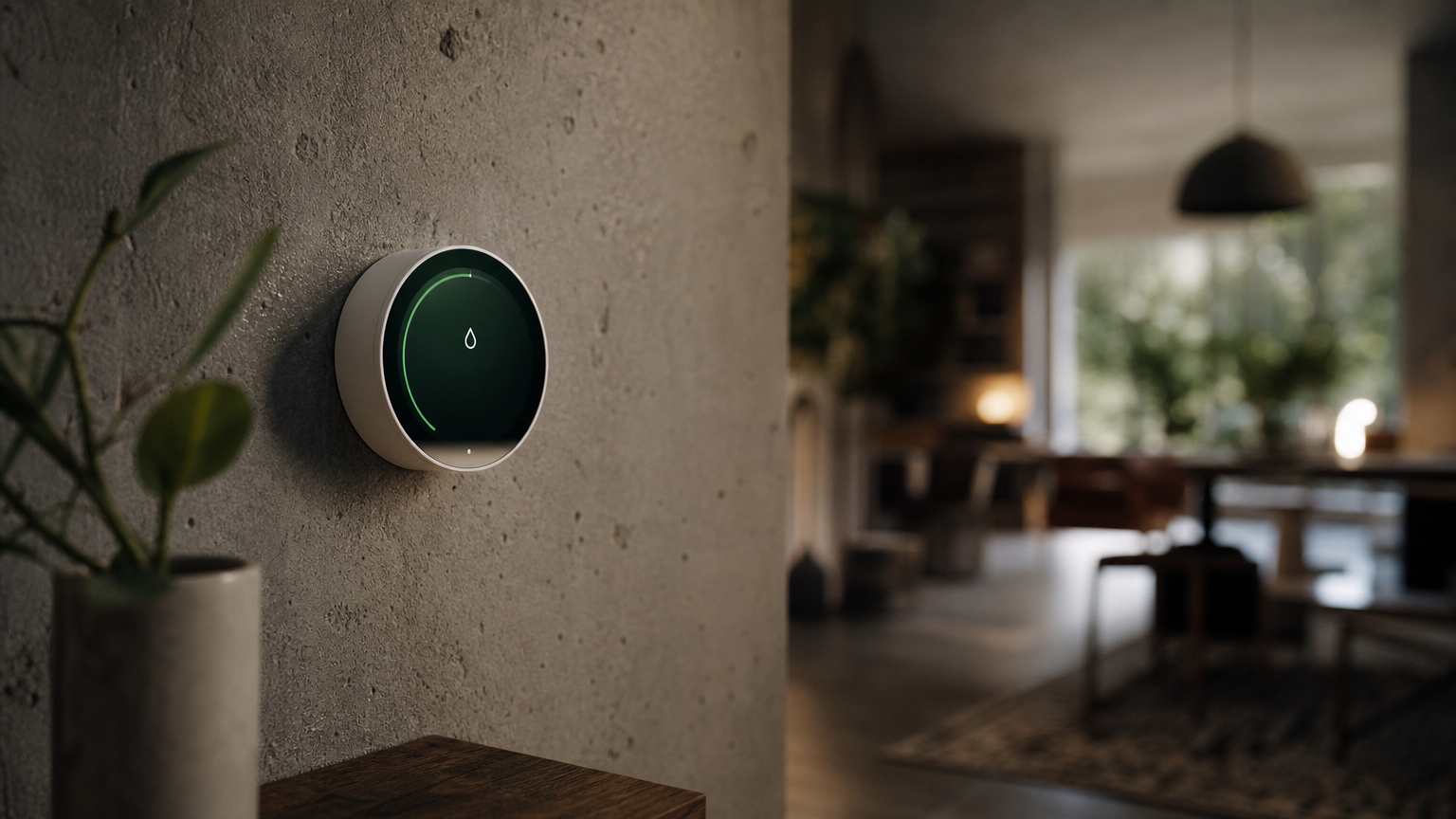
A whole house water leak detector is the quiet insurance policy of a modern home. It sits at the plumbing line, under an appliance, or beside a water heater, then warns you before a pinhole leak becomes a soaked floor. The best systems go further: they monitor water use, detect frozen pipes, and shut off the main supply automatically when something looks wrong.
For design-minded homeowners, the appeal is practical and aesthetic. A water leak is one of the fastest ways to ruin hardwood, limewash walls, wool rugs, built-ins, and custom cabinetry. The right detector protects the room you worked hard to finish without adding visual clutter.
Quick answer: The best whole house water leak detectors in 2026 are the Moen Flo Smart Water Monitor and Shutoff for most homes, Phyn Plus 2nd Gen for detailed pressure analytics, YoLink Smart Water Leak Protection System for budget sensor coverage, Flume 2 for non-invasive usage tracking, and Aqara Water Leak Sensor kits for smart home tinkerers.
What Is a Whole House Water Leak Detector?
A whole house water leak detector is a monitoring system that looks for unwanted water either at the main plumbing line or at high-risk points around the home. Inline systems, such as Moen Flo and Phyn Plus, attach to the main water line and can close a motorized valve. Sensor-based systems, such as YoLink or Aqara, place small battery sensors under sinks, behind toilets, near washing machines, and beside water heaters.
Definition: A whole house water leak detector protects multiple rooms or the main water supply, while a point leak sensor protects one local area. The safest setups use both: an automatic shutoff valve at the main line and small sensors where leaks often begin.
The difference matters. A $20 puck sensor can scream when the dishwasher leaks, but it cannot stop water from flowing. A $500 inline shutoff system can stop the supply, but it may miss a few ounces under a guest bath vanity unless paired with remote sensors.
Best Whole House Water Leak Detectors at a Glance
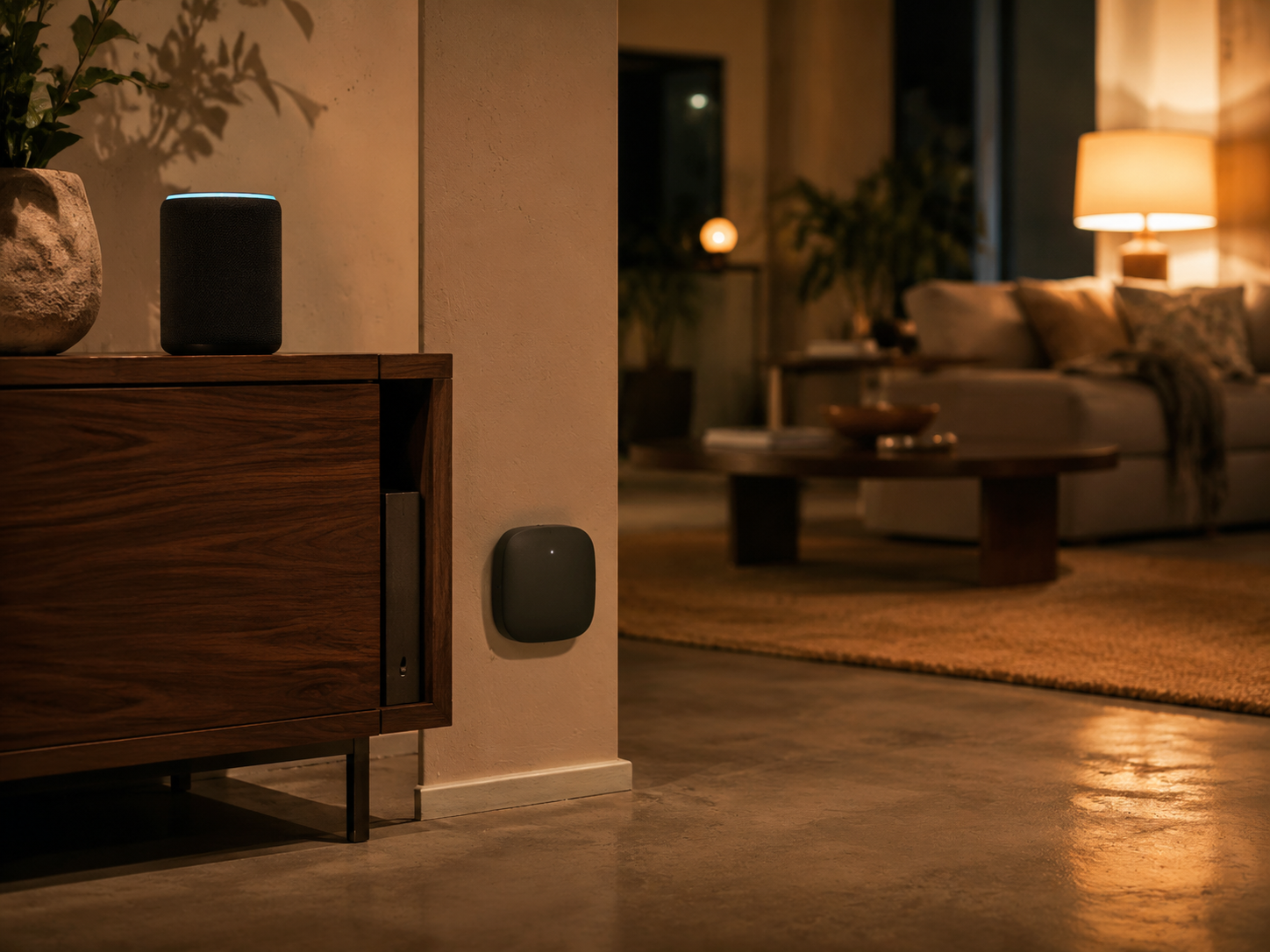
| System | Approx. price | Best for | Shutoff included? | Where to buy |
|---|---|---|---|---|
| Moen Flo Smart Water Monitor and Shutoff | $499 to $599 | Most single-family homes | Yes | Amazon, Home Depot, Lowe’s |
| Phyn Plus 2nd Gen | $579 to $699 | Data-rich water monitoring | Yes | Phyn, Amazon, Best Buy |
| YoLink Smart Water Leak Protection System | $80 to $250 starter kits | Large sensor coverage on a budget | Optional valve controller | Amazon, YoLink |
| Flume 2 Smart Home Water Monitor | $249 | No-plumbing installation | No | Flume, Amazon |
| Aqara Water Leak Sensor with Hub | $19 per sensor, hubs from $30 | Apple Home, Alexa, and automation fans | No native main shutoff | Amazon, Aqara |
Quotable data point: A burst pipe can release hundreds of gallons in a single day, while even a slow toilet leak can waste more than 100 gallons daily. The best leak detector is the one that alerts you and, ideally, cuts off the supply before the damage spreads.
1. Moen Flo Smart Water Monitor and Shutoff: Best Overall
The Moen Flo Smart Water Monitor and Shutoff is the most balanced choice for homeowners who want active protection without turning plumbing into a hobby. It installs on the main water line and tracks flow rate, pressure, and temperature. If it detects a likely burst pipe or sustained abnormal flow, it can shut the water off automatically.
Expect to pay about $499 to $599 depending on pipe size and retailer. Professional installation is strongly recommended, and labor can add $200 to $600 based on access, local rates, and whether fittings need to be modified. Moen sells 3/4-inch, 1-inch, and 1.25-inch versions, so check your main line before buying.
The app is polished, with daily water use insights and alerts for unusual activity. Optional FloProtect membership, often around $5 per month, adds extended warranty benefits and insurance documentation features. You do not need the subscription for basic alerts and shutoff, which keeps the core product useful after purchase.
Design and living note
Moen Flo is a good fit for renovated kitchens, finished basements, and homes with expensive flooring because it protects the entire supply. The device itself belongs in a utility closet, garage, basement, or mechanical room, not on display. It is a smart home product that works best when you never have to look at it.
2. Phyn Plus 2nd Gen: Best for Detailed Diagnostics
Phyn Plus 2nd Gen is the strongest rival to Moen Flo. It also installs inline, monitors the whole home, and includes automatic shutoff. Its signature feature is pressure-based analysis that can identify tiny changes in the plumbing system.
Pricing usually sits around $579 to $699. Like Moen Flo, Phyn Plus needs a proper install on the main line. It is best for homeowners who enjoy detailed app feedback and want a serious picture of how water moves through the house.
Phyn can run plumbing checks, watch for leaks, and warn about freezing conditions. It also has a clean app and works with popular voice assistants. The hardware looks premium, although most people will mount it out of sight near the shutoff valve.
Who should buy Phyn Plus?
Choose Phyn Plus if you want deeper diagnostics and do not mind paying a little more. It is especially appealing for second homes, older houses with mixed plumbing eras, or properties with finished lower levels. If you like seeing patterns in the data, Phyn feels more analytical than a simple alarm.
3. YoLink Smart Water Leak Protection System: Best Sensor Network
YoLink is the practical choice for covering many risk points without spending $600 on a main-line device. Starter kits often cost $80 to $120 and include a hub plus several leak sensors. Larger kits with a valve controller or motorized shutoff can climb toward $200 to $250.
The key advantage is range. YoLink uses LoRa-based wireless communication, which is useful in long homes, detached garages, basements, and utility rooms where Wi-Fi may be weak. That makes it a favorite for people who want sensors under every sink, behind the washing machine, beside the sump pump, and near the water heater.
YoLink sensors are small and easy to hide. They are not as visually refined as some Apple Home accessories, but they do the job. Add a YoLink valve controller if you want shutoff, though installation and valve compatibility should be checked carefully.
Best placements for YoLink sensors
Start under kitchen sinks, bathroom vanities, refrigerators with water lines, dishwashers, laundry machines, water heaters, basement floor drains, and HVAC condensate pans. In a three-bedroom home, 8 to 12 sensors is a sensible target. In a large house, 15 or more can be justified.
4. Flume 2: Best No-Plumbing Water Monitor
Flume 2 is not an automatic shutoff device, but it deserves a place on this list because installation is unusually simple. It straps to many existing water meters and reads flow without cutting into the main pipe. For renters with permission, cautious homeowners, or anyone avoiding a plumbing appointment, that matters.
The device costs about $249. It can alert you to unusual water use, track daily consumption, and help find leaks such as running toilets or irrigation problems. Since it cannot close the valve, it is best paired with local leak sensors or used in homes where fast alerts are enough.
Flume’s design value is invisibility. Nothing changes in the kitchen, bath, or laundry room. The sensor lives at the water meter, while the app gives you the useful information.
5. Aqara Water Leak Sensors: Best for Smart Home Automation
Aqara Water Leak Sensors are inexpensive, compact, and popular with Apple Home, Alexa, Google Home, and Home Assistant users. Individual sensors often sell for about $19, while an Aqara hub starts around $30 to $60 depending on model. They are ideal for smart home owners who already use Aqara switches, motion sensors, or temperature sensors.
The sensor itself is a small white puck with metal contacts on the base. Place it under a sink or near an appliance, and it will alert the hub when water bridges the contacts. It is not a whole-home shutoff device by itself, but it can trigger automations if connected to compatible valves or broader smart home systems.
For interiors, Aqara is one of the least intrusive options. The sensors are small enough to disappear behind a toilet or inside a vanity toe-kick. If your smart home runs on Apple Home, Aqara is often the neatest add-on.
Inline Shutoff vs. Leak Sensors: Which Is Better?
| Feature | Inline shutoff systems | Point leak sensors |
|---|---|---|
| Typical cost | $499 to $699 plus installation | $19 to $40 per sensor |
| Stops water automatically | Yes, on most models | No, unless paired with valve hardware |
| Install difficulty | Medium to high | Low |
| Best protection area | Main supply and whole-home flow | Specific appliances and fixtures |
| Best buyer | Homeowners with finished spaces to protect | Renters, apartments, and layered protection plans |
Clear recommendation: If you own the home and can access the main line, start with Moen Flo or Phyn Plus. If you rent, live in a condo, or cannot alter plumbing, use Flume 2 or a sensor kit from YoLink or Aqara.
How Much Should You Spend?
Budget $100 to $250 for a sensor-first setup, $250 for a non-invasive monitor, or $700 to $1,200 for a professionally installed shutoff system. That upper range includes device cost and typical labor. It is still small compared with replacing floors, drywall, cabinetry, and rugs after a major leak.
For a design-led home, put sensors where water can damage finishes quickly. A laundry closet above hardwood, a powder room with wallpaper, or a kitchen with custom millwork deserves more protection than an unfinished garage sink. The best plan follows the value of the room, not just the number of fixtures.
Installation Checklist Before You Buy
- Find the main water shutoff and confirm there is room for an inline device.
- Measure the pipe size, usually 3/4 inch or 1 inch in many homes.
- Check Wi-Fi strength near the mechanical area or water meter.
- List every appliance with a water line, including ice makers and humidifiers.
- Decide whether automatic shutoff is required or alerts are enough.
- Ask your insurer whether leak protection can qualify for documentation or discounts.
Q&A: Whole House Water Leak Detectors
Do whole house water leak detectors really work?
Yes, but the type matters. Inline monitors are best at detecting unusual flow patterns and stopping the main supply. Point sensors are best at catching local water exactly where it appears.
What is the best whole house water leak detector for most people?
Moen Flo is the best overall pick for most single-family homes because it combines whole-home monitoring, automatic shutoff, a mature app, and broad retail availability. Phyn Plus is the better pick if you want more diagnostic detail.
Can I install one myself?
Battery leak sensors are easy DIY products. Inline shutoff devices usually need a plumber because they require cutting into the main water line, fitting the valve correctly, and checking for leaks after installation.
Do I need a monthly subscription?
Most core leak alerts work without a subscription. Some brands charge for added warranty coverage, richer analytics, or insurance-related reports. Check the current plan details before buying.
Where should leak sensors go first?
Place them under the kitchen sink, behind the washing machine, beside the water heater, near toilets, under bathroom vanities, near the dishwasher, and near any refrigerator with a water line. Those spots catch many expensive household leaks early.
Final Verdict
The best whole house water leak detector is Moen Flo for most homeowners, Phyn Plus for data-focused buyers, YoLink for wide sensor coverage, Flume 2 for no-plumbing monitoring, and Aqara for smart home automation. If the budget allows, combine an inline shutoff with local sensors. That layered setup gives the strongest protection for the rooms, finishes, and furniture that make a house feel considered.
One-sentence takeaway: A $500 to $1,200 leak detection setup can protect tens of thousands of dollars in flooring, cabinetry, walls, and furniture, making it one of the most practical smart home upgrades for 2026.