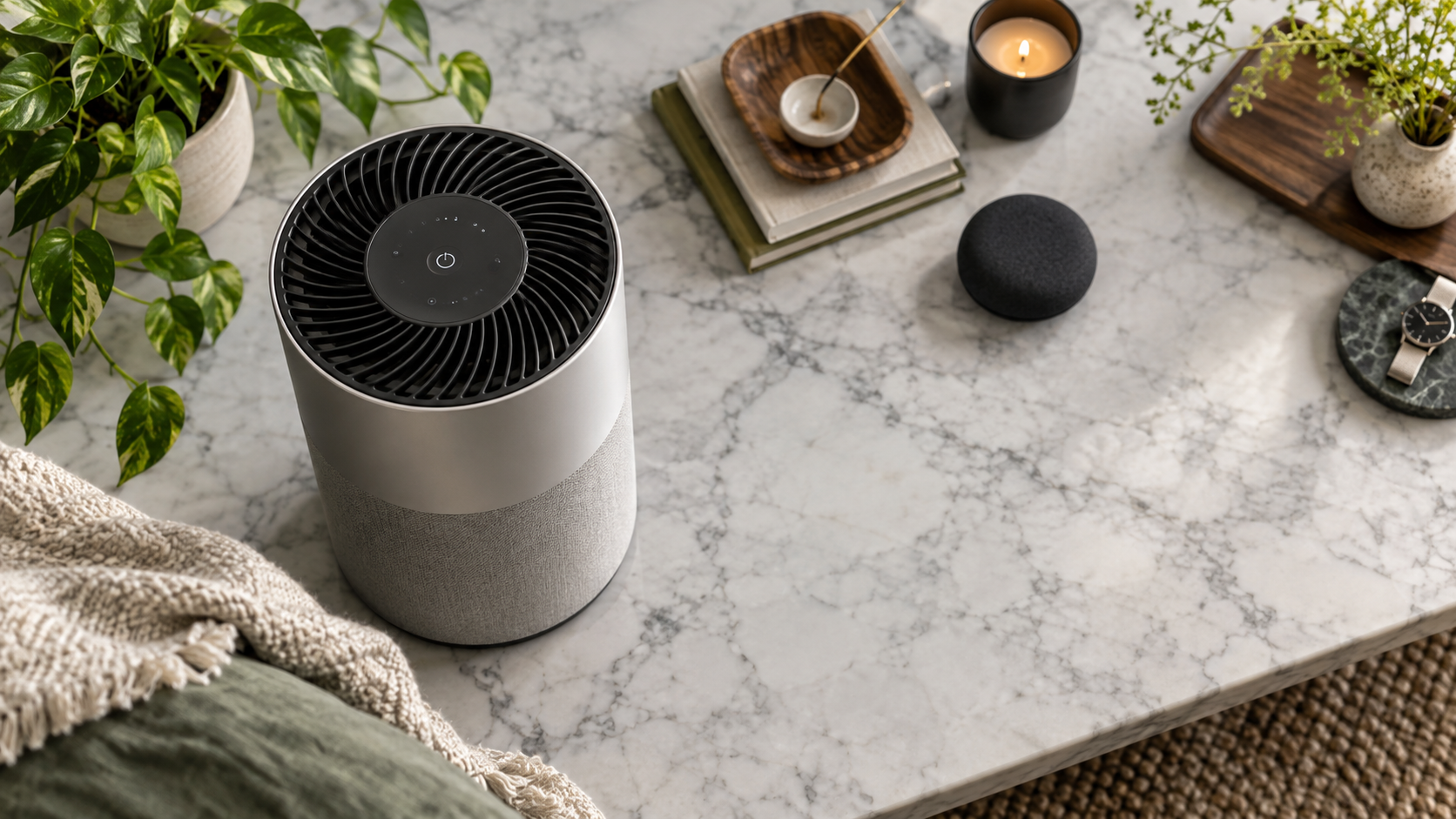
Choosing the best air purifier placement in a bedroom is mostly a matter of airflow, clearance, noise, and daily habits. A well-rated purifier can perform poorly when it is pushed behind a nightstand, blocked by curtains, or positioned where its clean-air outlet cannot circulate through the room. Placement does not replace the need to select an appropriately sized unit, maintain its filters, control indoor pollution sources, and follow the manufacturer’s instructions.
For most bedrooms, the most useful starting point is an open position near the area where people spend the most time, often beside the bed or along an unobstructed wall. The purifier should have clear intake and outlet paths, sit on a stable surface or the floor as directed, and avoid blowing directly across a sleeper’s face. The ideal location depends on the device design, room layout, noise tolerance, and the reason for using the purifier.
What Does “Best Air Purifier Placement” Mean?
Best placement means positioning a portable air cleaner so it can draw in room air, pass that air through its filters, and distribute treated air without obstruction or excessive discomfort. It is not necessarily the point closest to the center of the room or the place that looks best with the furniture.
In a bedroom, good placement normally has five characteristics:
- The air intake is not blocked by a wall, bed frame, curtain, clothing, or storage basket.
- The clean-air outlet has room to discharge air into the bedroom.
- The unit is close enough to the sleeping area to be useful during occupied hours, while remaining comfortable and quiet.
- The purifier is away from water, excessive dust, heat sources, and trip hazards.
- The position allows easy access for filter checks, cleaning, and controls.
Manufacturers use different intake and outlet designs. Some models pull air through the sides and release it through the top; others use a cylindrical intake or a front-to-back airflow path. The device manual should therefore take priority over generic room-layout advice.
Where Should an Air Purifier Go in a Bedroom?
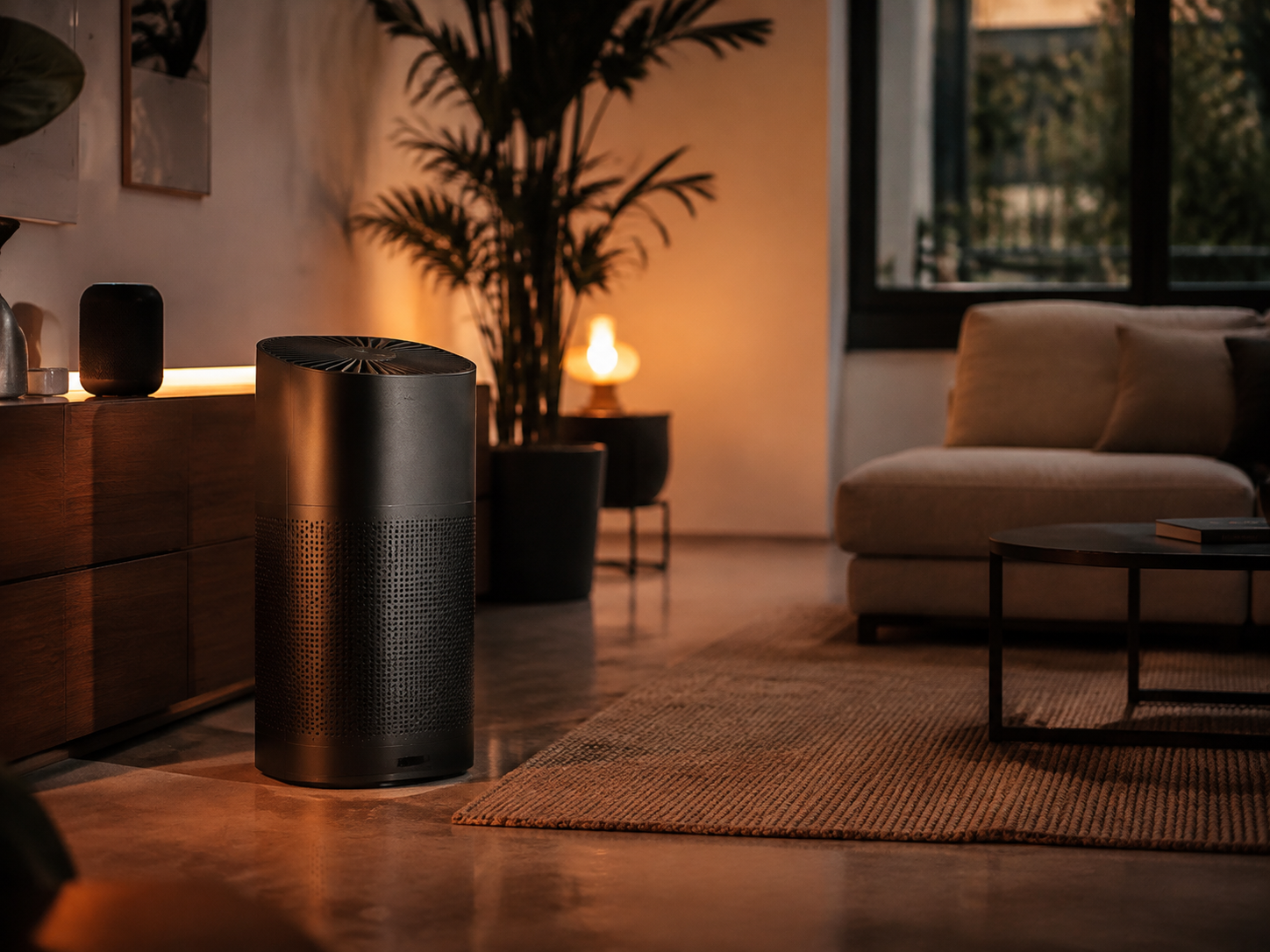
Beside the bed, with clear airflow
A position beside the bed can be sensible because the bedroom is occupied there for many hours. Put the purifier far enough from bedding and curtains that they cannot fall over the intake. If the device has a top outlet, avoid placing a shelf directly above it. If it has a front outlet, do not aim it into a wall or tightly into the side of a mattress.
Direct airflow across the face is not automatically dangerous, but it may feel cold, dry, or irritating and can disturb sleep. Angle the outlet away from the sleeper when possible. A lower fan setting may provide a better balance between filtration and comfort.
Near a source of particles, when appropriate
If the bedroom is affected by tracked-in dust, pet dander, or particles that enter from an adjacent hallway, placing the purifier near the affected area may help capture pollutants before they spread. Keep it clear of the doorway so people do not bump into it and so the door can open normally.
When the main concern is seasonal outdoor pollution, a location that supports circulation through the closed room may be more useful than placing the unit directly beside the window. The purifier should not block a window, radiator, or ventilation opening. During periods when outdoor air quality is poor, closing windows may reduce the amount of pollution entering, but rooms still need appropriate ventilation when conditions permit.
On the floor or on furniture?
Many portable units are designed to sit on the floor. A floor position is usually practical for a larger bedroom purifier and avoids placing a heavy appliance where it could be knocked over. Smaller devices may be designed for a desk, dresser, or bedside table, but the supporting surface should be stable and able to carry the device safely.
Do not raise a floor model onto a dresser unless the manufacturer permits that arrangement. Elevating the unit can change its airflow pattern, create a fall hazard, and expose it to accidental knocks. Conversely, do not place a tabletop model on the floor if its low intake could collect dust or if the manual does not allow it.
Step-by-Step Placement Method
1. Identify the main reason for using the purifier
Different goals suggest different priorities. For pollen, dust, or pet particles, look for a location that supports broad room circulation. For smoke or cooking-related particles that drift toward the bedroom, first reduce the source and then position the purifier where it can process the affected air. For sleep comfort, low noise and indirect airflow may matter more than placing the unit immediately beside the pillow.
An air purifier can reduce airborne particles, but it cannot remove every indoor-air problem. It will not correct a persistent moisture leak, replace source control for mold, remove all gases, or provide the ventilation needed to control carbon dioxide.
2. Read the airflow diagram and clearance guidance
Check the manual for minimum clearance around the intake and exhaust. If the manual does not give a specific distance, leave a visibly open area around the air paths rather than wedging the device between furniture. Keep all grilles free of dust and fabric.
Clearance is especially important for units with side intakes. A purifier placed against a wall may continue to run, but restricted intake can reduce the air volume it processes and make the fan work harder. A top-outlet model can also lose circulation if it is placed directly beneath a shelf.
3. Keep the air path open
Place the purifier where people will not cover it with laundry, bedding, books, or decorative objects. Avoid a position behind a door that is normally left open. Do not use a storage cabinet or enclosed shelf unless the product is specifically designed for built-in installation.
The same principle applies to furniture planning. A minimalist bedroom can make placement easier because an open floor area supports circulation. In a more crowded room, moving a small side table or changing the direction of a bed may improve the purifier’s performance without adding another appliance.
4. Test comfort during sleep
Run the purifier before bedtime at the setting you expect to use overnight. Listen for fan noise, check whether the airflow reaches the bed uncomfortably, and make sure indicator lights are not disruptive. Some smart bedroom gadgets provide scheduling, automatic modes, dimming, or app control, but these features do not compensate for blocked airflow.
If a device is too loud at its highest setting, use a higher setting before sleep to process the room air and a quieter setting overnight, provided the manufacturer’s controls support that routine. A purifier that is switched off for most of the night may be less useful than a quieter model that can run consistently.
5. Confirm safe access and maintenance
Keep the power cord away from walking paths and do not run it under a rug where damage may go unnoticed. Leave enough access to remove the filter and clean the intake grille. A purifier with a hidden or difficult-to-reach filter may be less practical than one that fits the room neatly but is easy to maintain.
Follow the product instructions for filter replacement and cleaning. A loaded filter can restrict airflow, increase noise, and reduce performance. Do not wash a filter unless the manufacturer specifically identifies it as washable.
Placement Mistakes to Avoid
Behind curtains or furniture
Curtains can obstruct intake and outlet paths, while a bed, wardrobe, or bookcase can trap discharged air. A purifier does not need to be hidden to fit a bedroom design. If appearance matters, choose a compact model with a finish that works with the room rather than compromising its airflow.
Directly beside a humidifier
Moisture can damage electronics and may affect particle sensors. Keep a purifier away from the visible mist of a humidifier and follow both products’ instructions. High humidity can also support mold growth when a room has poor moisture control. Neither appliance is a substitute for repairing leaks or managing persistent dampness.
Next to a heat source
Radiators, heaters, fireplaces, and strong sunlight can affect the appliance’s temperature and sensor readings. Keep the purifier away from heat sources unless the manual explicitly permits the arrangement. Do not use it where its power cord or casing could contact hot surfaces.
Beside an open window during polluted conditions
An open window can continually introduce outdoor particles faster than a small purifier can remove them. When the purpose is to reduce outdoor smoke or pollen entering the bedroom, use local air-quality guidance and the purifier’s operating instructions to decide when windows should be closed. Ventilate when outdoor conditions are suitable and the room requires fresh air.
Relying on ionization or ozone without checking the technology
Some air cleaners include ionizers, electrostatic functions, or other technologies in addition to mechanical filtration. These features should be evaluated separately from a standard particle filter. The United States Environmental Protection Agency warns that ozone is a lung irritant and that ozone-generating air cleaners are not a general solution for indoor air cleaning. Check whether a device intentionally produces ozone and review independent safety information before using that mode in a bedroom.
How Room Size and Purifier Specifications Affect Placement
Placement cannot overcome an undersized purifier. Compare the room’s size with the manufacturer’s recommended coverage and look for a credible clean air delivery rating where available. AHAM Verifide provides a certification and comparison framework for portable room air cleaners, including smoke, dust, and pollen performance information. Coverage labels can vary between brands, so comparing the underlying test information is more useful than treating every “room size” claim as equivalent.
EPA guidance also emphasizes that portable air cleaners work best as one part of an indoor-air-quality strategy. Source control, ventilation, and filtration each address different problems. For example, a purifier may capture airborne particles from a pet, but regular cleaning, washing bedding, and keeping the pet away from the sleeping area may reduce the source more effectively.
Energy use is another practical consideration. A unit that runs continuously can add to household electricity consumption, especially at high fan speeds. ENERGY STAR provides information for comparing certified air cleaners and their energy performance. Smart plugs, schedules, and room sensors can help manage operation, but they should not interrupt required safety functions or run the appliance outside its instructions.
Pros and Cons of Common Bedroom Placements
| Placement approach | Potential advantages | Potential limitations |
|---|---|---|
| Beside the bed | Convenient for overnight operation and personal comfort testing | May expose the sleeper to unwanted noise or direct airflow; bedding can block the intake |
| Open floor area | Often suits larger units and allows broad circulation | Can create a trip hazard if the cord is poorly routed |
| Near the bedroom entrance | May help process air moving in from other rooms | Can obstruct the doorway and may be less effective for the occupied sleeping zone |
| On a dresser or table | Keeps a small device accessible and visible | Not suitable for every model; may be unstable or restrict top airflow |
| Near a window | Can be useful when the window is a known entry point for particles | May continuously process incoming outdoor pollution; avoid blocking ventilation and curtains |
Using an Air Purifier With Other Smart Home Features
A purifier can fit into a wider smart home routine, but automation should remain understandable and reliable. A smart thermostat can manage temperature, while a purifier addresses selected airborne particles. These systems solve different problems and should not be treated as interchangeable. A thermostat sensor may also be in the wrong location to represent the air near the bed.
Smart lighting can support a calmer bedroom atmosphere by reducing glare and avoiding bright status lights at night. Home security systems may monitor doors or windows, but they do not measure indoor particle levels unless they include a dedicated air-quality sensor. Smart speakers and mobile apps can make scheduling convenient, although manual controls should remain available when internet access or an account is unavailable.
Decor and furniture choices also affect placement. Open shelving, fabric curtains, and heavy bedding can collect dust around the purifier. Choose washable textiles where practical, keep the intake clear, and avoid treating the appliance as a surface for decorative objects. This approach keeps the room organized while preserving the function of the device.
Concise Q&A
Should an air purifier be next to the bed?
It can be, provided the model has adequate clearance and its airflow does not disturb sleep. Keep bedding away from the intake and angle the outlet away from the sleeper if direct airflow is uncomfortable.
Is it better to place an air purifier high or low?
Use the position specified by the manufacturer. Floor placement suits many larger models, while some compact units are designed for a stable table or dresser. Height alone does not determine performance.
Can I put an air purifier in a corner?
Only if the corner leaves the intake and outlet unobstructed. A tight corner can restrict airflow, so an open position near a wall is generally more practical than wedging the device between two surfaces.
Should the bedroom door be open?
It depends on the goal. An open door may allow air exchange with the rest of the home, but a portable purifier is generally most effective when sized for and operating in the room it is intended to clean. Do not expect one small unit to replace whole-home ventilation or filtration.
Does an air purifier remove carbon dioxide?
Standard mechanical particle purifiers do not remove carbon dioxide. Fresh-air ventilation is the usual way to manage carbon dioxide, subject to outdoor air quality, climate, and building conditions.
Bottom Line
The best air purifier placement in a bedroom is an open, stable location that supports the device’s designed airflow, remains comfortable during sleep, and allows regular maintenance. Beside the bed can work well when the unit is quiet and unobstructed, while an open floor position may be better for a larger model. Keep the purifier away from curtains, heat, water mist, blocked corners, and trip hazards. Pair filtration with source control, sensible ventilation, clean filters, and a properly sized unit.
Sources and methodology: This guidance is based on the United States Environmental Protection Agency’s Air Cleaners and Air Filters in the Home information, AHAM Verifide’s air-filtration standards and certification information, and ENERGY STAR’s air-cleaner guidance. Product-specific clearance, operating modes, and filter instructions should be taken from the manual for the exact model.
Safety and informational disclaimer: This article provides general home-care information, not medical, electrical, or indoor-environmental consulting. People with asthma, allergies, respiratory symptoms, or concerns about smoke, mold, or hazardous pollutants should consult an appropriate healthcare or qualified indoor-air professional. Stop using a device that overheats, smells of burning, has damaged wiring, or behaves abnormally.