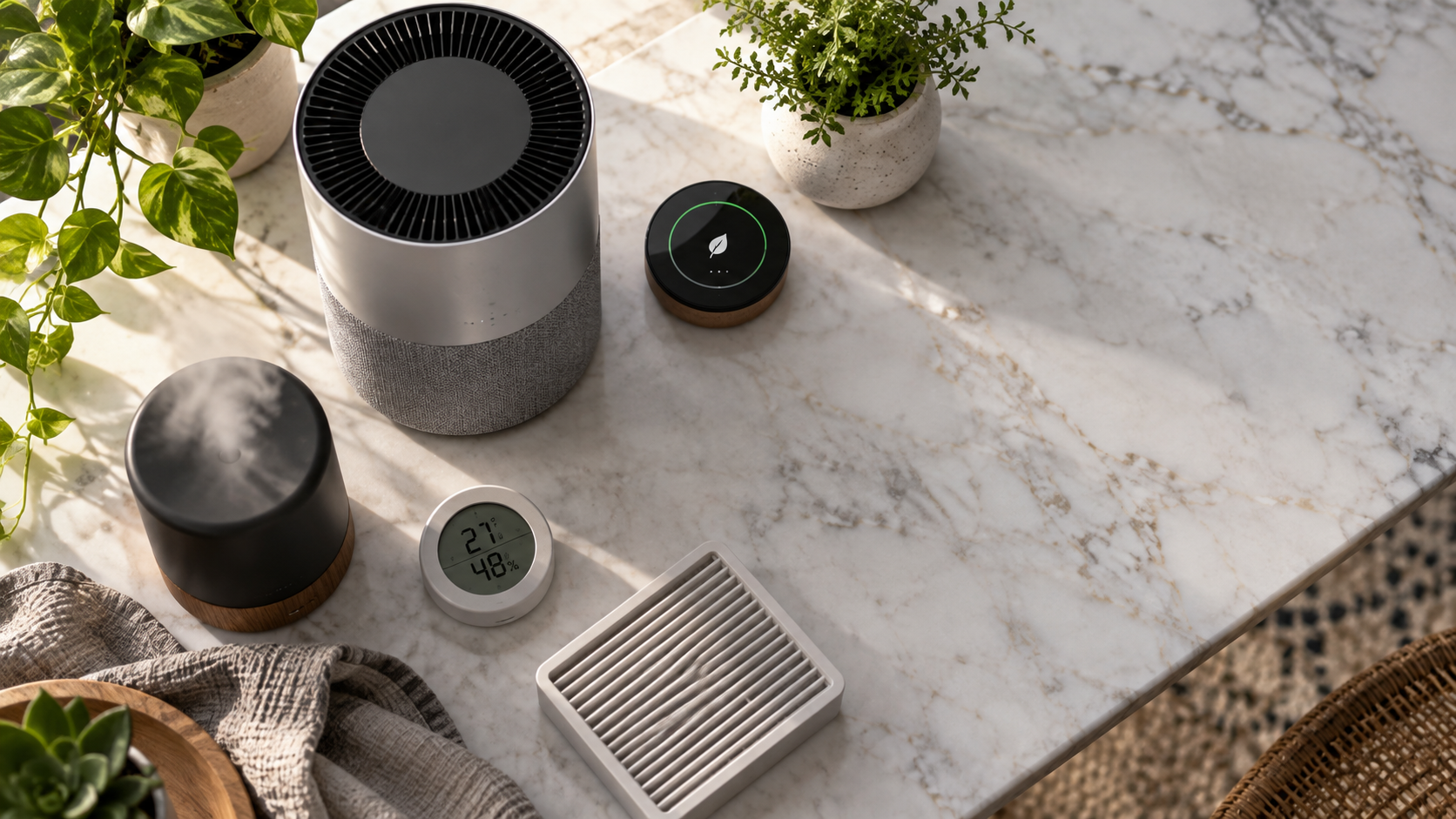
Knowing how to improve indoor air quality at home starts with a simple principle: reduce pollution at its source, bring in suitable outdoor air, and use filtration where it helps. An air purifier can be useful, but it is not a complete solution for cooking fumes, dampness, smoke, or chemicals released by household products. A well-planned approach combines everyday habits with ventilation, cleaning, and correctly chosen equipment.
This guide explains what indoor air quality means, how to identify common issues, and which practical steps can make a difference. It also covers how smart thermostats, lighting, security devices, furniture, and cleaning tools fit into a healthier home without overstating what connected gadgets can do.
What does indoor air quality mean?
Indoor air quality (IAQ) describes the condition of the air inside a building and how it may affect comfort and health. It includes pollutants such as fine particles, smoke, dust, and gases, as well as factors such as moisture, temperature, and ventilation. IAQ is not a single reading: a room can have low particle levels but still have excess humidity, inadequate fresh air, or a source of irritating chemicals.
Common indoor pollutants include particles from cooking, candles, tobacco smoke, and outdoor pollution; gases such as carbon monoxide and nitrogen dioxide; volatile organic compounds (VOCs) from some paints, finishes, furnishings, and cleaning products; and biological contaminants associated with damp conditions, pests, or poorly maintained equipment. The relevance of each depends on the building, activities, outdoor environment, and individual sensitivities.
Start by finding the source
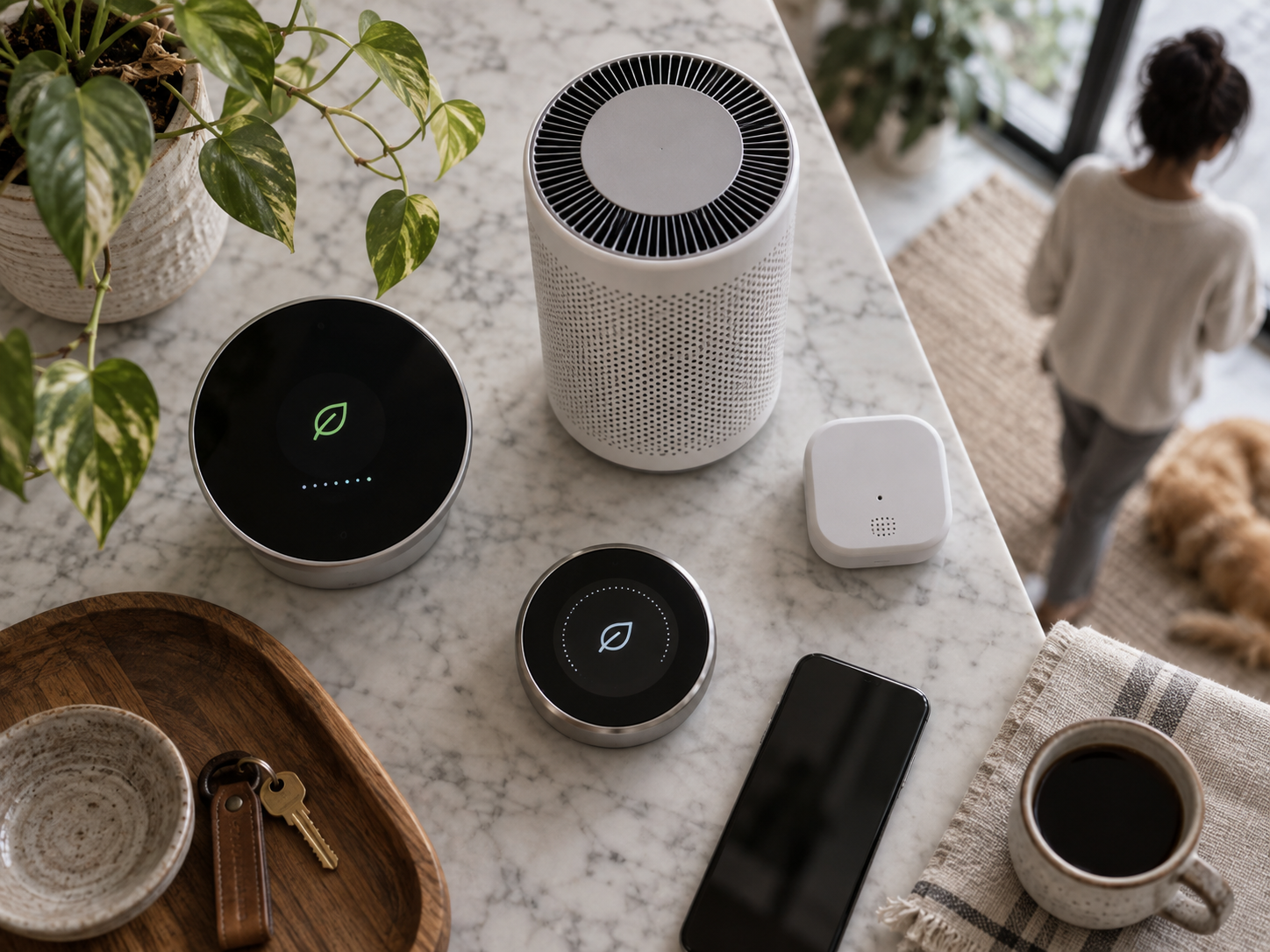
Before buying devices, look for patterns. Notice whether symptoms or odors appear during cooking, after using a product, when the heating or cooling system runs, or in a particular room. Check for water stains, condensation, musty smells, visible mold, dusty supply vents, and clogged filters. This is not a diagnosis, but a simple log of time, room, activity, and conditions can help you identify what to investigate.
For guidance, this article draws on established public resources rather than product testing. The U.S. Environmental Protection Agency (EPA) explains indoor air pollution, ventilation, filtration, and moisture control in its indoor air quality guidance. The Centers for Disease Control and Prevention (CDC) provides practical information about ventilation and respiratory protection. The American Society of Heating, Refrigerating and Air-Conditioning Engineers (ASHRAE) publishes ventilation and indoor environmental quality standards for building professionals. These sources address different aspects of the topic; local building codes and a qualified professional may also be relevant.
Practical steps to improve indoor air quality at home
1. Control pollution at the source
Source control is often the most direct first step. Do not smoke or vape indoors. When cooking, use a range hood that vents outdoors if one is available, and switch it on while cooking. If the hood recirculates air through a filter rather than exhausting outdoors, follow its maintenance instructions and recognize that it may not remove all pollutants. Covering pans when appropriate and using a back burner beneath the hood can help direct cooking emissions toward the capture area.
Use cleaning products, paints, adhesives, and fragrances according to their labels. Choose unscented products if fragrances bother household members, avoid mixing cleaning chemicals, and store products securely. Where feasible, select lower-emission materials for renovation or new furniture, and ventilate during and after projects in accordance with product instructions. “Natural” does not automatically mean harmless, and scent alone cannot tell you whether a product is safe.
2. Ventilate thoughtfully
Ventilation replaces or dilutes indoor air with outdoor air. Open windows when outdoor air is suitable and it is safe and comfortable to do so. Avoid relying on open windows during wildfire smoke, high outdoor pollution, extreme heat or cold, or periods when pollen is a serious concern. Use bathroom exhaust fans during showers and afterward as directed, and use kitchen exhaust ventilation during cooking.
Not every fan brings in fresh air: many ceiling fans only move room air, and some bathroom fans may be noisy, poorly maintained, or vented incorrectly. If a room feels persistently stuffy, or condensation and odors linger, ventilation may need assessment. Homes that are tightly sealed for energy efficiency can benefit from properly designed mechanical ventilation. A ventilation professional can help determine what a specific building needs.
3. Keep moisture under control
Leaks and persistent dampness can support mold growth and damage building materials. Repair plumbing or roof leaks promptly, dry wet materials, and use bathroom and kitchen exhaust fans. Check around windows, basements, and appliances that use water. If you see recurring mold or smell a persistent musty odor, address the underlying moisture rather than simply covering the smell with fragrance or placing an air purifier nearby.
A hygrometer can help you observe indoor relative humidity, but a number alone does not establish whether a home is healthy. Climate, surface temperatures, ventilation, and building materials all matter. Follow local public-health advice and appliance instructions when using a dehumidifier or humidifier. Clean and maintain these devices as directed; poorly maintained humidifiers can disperse contaminants, while excess humidity can worsen moisture problems.
4. Choose air filtration for the problem you have
A portable air cleaner may reduce airborne particles in the room where it operates when it is appropriately sized and maintained. For particles, look for a device with a genuine HEPA filter or a clearly stated clean-air delivery performance suitable for the room. Check the manufacturer’s room-size guidance, noise level, replacement-filter availability, and operating instructions. A unit that is switched off or run at an unusably loud setting cannot provide its intended service.
Filtration has limits. Particle filters do not necessarily remove gases, odors, or VOCs; some devices use activated carbon or another sorbent for certain gases, but capacity and effectiveness vary. Avoid ozone-generating air cleaners. The EPA cautions that ozone is a lung irritant, and devices marketed with ionization or similar features should be checked carefully for ozone emissions and independent certification. An air cleaner also does not fix a leak, replace a vented range hood, or make a smoke-contaminated room safe.
5. Maintain heating and cooling equipment
Replace or clean HVAC filters on the schedule and in the manner recommended for the system. Use only a filter type and resistance the equipment can handle; a denser filter is not automatically an upgrade if it restricts airflow beyond the system’s design. Keep return-air grilles clear, and arrange professional maintenance when the system is not operating properly or filters become unusually dirty soon after replacement.
A smart thermostat can support comfort and energy management by scheduling heating and cooling, but it is not an air-quality monitor unless it has relevant sensors, and even built-in sensors have limitations. A thermostat can remind you about maintenance or help manage temperature; it cannot remove pollutants by itself. Avoid changing equipment settings based on an unverified app reading alone.
6. Clean without redistributing dust
Regularly clean high-touch and dusty surfaces, and wash bedding according to its care instructions. A vacuum with effective filtration and a sealed design can help limit the amount of fine dust it returns to the room, though performance differs among models. Robot vacuums can make routine floor cleaning easier, especially when used consistently, but they do not clean upholstery, high shelves, vents, or every corner. Empty and maintain the bin and filters as directed.
Use a damp cloth for dusting when appropriate, rather than dry sweeping that can send particles airborne. Keep cleaning equipment clean, and consider where dust collects: rugs, soft furnishings, pet bedding, and cluttered surfaces may need attention. Minimalist desk setups and uncluttered rooms can make surfaces easier to clean, but minimalism is a housekeeping choice, not a substitute for ventilation or source control.
7. Make room-by-room adjustments
Kitchen: Use exhaust ventilation while cooking, maintain grease filters, and keep combustion appliances serviced. If you have a gas stove, discuss suitable ventilation and appliance options with a qualified professional, especially if anyone experiences symptoms around cooking.
Bedroom: Wash bedding regularly, keep air intakes unobstructed, and use a properly sized portable purifier if particle reduction is a goal. Smart bedroom gadgets such as humidifiers, sleep sensors, and air monitors can add convenience, but they do not replace cleaning or medical advice. Avoid adding humidity without a specific need.
Bathroom and laundry: Run exhaust fans during moisture-producing activities, dry spills, and inspect for recurring condensation. Do not cover ventilation grilles with decor or furniture.
Living and work areas: Keep furnishings and curtains from blocking HVAC returns. When selecting furniture or decor, consider material emissions, product information, and any relevant third-party certifications. These labels may help with product selection, but their scope differs and they do not guarantee that a whole room has good IAQ. Smart lighting can make a room more comfortable and support routines, but light settings do not clean the air.
Do air-quality monitors help?
Consumer monitors may track selected measures, such as particles, carbon dioxide, temperature, or humidity. They can help reveal changes around cooking, ventilation, or occupancy, but they do not detect every pollutant. A low reading from one sensor does not prove that all indoor air is safe, and different devices may use different sensors and reporting methods.
Use a monitor as an observation tool, not as a substitute for a carbon monoxide alarm, professional inspection, or clinical assessment. Place it according to the manufacturer’s directions, allow it to stabilize, and interpret patterns rather than reacting to every short-lived fluctuation. If readings appear inconsistent, check the device documentation and consider whether the sensor measures the pollutant you are concerned about.
Benefits and trade-offs of common approaches
- Source control: Often addresses pollution where it begins and may not require new equipment. It can mean changing habits, replacing products, or arranging repairs, and some sources—such as outdoor smoke—may not be under your control.
- Ventilation: Can dilute indoor pollutants when outdoor air is suitable. It may be less useful during polluted weather and can affect heating or cooling needs; a poorly designed system may not ventilate effectively.
- Portable filtration: Can reduce some airborne particles in a treated room. It requires space, electricity, upkeep, and filter replacements, and it generally will not resolve gases or moisture problems.
- Smart monitoring: Can make trends easier to notice and may support routines. Sensors have limits, readings can be misunderstood, and connected features may raise privacy or data-security questions.
- Professional assessment: Can help investigate complex ventilation, moisture, or appliance problems. It may involve cost and is not necessary for every ordinary household issue.
Limitations and when to seek help
No single gadget can guarantee healthy air throughout a home. A purifier cannot correct inadequate ventilation, remove a pollutant that is not captured by its filter, or identify the source of a persistent odor. A monitor may not measure a particular chemical or biological contaminant. The best response depends on the pollutant, room, building, outdoor conditions, and the needs of occupants.
Seek qualified help for recurring moisture or mold, suspected fuel-burning appliance problems, persistent ventilation issues, or unexplained symptoms that seem connected to a building. If a carbon monoxide alarm sounds, leave the building and contact emergency services or the appropriate local authority; do not rely on a general air-quality monitor. For health concerns, consult a medical professional rather than using an app or purifier reading to diagnose a condition.
Concise Q&A
What is the first step to improve indoor air quality?
Identify and reduce the likely source. For example, use outdoor-vented kitchen exhaust during cooking, stop indoor smoking, or repair a leak before deciding whether to add equipment.
Will an air purifier solve all indoor air problems?
No. A suitable purifier can reduce some airborne particles in its coverage area, but it does not replace source control, ventilation, moisture repair, or carbon monoxide alarms.
Should I open windows every day?
Not automatically. Opening windows can bring in fresh air when outdoor conditions are suitable, but smoke, pollution, pollen, weather, security, and building design may make it inappropriate at a particular time.
Can a smart thermostat improve air quality?
It can help manage temperature and system schedules, and some models provide limited air-related readings or reminders. It does not directly clean air, and its sensors do not measure every pollutant.
A manageable routine
Start with one observation: note when odors, dust, dampness, or discomfort occur. Address the most plausible source, maintain ventilation and HVAC equipment, and use filtration only for a defined need. Reassess after changes rather than buying several devices at once. Small, consistent actions—such as running the kitchen hood, keeping filters maintained, and drying damp areas—are usually more useful than expecting a single smart-home product to solve every air-quality concern.
Disclaimer: This article is general informational content, not medical, engineering, or product-selection advice. Indoor conditions vary. Follow appliance and product instructions, local safety guidance, and consult qualified professionals for persistent hazards or health concerns.