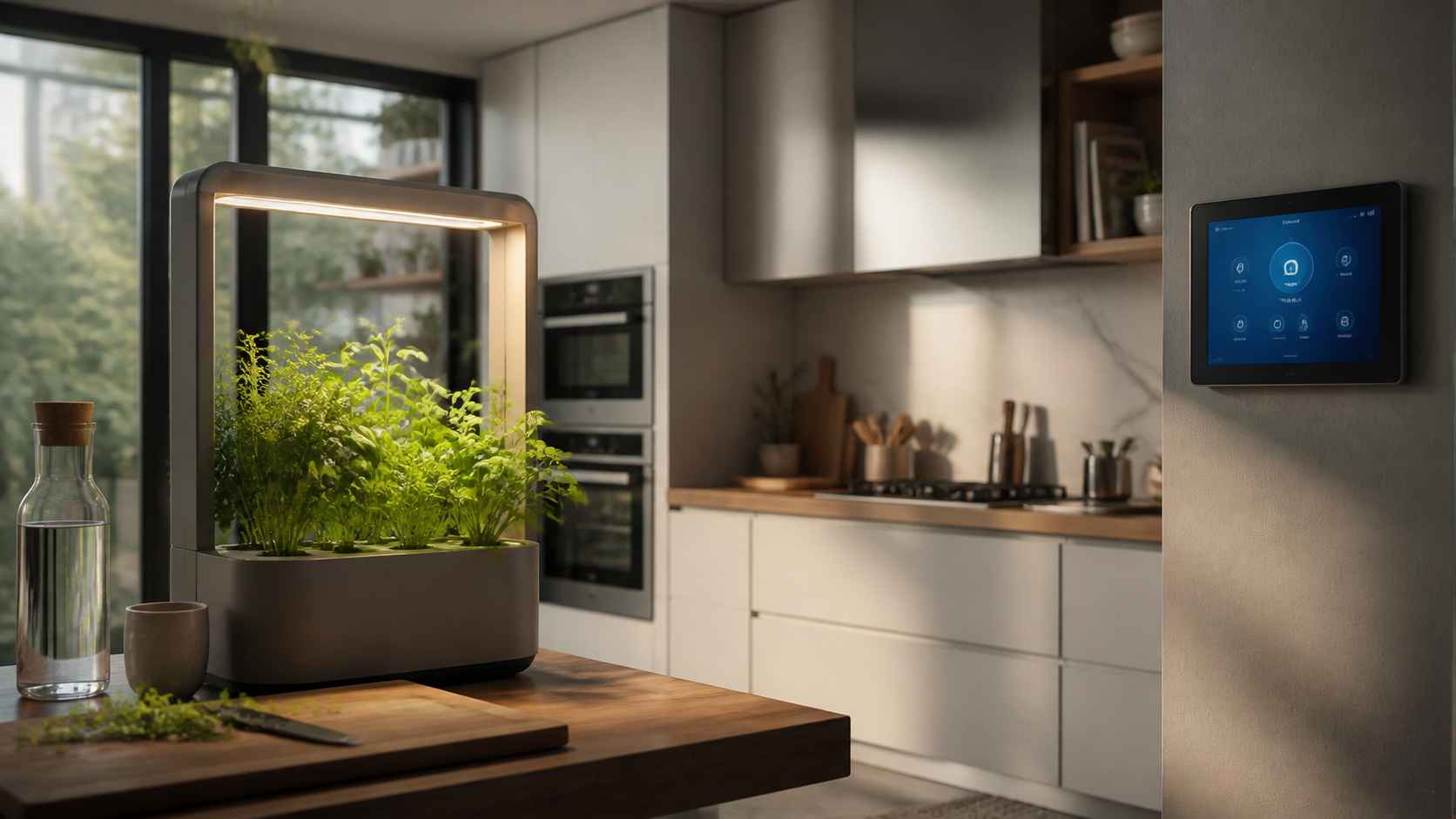
An indoor garden can be as small as three herb pots on a kitchen shelf or as polished as a dedicated growing station with LED lights, a water reservoir, and a phone app. The best setup is not the one with the most technology. It is the one that matches your light, schedule, counter space, and appetite for maintenance.
For most homes, the sensible starting point is a compact herb garden near a bright window, supported by a small grow light. Basil, mint, chives, parsley, thyme, and baby lettuce reward regular harvesting and do not require a greenhouse. With a $75 to $250 budget, you can create a useful green corner that looks intentional rather than improvised.
What is an indoor garden?
Definition: An indoor garden is a group of plants grown inside a home using natural light, artificial light, or a controlled hydroponic system. Soil-based pots are the simplest option. Hydroponic gardens grow plants in water with a nutrient solution, usually supported by an LED panel and a circulation pump.
That distinction matters. A windowsill garden depends on the conditions already in your room. A hydroponic kit creates more of its own conditions, but it also adds pumps, cleaning, replacement pods, and electricity use.
Choose the right first system
| Type | Typical cost | Best for | Watch out for |
|---|---|---|---|
| Window pots | $25 to $90 | Herbs and small leafy plants | Weak winter light and uneven growth |
| Countertop hydroponic kit | $90 to $250 | Fast herbs and greens | Pod availability and weekly cleaning |
| Modular shelf garden | $150 to $500 | Several plant varieties | Heat, cable management, and noise |
| DIY grow-light shelf | $80 to $300 | Budget-conscious plant keepers | More setup and light calibration |
Window pots are the right answer for a renter who wants fresh herbs without another appliance. A countertop kit suits someone who wants predictable growth and a tidy display. A shelf makes sense only after you know you enjoy the routine.
Our practical product shortlist
Click & Grow Smart Garden 9, about $199
The Click & Grow Smart Garden 9 is a clean-looking hydroponic unit with nine plant spaces and a built-in light. It is widely sold through Click & Grow, Amazon, and major home retailers. The starter pods make the first planting easy, and the white body fits a Scandinavian or minimalist kitchen. Expect roughly 30 to 45 days from planting to a useful harvest for many herbs, depending on the crop and room conditions. Replacement plant capsules often cost about $15 to $25 for a multipack.
Best use: a family kitchen that wants a visible, low-fuss herb display. Its weakness is the ongoing cost of branded pods.
AeroGarden Harvest Elite Slim, about $130
The AeroGarden Harvest Elite Slim offers six growing spaces, a height-adjustable LED light, water-level reminders, and a narrow footprint. It is available from AeroGarden, Amazon, Walmart, and other large retailers. At about 6 inches wide, it works well on a counter where depth is limited. The digital controls are helpful for beginners, though the small reservoir needs regular topping up once plants mature.
Best use: a first hydroponic garden for basil, dill, parsley, and salad greens. It is less suitable for tall tomatoes unless you are willing to prune.
Gardyn Home Kit 4.0, about $899
The Gardyn Home Kit 4.0 is a vertical growing system designed for a larger collection of greens and herbs. The unit uses a tall frame, integrated lighting, cameras, and a companion service. Prices and membership offers change, so check Gardyn before buying. It can become a strong focal point in a dining area, but it needs a dedicated wall and a realistic plan for cleaning and harvesting.
Best use: a design-conscious household that wants a substantial growing feature. It is expensive for casual experimentation.
Soltech Aspect grow light, about $120
If you already have attractive ceramic pots, a separate light may be the better design choice. Soltech’s Aspect pendant-style grow light costs about $120 and is sold through Soltech and independent retailers. Hung above a shelf or sideboard, it looks closer to a lighting fixture than a workshop lamp. Pair it with a timer and drainage trays, then grow herbs in standard potting mix.
Best use: a home where the furniture and pots matter as much as the plants. Check the recommended hanging height and avoid aiming bright light directly at eye level.
How to start an indoor garden in seven steps
- Audit the light. Watch the chosen spot for one day. A south-facing window usually gives the strongest light, while an east-facing window offers gentler morning light. If the spot is dim, budget for a grow light from the start.
- Pick crops you will eat. Basil is rewarding but thirsty. Chives and thyme are more forgiving. Lettuce and arugula grow quickly, while rosemary prefers bright light and excellent drainage.
- Start with three to six plants. A smaller garden makes watering, trimming, and pest checks manageable. More plants are not better if half of them go unused.
- Use the correct container. Soil pots need drainage holes and a saucer. Never leave roots sitting in a puddle. Hydroponic units need a reservoir that can be opened and cleaned.
- Set a simple schedule. Check soil moisture every two or three days. For hydroponics, inspect the water level twice a week and follow the nutrient instructions instead of guessing.
- Give plants airflow. A small gap between pots reduces damp leaves and mildew. Do not press plants against a cold window in winter.
- Harvest early and often. Pinching basil above a leaf pair encourages branching. Cutting greens from the outside lets the center continue growing.
“The most successful indoor garden is the one that stays visible, useful, and easy to reset.”
Make the garden fit the room
Visual order makes plant care more likely. Keep pots in one tray, hide the power strip under the shelf, and choose one finish for the containers. A pale oak riser warms a white hydroponic kit. Matte black metal suits a modern kitchen. Terracotta gives a softer, more traditional look, but it dries faster than plastic.
Place the garden close to the kitchen if you want to cook with it. A pretty setup in a spare room may be forgotten. Keep a pair of small scissors nearby, label unfamiliar seedlings, and reserve one container for cuttings or a failed experiment.
Common mistakes and running costs
The first mistake is buying a large system before testing the habit. The second is treating every plant as if it needs the same water and light. The third is ignoring replacement costs. A basic soil garden may cost $10 to $20 per month for potting mix, seeds, and occasional fertilizer. A branded hydroponic kit may run $15 to $35 per month when pods and nutrients are included. LED power use is usually modest, but a tall multi-light shelf will cost more than a single pendant.
Watch for fungus gnats in damp soil, pale leaves from insufficient light, and stretched stems that indicate a light placed too far away. Remove damaged leaves promptly and clean tools between plants. If an indoor garden starts smelling sour, inspect the roots or reservoir rather than adding more food.
Q&A
Is an indoor garden worth starting?
Yes, if you choose edible plants and place the garden where you already spend time. The value is fresh flavor, a calmer room, and a manageable care ritual, not a promise of free groceries.
What is the easiest plant for an indoor garden?
Chives, mint, basil, and leaf lettuce are friendly first choices. Mint grows aggressively, so keep it in its own pot.
Can I start an indoor garden without a grow light?
Yes. Use a bright window and select herbs that tolerate indoor conditions. In darker rooms or short winter days, a timer-controlled LED light will produce more reliable growth.
Should beginners choose soil or hydroponics?
Choose soil for the lowest cost and widest plant choice. Choose hydroponics for a tidy countertop display and faster, more predictable herbs. Neither removes the need for cleaning and harvesting.
Bottom line: Start with three useful plants, one attractive tray, and the best light you can provide. Once that small garden survives a month of normal life, add technology or a second shelf with confidence.