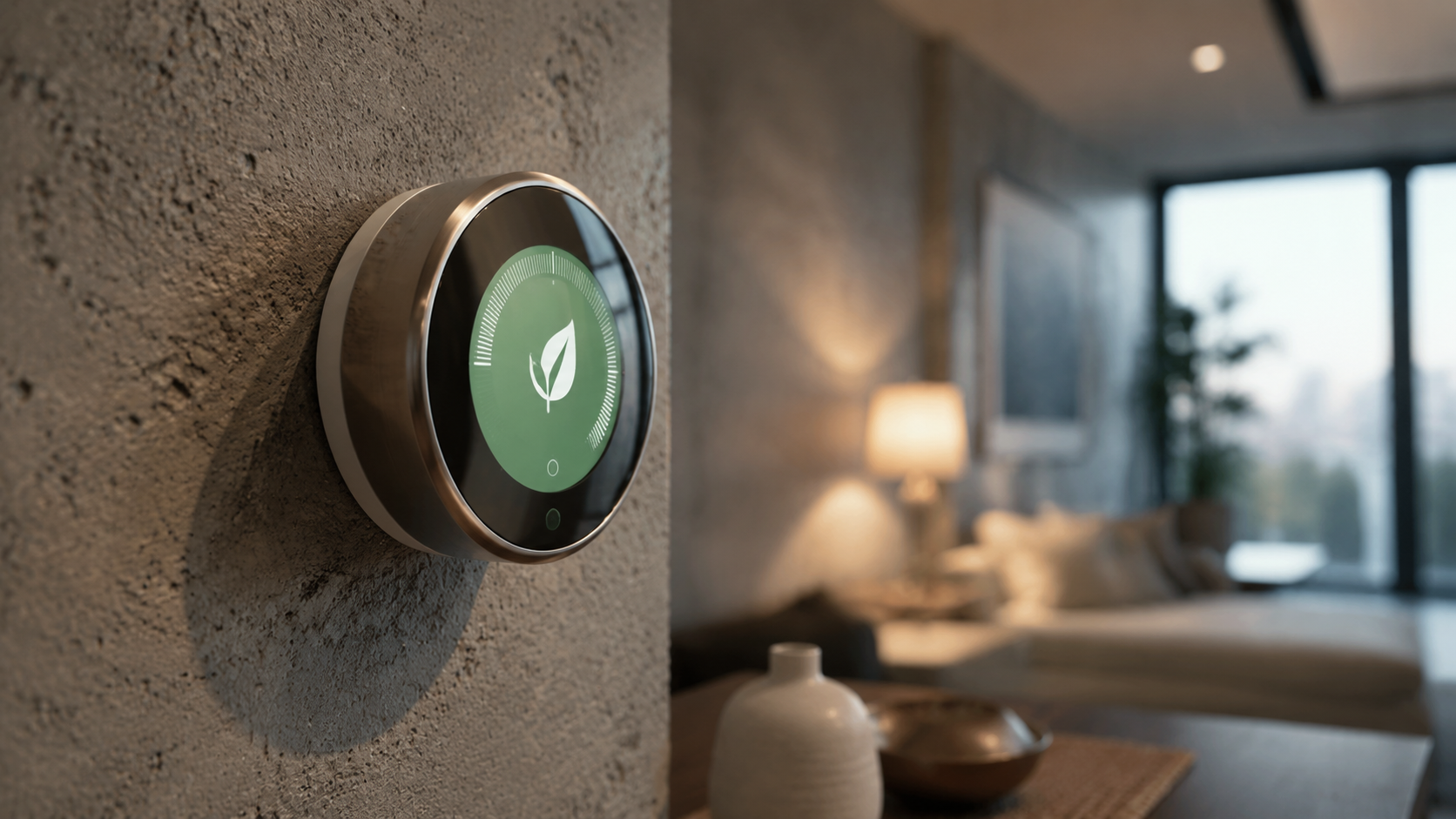
How are smart thermostats energy efficient? They save energy by reducing heating and cooling when rooms are empty, learning household routines, using phone location to detect away time, and adding small temperature setbacks that traditional thermostats often miss. The best models also use remote sensors, humidity data, and utility demand programs to avoid waste without making a home feel neglected.
That sounds technical, but in a real home it is mostly a design decision. A good thermostat becomes the quiet control point between comfort, architecture, sunlight, insulation, and the family calendar. It should not call attention to itself on the wall, yet it should make the HVAC system run fewer wasteful hours.
For 2026, the strongest smart thermostat buys are not just the prettiest screens. They are the models that match your wiring, your HVAC type, and the rooms you actually use. Below is a practical guide with current product pricing, savings data, and the details that matter before you replace the small plastic rectangle in the hallway.
What Is A Smart Thermostat?
A smart thermostat is a Wi-Fi connected heating and cooling controller that can adjust temperature automatically using schedules, sensors, phone apps, occupancy cues, and weather data. Unlike a basic programmable thermostat, it can react to daily changes and help reduce HVAC runtime when comfort demand is low.
Most models mount where your old thermostat sits, although many require a C-wire for steady power. If your home has a heat pump, multi-stage furnace, radiant system, or older boiler, compatibility matters more than brand loyalty. The right device can look minimal and still handle the mechanical details behind the walls.
The Short Answer: How Are Smart Thermostats Energy Efficient?
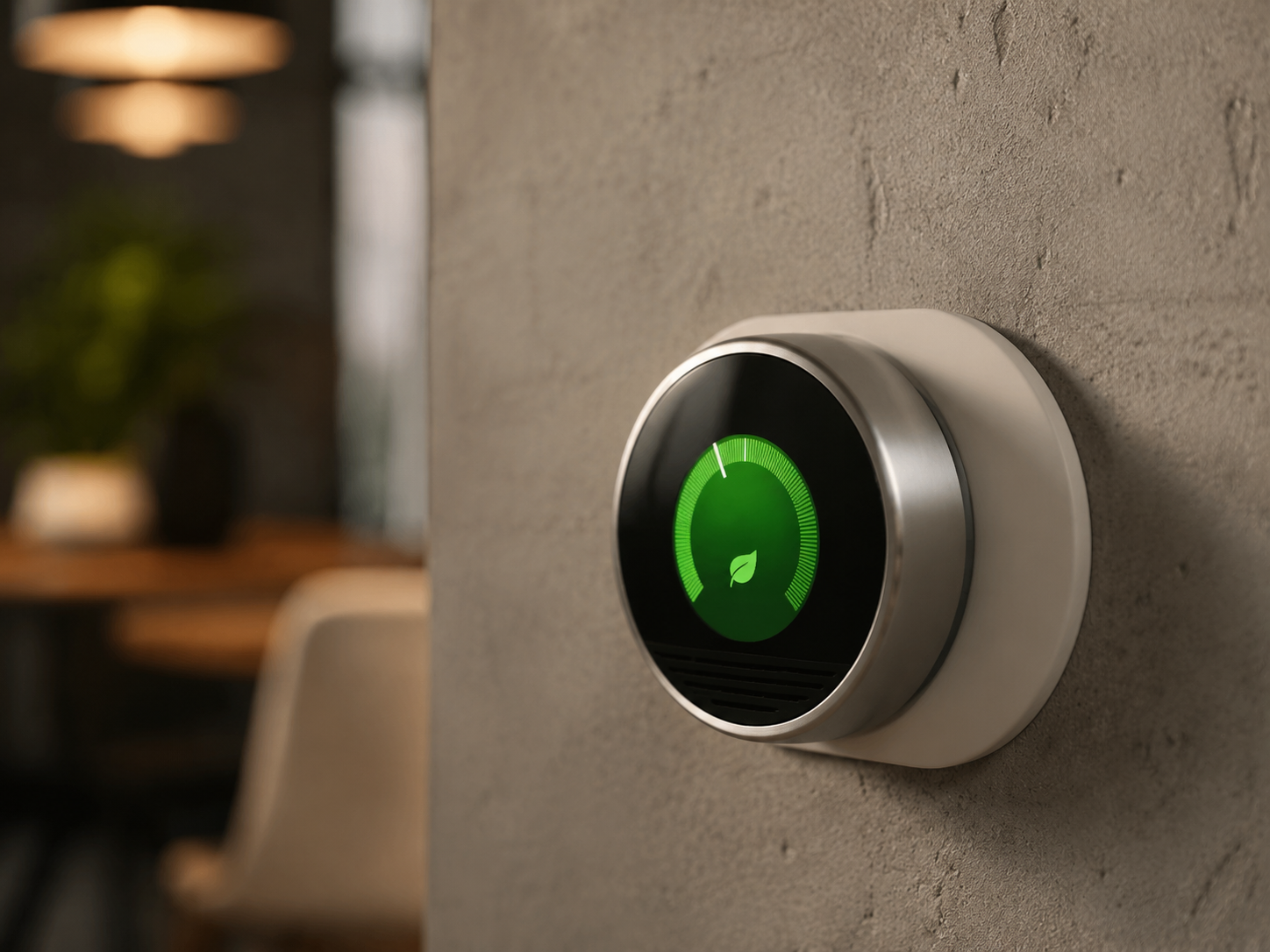
How are smart thermostats energy efficient in daily use? They cut run time during away hours, sleep hours, peak-rate periods, and mild weather, then bring the home back to a comfortable setting before you need it. That is the whole idea: less conditioning when nobody benefits from it.
ENERGY STAR notes that heating and cooling account for almost half of the average American home energy bill, more than $900 per year. The U.S. Department of Energy says homeowners can save as much as 10% a year on heating and cooling by setting thermostats back 7 to 10 degrees Fahrenheit for 8 hours a day. Smart thermostats make those setbacks easier to apply consistently.
Quotable stat: If a household spends $900 a year on heating and cooling, a 10% reduction is about $90 per year before utility rebates or time-of-use rate savings.
Brand claims can be higher. Ecobee says its Smart Thermostat Premium can save up to 26% on energy costs and up to $284 per year, while Nest has historically cited average savings around 10% to 12% on heating and 15% on cooling. Treat those numbers as scenarios, not guarantees. Insulation, climate, setpoints, HVAC age, and family habits decide the final bill.
Where The Energy Savings Actually Come From
1. Automatic Setbacks While You Are Away
The biggest savings usually come from not heating or cooling an empty home. Geofencing uses your phone location to know when the household has left. Occupancy detection uses motion or presence sensors to reach the same conclusion indoors.
A traditional thermostat can do this only if the schedule is perfect. Real life is rarely that tidy. Smart control helps because a late meeting, a school pickup, or a weekend trip changes the HVAC plan without needing five manual button presses.
2. Room Sensors That Fix The Hallway Problem
Many homes have the thermostat in a hallway that nobody uses for long. A sunny office, cold nursery, or upstairs bedroom can be several degrees different from that hallway reading. Remote sensors let the system prioritize the rooms where people are present.
This can save energy in two ways. First, the thermostat stops over-conditioning the whole house to satisfy a bad wall location. Second, it can balance comfort around occupied rooms instead of running the system for spaces that are empty.
3. Smarter Recovery And HVAC Protection
Recovery is the period when your system returns from an energy-saving setpoint to a comfort setpoint. A basic thermostat may start too early or too late. A smart thermostat learns how quickly your home warms or cools, then times recovery more carefully.
Some models also support compressor protection, heat-pump balance settings, and auxiliary heat limits. That matters because electric resistance backup heat can be expensive. A thermostat that avoids unnecessary auxiliary heat can protect both comfort and the monthly bill.
4. Peak-Rate And Utility Program Control
Many utilities offer rebates for ENERGY STAR certified smart thermostats. Some also offer demand response programs, where the thermostat makes small temperature changes during grid stress events. You usually get notice, and most programs allow manual opt-out.
This is not for every household. If someone works from home in a heat wave, comfort may be worth more than a small credit. Still, for households with flexible schedules, utility programs can add savings beyond ordinary scheduling.
2026 Smart Thermostat Comparison Table
| Model | Typical 2026 Price | Best For | Key Efficiency Tools | Where To Buy |
|---|---|---|---|---|
| Ecobee Smart Thermostat Premium | $259.99 | Larger homes, sensor-first comfort | Included SmartSensor, occupancy, air quality, humidity, voice control | Ecobee, Amazon, Best Buy |
| Google Nest Learning Thermostat, 4th gen | About $279.99 | Design-led homes and automatic scheduling | Learning schedule, presence sensing, HVAC monitoring, Matter support | Google Store, Best Buy, Home Depot |
| Google Nest Thermostat | About $129.99 | Simple apartments and smaller homes | Eco temperatures, Savings Finder, phone control, HVAC alerts | Google Store, Amazon, Target |
| Amazon Smart Thermostat | About $79.99 | Budget Alexa households | Alexa routines, app scheduling, ENERGY STAR certification | Amazon |
| Honeywell Home T9 | About $199.99 to $209.99 | Rooms with hot and cold spots | Smart room sensors, geofencing, adaptive recovery | Honeywell Home, Lowe’s, Amazon |
The best-looking model is not always the smartest buy. Ecobee Premium is the strongest choice if you care about room sensors out of the box. Nest Learning Thermostat is the better object on the wall, with a more sculptural face and a cleaner presence in open-plan interiors.
For rentals and smaller homes, the Amazon Smart Thermostat or standard Nest Thermostat can make more financial sense. A $79.99 thermostat with a utility rebate may pay back quickly if the HVAC schedule is currently unmanaged. The tradeoff is fewer advanced room-by-room comfort tools.
Design Notes: Where To Place It And How To Make It Look Intentional
A thermostat is small, but wall placement can make it feel like visual clutter. If you are renovating, place it on an interior wall away from direct sun, kitchen heat, exterior doors, and supply vents. Bad placement causes bad readings, and bad readings waste energy.
In a modern living room, the Nest Learning Thermostat works well with limewash, plaster, walnut, white oak, and stone because the circular form feels closer to a fixture than a control panel. Ecobee Premium looks more like a small black glass tile, which suits kitchens, media rooms, and offices with other black accents.
If the old thermostat left paint ghosts or wall damage, use the manufacturer’s trim plate or repaint a clean rectangle around the device. Do not hide the thermostat behind a cabinet, door, curtain, or gallery wall frame. It needs open air to read the home correctly.
Cost, Rebates, And Payback Math
Here is a simple payback example. If a household spends $1,200 per year on heating and cooling, a conservative 8% savings rate equals $96 per year. A $130 thermostat with a $50 utility rebate has an effective cost of $80, so the payback can be under one year.
| Annual Heating And Cooling Spend | Estimated 8% Savings | Estimated 10% Savings | What It Means |
|---|---|---|---|
| $700 | $56 | $70 | Budget models make the most sense |
| $1,000 | $80 | $100 | Most ENERGY STAR models can justify themselves |
| $1,500 | $120 | $150 | Remote sensors and heat-pump controls become more valuable |
| $2,000 | $160 | $200 | Premium models can pay back if settings are used well |
Installation costs vary. Many homeowners can install a simple thermostat in 30 to 60 minutes if the wiring is labeled and a C-wire is present. Professional installation often costs about $100 to $250, depending on market and HVAC complexity.
Buying Advice By Home Type
Best For Apartments
Choose the Google Nest Thermostat or Amazon Smart Thermostat if your apartment has a compatible low-voltage HVAC system and you mainly need scheduling, app control, and away settings. Check lease rules first. Some apartment systems, especially line-voltage baseboard heat, need different thermostats.
Best For Family Homes
Choose Ecobee Smart Thermostat Premium with its included SmartSensor if bedrooms and living areas differ in temperature. Add extra Ecobee SmartSensors at about $99.99 for a two-pack if the upstairs rooms run hot or the nursery runs cold.
Best For Design-Forward Renovations
Choose Nest Learning Thermostat, 4th gen, when the thermostat sits in a visible hallway, dining area, or open-plan living zone. Its polished circular form reads as intentional hardware. Pair it with a clean wall finish and avoid surrounding it with switches.
Q&A: Smart Thermostat Efficiency
Do smart thermostats save energy if I am home all day?
Yes, but savings are usually smaller. The thermostat can still reduce nighttime runtime, manage humidity, avoid excessive preheating or precooling, and use room sensors. The biggest savings happen when there are regular away periods or unused rooms.
Are smart thermostats worth it for heat pumps?
They can be, but compatibility is critical. Look for support for your heat-pump stages and auxiliary heat settings. A poor setup can call expensive backup heat too often, while a good setup can reduce waste during recovery periods.
Can an energy company control my thermostat?
Only if you enroll in a utility demand response program and agree to its terms. These programs may adjust temperatures during peak grid events, often by a few degrees. Most programs allow opt-out from a specific event through the app or thermostat.
How are smart thermostats energy efficient compared with programmable thermostats?
Programmable thermostats save energy when people actually program and maintain schedules. Smart thermostats add phone control, occupancy sensing, adaptive recovery, reminders, and remote sensors. Those features help maintain the energy-saving plan when daily routines change.
The Bottom Line
A smart thermostat is not magic. It is a better editor for the energy your HVAC system was already using. The best units reduce waste through away detection, room sensors, setback schedules, and cleaner recovery timing.
If you want the most complete package, buy the Ecobee Smart Thermostat Premium for $259.99. If wall presence matters as much as control, buy the Nest Learning Thermostat, 4th gen, for about $279.99. If your goal is fast payback, start with the Amazon Smart Thermostat or the standard Nest Thermostat and check your utility rebate before paying full price.